
Ministry of Energy and Mineral Resources develops renewable energy on Buru Island
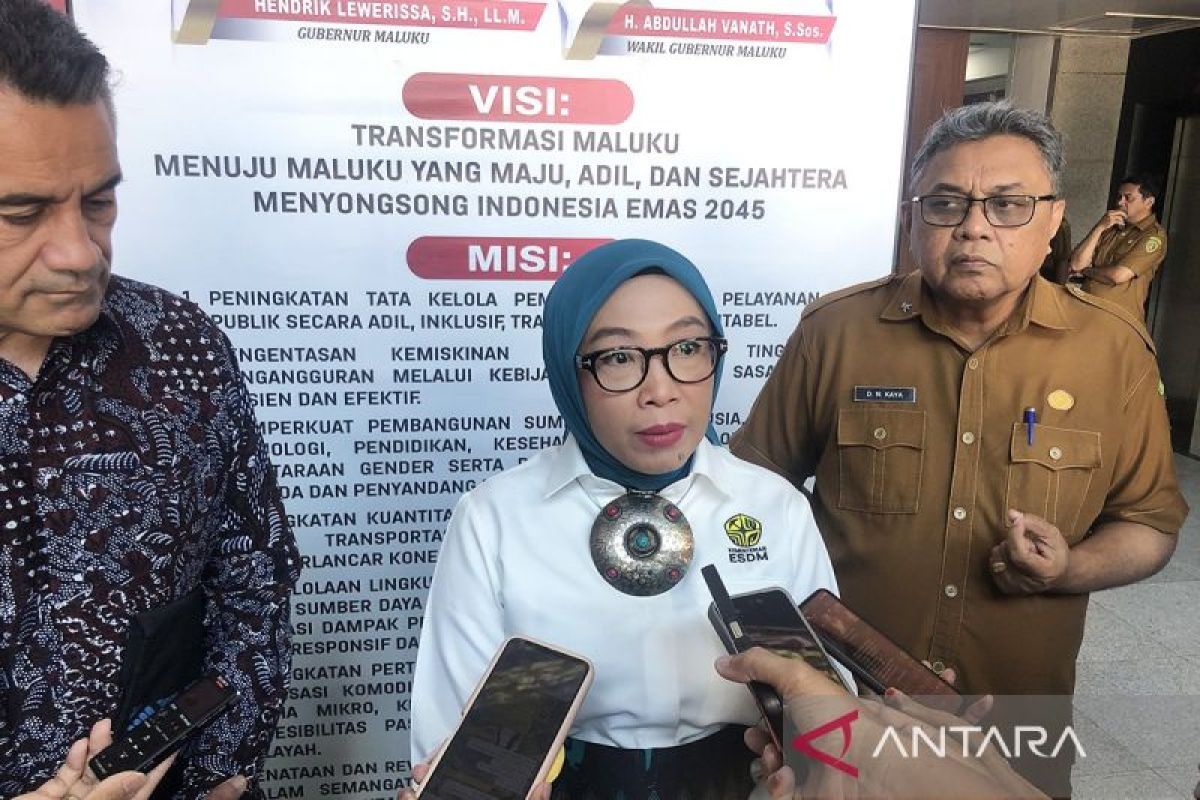
The Ministry of Energy and Mineral Resources (ESDM) is accelerating the development of new and renewable energy (EBT) potential on Buru Island, Maluku Province, in order to strengthen the reliability of clean electricity supply while supporting local economic growth.
Director General of New, Renewable Energy and Energy Conservation (EBTKE) at the Ministry of ESDM, Prof Eniya Listiani Dewi, said in Ambon on Tuesday that the development of renewable energy on Buru Island is designed to support productive sectors in island regions.
“The renewable energy programme not only provides electricity, but can also drive economic activity and improve community welfare in island areas,” she said.
She added that this strategic step is set out in the 2025-2034 Electricity Supply Business Plan (RUPTL) roadmap, which covers the use of various local renewable energy resources, from geothermal and hydro to solar power and biomass.
According to her, renewable energy can be further utilised to support the economic activities of local communities, including through the provision of electricity for cold storage to preserve the quality of fisheries products, as well as for drying agricultural and fishery commodities.
Based on data from the Directorate General of EBTKE, one of the flagship projects on Buru Island is the Wapsalit Geothermal Working Area (WKP) with a capacity of 20 megawatts (MW), targeted to reach its Commercial Operation Date (COD) in 2028.
The WKP, which has already secured a Geothermal Permit (IPB), has significant potential to support green mining operations of 32 MW as well as cold storage power needs of up to 40 MW.
In addition to geothermal, the government is also preparing hydropower potential through the Way Tina hydropower plant (PLTA) with a capacity of 4 x 3 MW (targeted COD 2030) and the Wae Mala micro-hydropower plant (PLTM) with a capacity of 1.1 MW (targeted COD 2029).
To meet short-term needs, the Namlea solar power plant (PLTS) equipped with a Battery Energy Storage System (BESS), with a capacity of 5 MW, is targeted to begin operating soon, followed by the Namlea 2 biomass power plant (PLTBm) with a capacity of 10 MW in 2029.
She added that nationally, the new and renewable energy mix has reached around 18.3 per cent. However, challenges in island regions remain considerable, as a number of small islands still depend on fuel oil (BBM) as the main source of electricity generation.
Therefore, the Ministry of ESDM continues to encourage the acceleration of the energy transition in remote and island areas by harnessing local energy sources suited to the characteristics and geographical potential of each region.
Source: jawawa.id (https://jawawa.id/newsitem/ministry-of-energy-and-mineral-resources-develops-renewable-energy-on-buru-island-1789469801)
Originally published by Antara (Indonesian) (https://www.antaranews.com/berita/5742100/kementerian-esdm-kembangkan-energi-terbarukan-di-pulau-buru), translated from Indonesian