
Ministry of Education Collaborates with BRIN to Prepare Young Research Talents
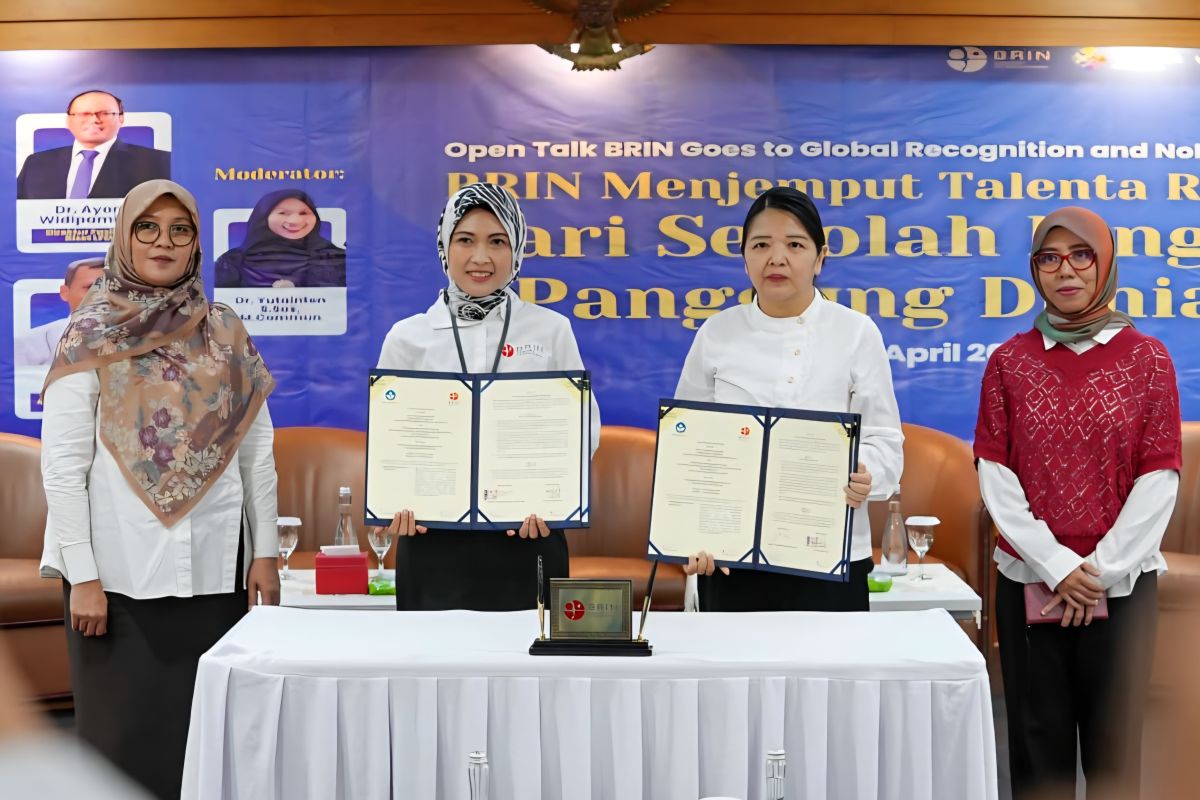
Jakarta (ANTARA) - The National Centre for Student Achievements (Puspresnas) of the Ministry of Education, Culture, Research, and Technology is strengthening the nurturing of the young researcher generation through a strategic collaboration with the National Research and Innovation Agency (BRIN). This collaboration is marked by the signing of a cooperation agreement focused on talent nurturing and development, particularly for prospective finalists of the Indonesian Student Research Olympiad (OPSI) and OPSI winners who will participate in international competitions. Head of Puspresnas of the Ministry of Education, Culture, Research, and Technology, Veronica Irene Herdjiono, in Jakarta on Saturday, emphasised the importance of this collaboration in building a research culture among students. “Through collaboration with BRIN, we want to ensure that students have real experience in the research process, from planning to reporting,” she said. The involvement of BRIN experts in mentoring OPSI winners strengthens the quality of methodology and the novelty of research, making it competitive at the international level. “We are not only preparing students to participate in competitions but also building strong scientific character. With BRIN’s support, we are optimistic that Indonesian students can produce innovative research works that contribute to the nation’s progress,” she added. In addition, OPSI winners who will participate in international competitions receive direct mentoring from BRIN researchers according to their respective research fields, either online or offline at BRIN’s research laboratories. On the same occasion, Director of Talent Management at BRIN, Ajeng Arum Sari, emphasised that direct practical experience is key to building sustainable research competencies. “Practice-based learning allows students to understand the research process comprehensively. Not only understanding theory, but also directly experiencing the experiment process, data analysis, to the preparation of scientific reports. This approach is very important for building high-quality and globally competitive research capabilities,” said Ajeng.