
Ministry of Culture studies international museum management in Egypt
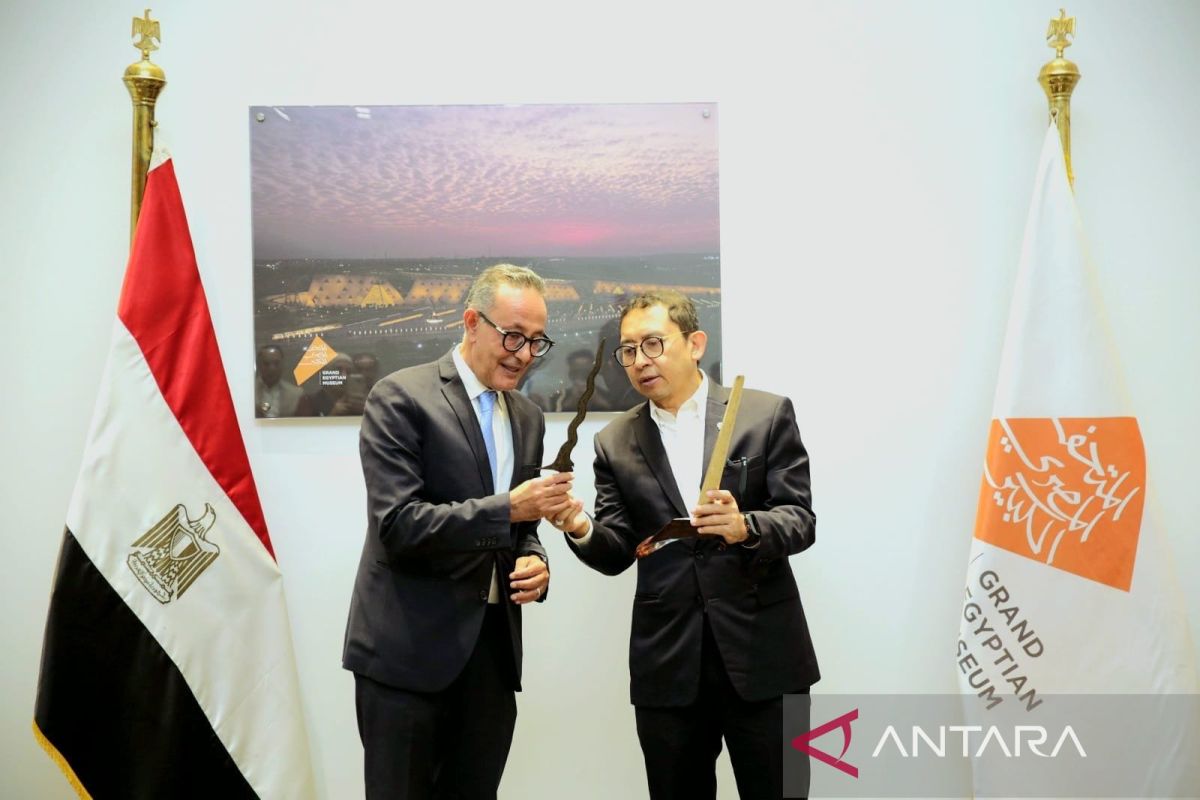
Jakarta (ANTARA) - The Ministry of Culture is studying the efforts of the Grand Egyptian Museum (GEM) in Egypt regarding the construction and management of modern, international-scale museums.
“Indonesia is currently developing modern museums. We wish to learn from the Grand Egyptian Museum, particularly regarding how a museum with such a vast collection can be managed professionally, modernly, and attractively for the public, while maintaining an international standing,” stated the Minister of Culture in an official statement received in Jakarta on Tuesday.
During a meeting with the CEO of the Grand Egyptian Museum Authority, Prof. Dr. Ahmed Ghoneim, in Cairo, Minister Fadli Zon noted that the learning process covers aspects of governance, collection management and conservation, curation and exhibition presentation, visitor experience, the use of technology, facility management, and operational sustainability.
CEO of the Grand Egyptian Museum Authority, Prof. Dr. Ahmed Ghoneim, explained that the GEM was developed with three primary functions: Egyptology and research, global tourism and heritage, and cultural communication.
The ‘global tourism and heritage’ aspect positions the museum as part of the global tourism and cultural heritage ecosystem, while ‘cultural communication’ establishes the museum as a space for cultural exchange, connecting Egypt with people from various nations.
This concept is of particular interest to Indonesia as it considers the future direction of museum development. Modern museums are not only required to possess significant collections but must also be capable of transforming those collections into accessible knowledge and experiences for the public.
A key point of discussion was the scale of the Grand Egyptian Museum’s construction. During the meeting, it was mentioned that the construction costs for the GEM reached approximately US$1.2 billion prior to its opening.
Furthermore, the GEM is capable of generating a profit of around US$15 million per year.
Energy efficiency was also a key learning point, specifically the use of solar energy and efforts to improve the efficiency of air conditioning and lighting systems, which are vital for maintaining the operational sustainability of such a massive facility.
For Indonesia, these experiences are highly relevant, as the development of modern museums involves more than just physical construction; it also concerns ensuring that museums can operate sustainably, efficiently, and safely, while providing the best possible experience for visitors.
Source: jawawa.id (https://jawawa.id/newsitem/ministry-of-culture-studies-international-museum-management-in-egypt-1790071594)
Originally published by Antara (Indonesian) (https://www.antaranews.com/berita/5752912/kemenbud-belajar-ke-mesir-soal-tata-kelola-museum-internasional), translated from Indonesian