
Ministry of Culture Equips Public Relations Officers with Skills for Valuable and Engaging News Writing
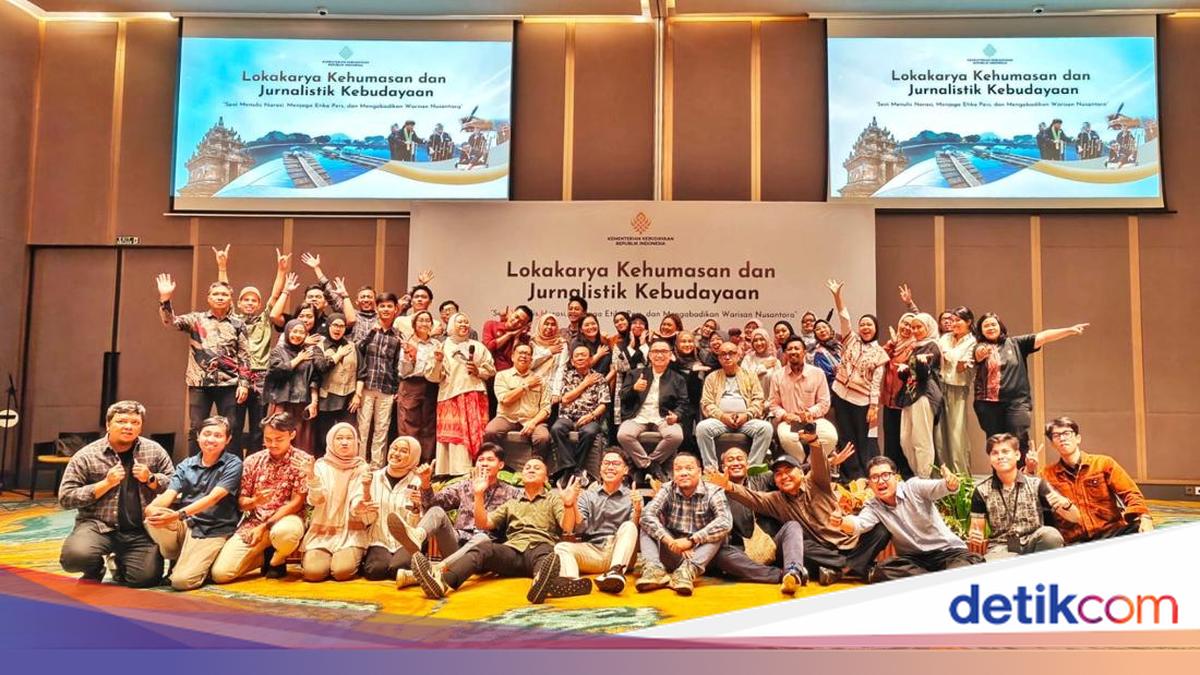
The Ministry of Culture held a Cultural Public Relations and Journalism Workshop in Garut, West Java, yesterday. The training covered news writing, narrative construction, press ethics, and methods for documenting the cultural wealth of the Nusantara.
Currently, cultural public relations officers are required to be able to identify facts that are important to the public, select strong angles, and convey them using simple language. Therefore, the training was designed to expand insights and provide essential tools for the public relations staff.
“This training is intended to increase insight and serve as preparation for public relations officers. The extensive experience of the presenters can be utilised to ensure that future public relations work is even better,” said M. Asrian Mirza, Special Staff to the Minister of Culture for Media and Public Communication, in a statement on Thursday (8/10/2026).
Meanwhile, the Editor-in-Chief of VOI.id, Iqbal Irsyad, highlighted that many public relations releases still lack news value because they are too focused on describing ceremonies. In reality, readers require information regarding new developments, impacts, figures, decisions, or changes that have occurred.
“An activity is not automatically news. News is born when there is something new, impactful, and important for the reader,” explained Iqbal.
According to Iqbal, public relations officers need to shift their mindset from merely explaining what an institution has done to identifying what is important for the public to know.
In news writing, Iqbal emphasised that the angle, lead, data, and substantial quotes are the determining factors of whether a release captures editorial attention or remains merely as activity documentation.
Similarly, former senior journalist from Kompas, Jimmy S. Harianto, emphasised the importance of the basic 5W+1H elements. However, completeness alone is not enough. According to him, the “why” and “how” components are actually the gateways to discovering the most significant aspects of an event.
“Do not stop at what happened. Find out why the event occurred and how the process unfolded,” said Jimmy.
On the other hand, former Photo Editor of Koran Pikiran Bandung, Dudi Sugende, reminded cultural public relations officers that they are also responsible for recording cultural heritage.
He emphasised that a good story can make traditions more widely known, but careless storytelling can actually harm the communities that own the culture. The material also emphasised accuracy, balance, permission, and respect for communities in every instance of cultural documentation.
“News informs, while narrative makes people feel. However, both must remain based on facts,” said Dudi.
For information, the workshop was attended by the Head of the Bureau of Public Relations and Public Information of the Ministry of Culture along with their staff, as well as representatives from the Cultural Preservation Centres from 34 provinces across Indonesia.
Enthusiasm was evident among participants throughout the sessions. Various questions arose, ranging from determining angles and creating leads to selecting quotes and transforming overly ceremonial releases into more lively news with value for the readers.
Through this training, public relations officers are expected to not only be skilled at making their institutions heard but also to understand which information is truly worth the public’s attention.