
Ministry of Culture: Do not sacrifice cultural values for economic interests
The Ministry of Culture (Kemenbud) has reminded that the use of culture to support tourism and the creative economy must not sacrifice the cultural values that live within society.
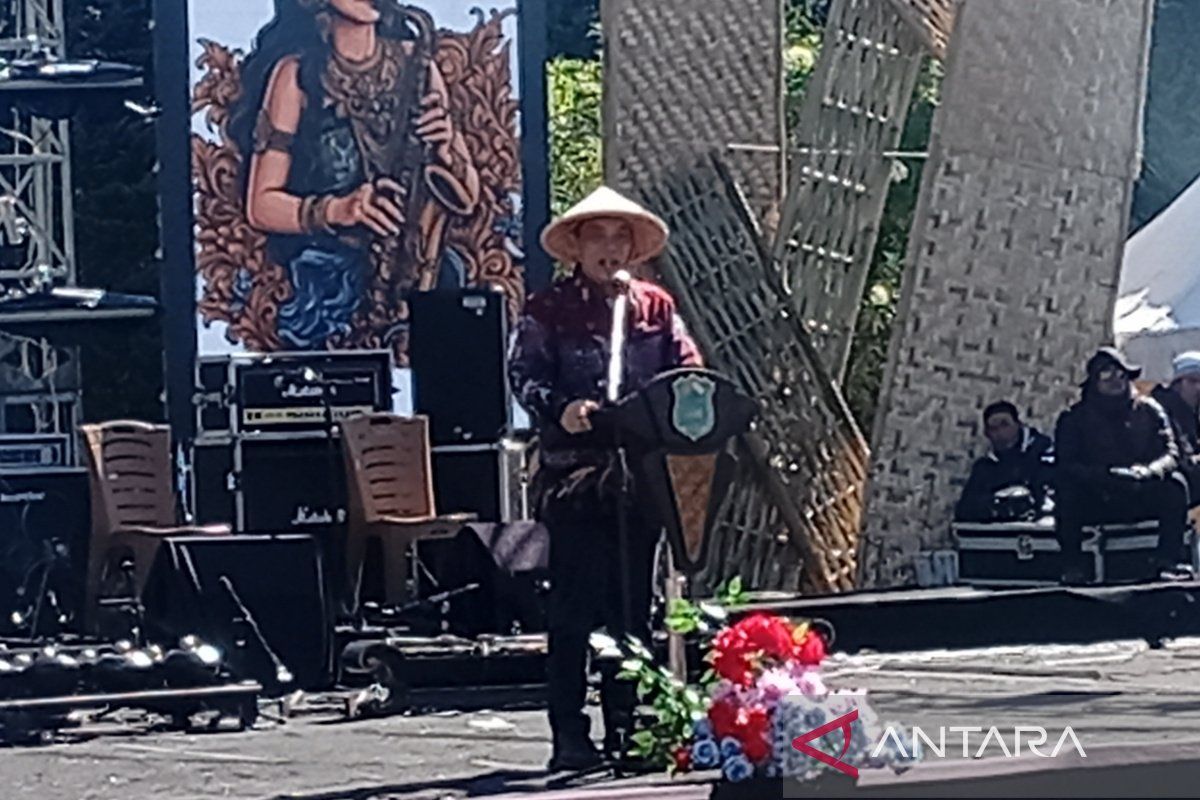
Minister of Culture Fadli Zon, in a written address read by Director of Cultural Heritage Agus Widiatmoko at the opening of the Dieng Culture Festival (DCF) 2026 in Dieng Kulon Village, Batur District, Banjarnegara Regency, Central Java, on Friday, said the community must remain the primary owner of cultural traditions.
“Do not let cultural values be sacrificed for economic interests. This is one of our challenges going forward,” he said.
He said the tradition of ruwatan anak berambut gimbal (ritual for children with dreadlocked hair) in Dieng is not merely a hair-cutting procession, but a tradition passed down across generations that contains knowledge systems, symbols of prayer, social relations, spiritual values, respect for ancestors, mutual cooperation, and the community’s relationship with nature.
The ruwatan rambut gimbal tradition was designated as an Intangible Cultural Heritage of Indonesia in 2016 within the domain of customs, rites, and celebrations.
“What we actually pass on is not only the ritual of cutting hair, but the values that live behind it,” he said.
According to him, these values include gratitude, togetherness, mutual cooperation, respect for ancestors, the relationship between humans and nature, and responsibility to family and community.
He said living culture must also provide benefits for the community that owns and practises it.
Tourists are expected not only to enjoy the natural beauty and witness the ritual, but also to learn about the history and community of Dieng, enjoy the arts, taste local food, buy community products, and stay longer.
In this way, culture can strengthen tourism, while tourism opens space for the creative economy and employment opportunities that ultimately improve community welfare.
“We do not want tradition to become merely a spectacle. We do not want the community to become mere spectators of their own culture. The community must be the owner, practitioner, manager, and primary beneficiary,” he said.
He emphasised the importance of knowledge regeneration for the younger generation so that they understand not only how traditions are carried out, but also their meaning, history, social values, and the relationship between tradition and the environment.
He affirmed that cultural preservation requires collaboration between the government, indigenous communities, cultural communities, elders, the younger generation, artists, cultural figures, tourism and creative economy actors, schools, universities, and the business world.
“We hope DCF 2026 does not stop as a festival, but is able to maintain the Dieng tradition as a living tradition that continues to be passed down across generations,” Fadli said in his written address.
The 16th DCF 2026 was held on 28–30 August, with the main agenda being the Ruwatan Anak Berambut Gimbal on Saturday (29/8).