
Ministry of Creative Economy states trend forecasting drives export-oriented traditional textiles
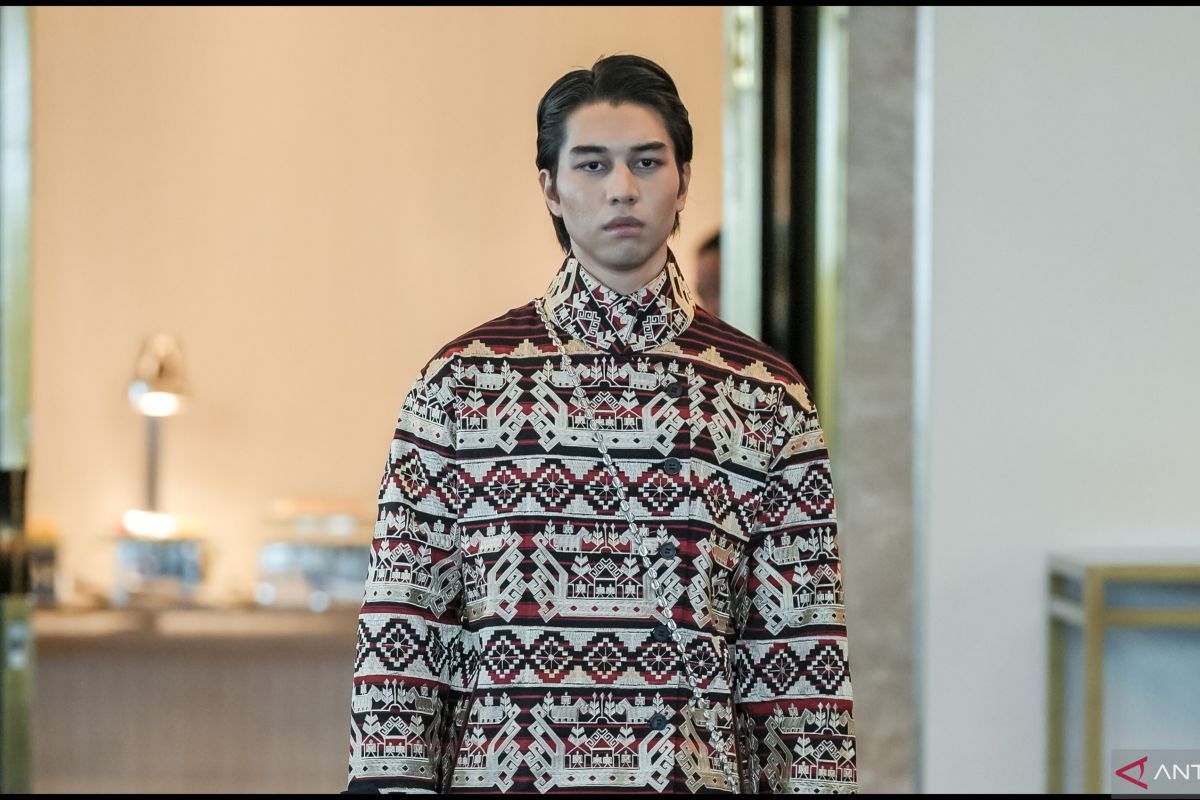
The Ministry of Creative Economy/Creative Economy Agency (Kemenekraf/Bekraf) is encouraging the use of trend forecasting and the protection of intellectual property rights (IPR) to increase the market value and competitiveness of fashion products based on Nusantara traditional textiles in the global market.
Iffah Sa’aidable, Director of Fashion at Kemenekraf/Bekraf, stated that trend forecasting is a vital instrument for designers to transform Nusantara textiles into ready-to-wear products that align with global market tastes without losing their cultural identity.
“The Ministry of Creative Economy recognises the role of trend forecasting in elevating Nusantara textiles, and we are providing support so that local designers’ products are not only globally competitive but also protected by IPR,” Iffah said in a statement received in Jakarta on Tuesday.
According to her, utilising trend forecasting can help designers produce products that possess not only cultural value but are also relevant to market developments, thereby achieving higher competitiveness and selling value at the international level.
On the other hand, Kemenekraf is also encouraging IPR protection for fashion works, including through the facilitation of trademark registration, design copyrights, and motif protections.
This step is considered essential to provide legal certainty for designers’ works when products begin to be marketed abroad, while simultaneously increasing the economic value of the creative assets produced.
Meanwhile, the Indonesian Fashion Chamber (IFC), as a strategic partner of IN2MOTIONFEST x Jakarta Muslim Fashion Week (JMFW), is pushing for trend forecasting to extend beyond the creation of runway collections and be translated into business readiness.
Ali Charisma, Project Officer for IN2MOTIONFEST x JMFW, stated that the curation process is conducted according to international standards to ensure that the displayed collections are ready to enter the global market, through both business-to-business (B2B) and retail schemes.
“With Trend Forecasting as inspiration, designers’ works are not only directed towards runway beauty, but are also directed towards business readiness, costing, pricing, and digital merchandising,” said Ali.
According to Ali, the strengthening of these business aspects is carried out through a series of masterclasses, seminars, workshops, as well as industry forums and summits that are part of IN2MOTIONFEST x JMFW.
With this approach, fashion players are not only required to produce visually appealing products but also to understand cost structures, pricing strategies, and digital marketing so that their products can compete in international markets.
Ali added that this approach is also aimed at building an ecosystem that allows brands, SMEs, and local designers to transform into sustainable, globally-oriented fashion entrepreneurs.
Strengthening both the product and business aspects is part of the effort to ensure Nusantara textiles are positioned not just as cultural products, but as raw materials and identities that can create economic added value through the fashion industry.
This collaborative development will be part of IN2MOTIONFEST x JMFW, held from 14–18 October 2026 at the Jakarta International Convention Centre (JICC), Senayan, Jakarta.
Through this event, Indonesian fashion industry players are being directed to become more connected with buyers and international trade networks, so that the potential of Nusantara textiles can be translated into value-added, export-oriented fashion products.
Source: jawawa.id (https://jawawa.id/newsitem/ministry-of-creative-economy-states-trend-forecasting-drives-export-oriented-traditional-textiles-1790661668)
Originally published by Antara (Indonesian) (https://www.antaranews.com/berita/5762695/kemenekraf-sebut-trend-forecasting-dorong-wastra-berorientasi-ekspor), translated from Indonesian