
Ministry of Creative Economy seeks to expand creative industry market through strategic cooperation with US
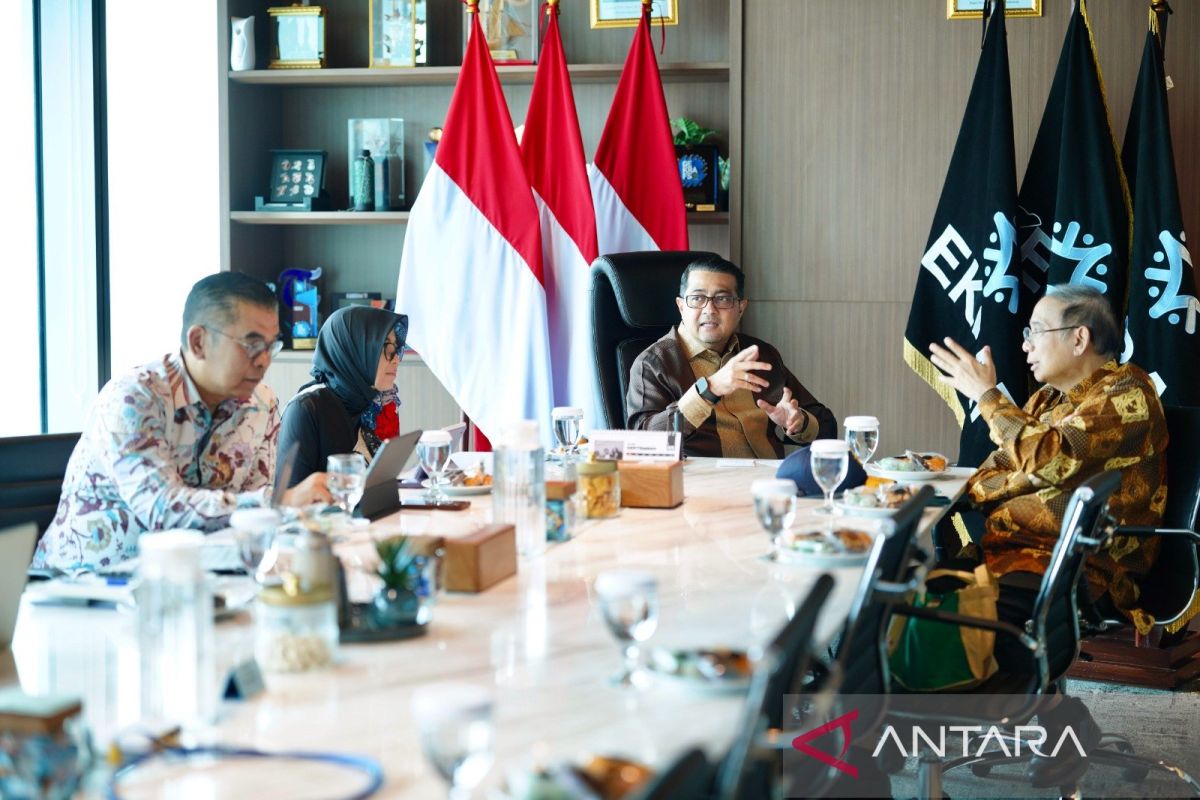
Jakarta (ANTARA) - The Ministry of Creative Economy/Creative Economy Agency (Kemenekram/Bekraf) is following up on opportunities for strategic cooperation with the United States (US) to expand access for Indonesian creative products and industries to the global market.
The Minister of Creative Economy/Head of the Creative Economy Agency, Teuku Riefky Harsya, stated that various subsectors of Indonesia’s creative economy (ekraf) have opportunities for development through collaboration with the US, spanning trade, investment, technology, and creative industry development.
“We are very open to cooperation between Indonesia and the US across various subsectors. Various directorates under the Ministry of Creative Economy are ready to work further with various parties in the US to ensure the follow-up of the Indonesia-US Comprehensive Strategic Partnership,” Riefky said in a statement received in Jakarta on Thursday.
According to Riefky, the US is one of the vital markets for Indonesian creative economy products. Based on data from the Central Bureau of Statistics (BPS) processed by Kemenekraf, the value of Indonesia’s creative economy exports to the US reached 3.31 billion USD during the January-April 2026 period.
These exports primarily originated from the fashion subsector with a value of 2.80 billion USD, followed by crafts at 480 million USD and culinary at 15.55 million USD.
The high export value indicates that there is still significant room to expand the penetration of Indonesian creative products into the US market, including encouraging other subsectors to make larger contributions.
“Through strategic collaboration with the United States as a key partner, we are not only opening export routes for leading subsectors such as fashion and crafts, but also expanding the penetration of other subscale sectors to strengthen the reach of local creative products in the global market,” said Riefky.
In addition to trade, Kemenekraf is also exploring the strengthening of creative industry cooperation with US business actors. One such initiative is the planned signing of a Memorandum of Understanding (MoU) with the Hollywood Chamber of Commerce (HCC).
The cooperation covers nine strategic areas, including creative economy development, film, television and media production, investment and trade, protection of intellectual property and trademarks, technology and innovation, as well as global collaboration.
The signing of the MoU with the HCC is targeted to take place alongside the World Conference on Creative Economy (WCCE) 2026, which will be held in Jakarta from 21-23 October 2026.
WCCE 2026, themed “Inclusively Creative: Collective Continuity,” is expected to be attended by over 8,000 participants from more than 50 countries. Kemenekraf is also exploring the presence of high-level US delegations, creative industry players, as well as technology and artificial intelligence (AI) companies.
Riefky noted that the forum could serve as a space to bring together governments, industry players, and international stakeholders to drive concrete cooperation in the creative economy sector.
Meanwhile, the Indonesian Ambassador to the US, Dwisuryo Indroyono Soesilo, expressed interest in the development of Indonesia’s creative economy, which encompasses 21 subsectors.
“We hope to identify more collaboration opportunities and develop concrete cooperation to advance the creative economies of both nations together,” said Indroyono.
Previous Indonesia-US creative economy cooperation has been conducted through several programmes, including the US Business for Indonesia: Creative Economy Forum 2025, international intellectual property rights protection workshops, the AI for Creative Economy Hackathon with Amazon Web Services, and digital talent development through Microsoft.
This cooperation serves as capital for Kemenekraf to expand partnerships with the US, particularly in driving Indonesian creative products, talent, and intellectual property into the global value chain.