
Ministry of Cooperatives Strengthens Cooperative-Based Mining Transformation in NTB
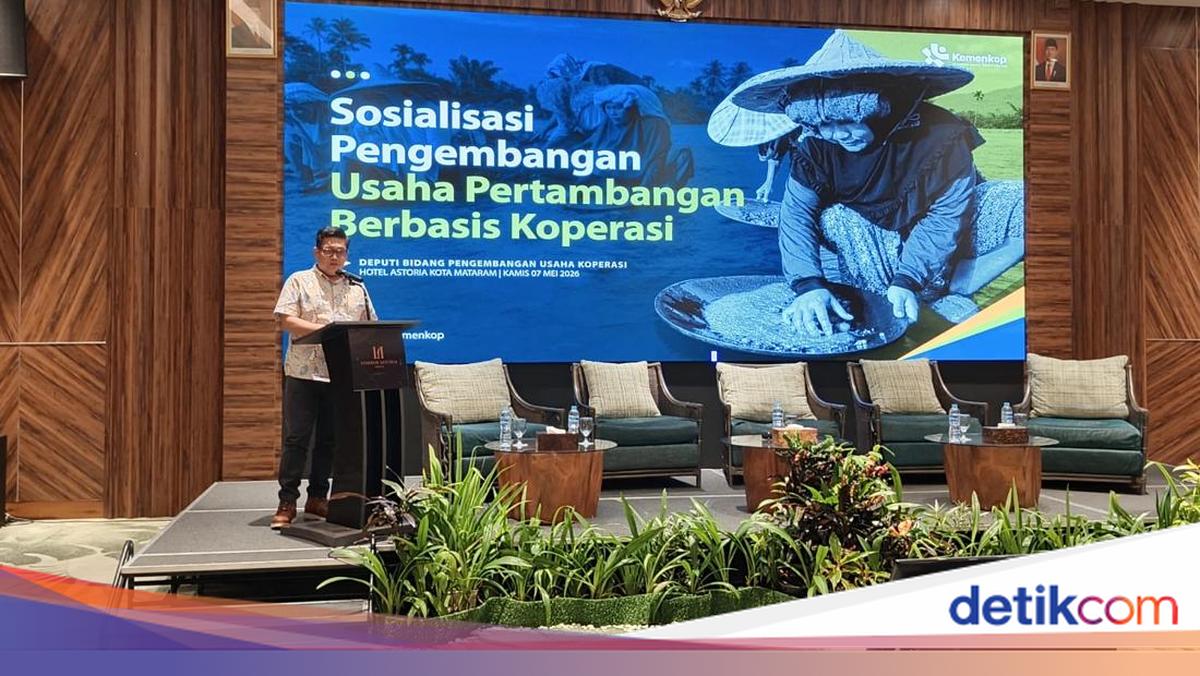
This activity represents a strategic step in promoting the transformation of cooperatives into modern mining cooperatives capable of managing mining operations legally, professionally, and sustainably,” said Deputy for Cooperative Business Development at the Ministry of Cooperatives, Panel Barus, in a written statement on Thursday (7/5/2026).
According to Panel, West Nusa Tenggara is one of the regions with vast potential for mineral and coal resources (minerba) in Indonesia. Moreover, NTB is known to have reserves of gold and copper, particularly in West Sumbawa, as well as other mineral potentials such as manganese, iron sand, rocks, and people’s mining commodities scattered across various districts like West Lombok, Sumbawa, Dompu, and Bima.
Furthermore, the Ministry of Cooperatives continues to encourage the province of NTB to become a national model in cooperative-based people’s mining governance. This aims to ensure that mining management operates legally, equitably, and sustainably in accordance with good mining practices (Good Mining Practice).
Based on data from the Central Statistics Agency (BPS), the mining sector contributes around 15% to more than 20% of NTB’s GRDP. In certain conditions, it can reach about 21%, making it the second largest sector after agriculture.
“In nominal terms, this sector’s contribution is estimated to reach tens of trillions of rupiah per year, demonstrating its strategic role in driving the regional economy,” said Panel.
Therefore, Panel emphasised that strengthening the role of cooperatives in the mining sector is part of the government’s strategic agenda.
“Based on Government Regulation Number 39 of 2025 on the Implementation of Mineral and Coal Mining Business Activities, priority for Mining Business Work Areas (WIUP) can be granted to cooperatives, small and medium enterprises (SMEs), or business entities owned by religious community organisations,” said Panel.
Panel added that the regulation stipulates that cooperatives can manage WIUP for metallic minerals and coal with an area of up to 2,500 hectares.
“This provision shows that cooperatives are no longer positioned in a limited manner, but as mining business actors with medium-scale capacity,” stated Panel.
In line with this, the Ministry of Cooperatives has issued Ministerial Regulation Number 12 of 2025 on the Implementation of Mineral and Coal Mining Business Activities by Cooperatives.
“This regulation encourages cooperatives to transform into professional, business-oriented mining actors, strengthening institutions and governance (good cooperative governance), enhancing technical, managerial, and capital capacity, building strategic partnerships with SOEs, private entities, and investors, as well as managing mining operations sustainably and with environmental awareness,” explained Panel.
Within this policy framework, cooperatives are positioned as aggregators of communities to gather and organise people’s miners, mining business entities with legality and business capacity, as well as instruments for economic empowerment to promote equitable distribution of natural resource benefits.
This socialisation event was attended by 50 cooperatives from various regions in NTB, reflecting the significant potential of cooperative institutions in managing cooperative-based mining businesses, with speakers from the Ministry of Cooperatives, the Ministry of Energy and Mineral Resources, the Provincial Cooperative Office of NTB, and the Provincial Energy and Mineral Resources Office of NTB.
The invitees and participants included representatives from central and regional governments, the Central and Regional NTB Cooperative Councils (Dekopin), the Indonesian People’s Mining Association (APRI), as well as mining cooperative boards from various districts/cities in West Nusa Tenggara Province.
Participants received materials on the cooperative perspective in mining businesses, permitting mechanisms and operational technicalities, regional mining potentials, and regional government support in optimising cooperative-based mining management in NTB.
“We hope that through this activity, mining cooperatives will emerge that can optimally manage mineral resources, reduce illegal mining practices, improve the welfare of members and the community, and provide tangible contributions to the regional economy,” Panel concluded.