
Ministry of Basic and Secondary Education: Three Indonesian Geoparks Receive UNESCO "Green Card"
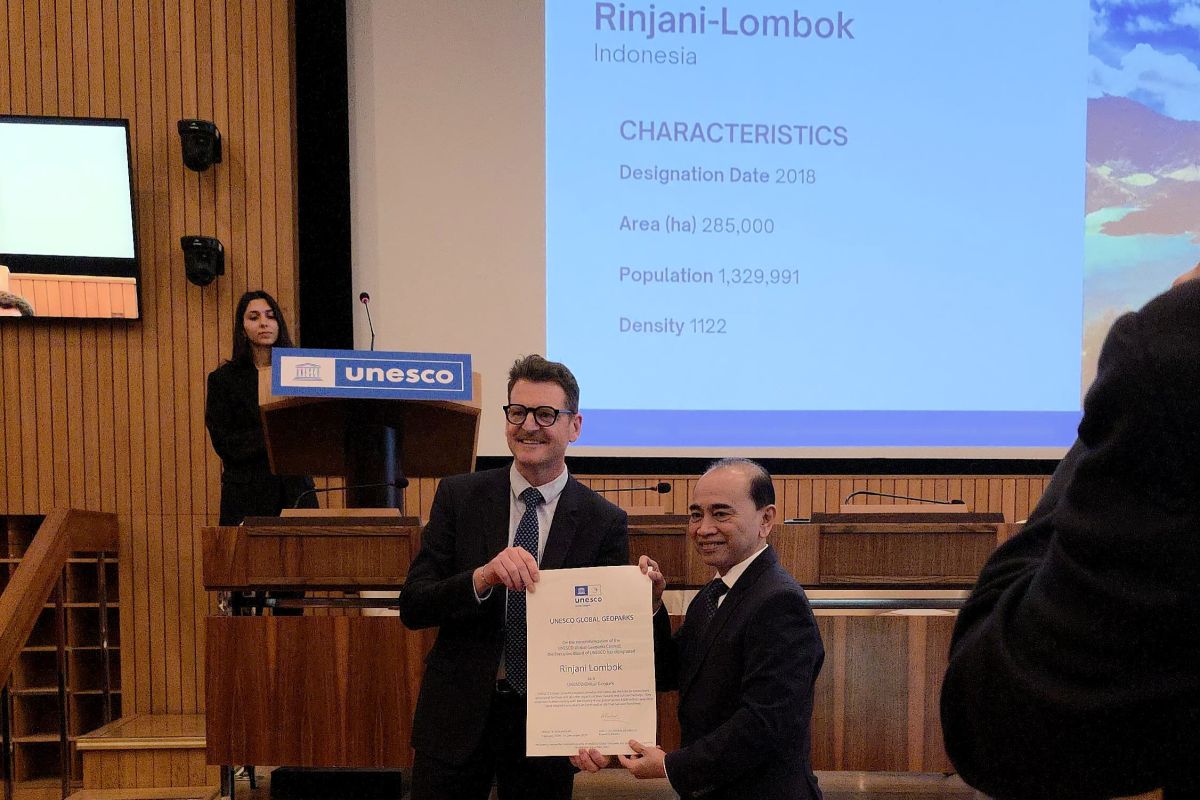
Jakarta (ANTARA) - The Ministry of Basic and Secondary Education (Kemendikdasmen) has stated that three Indonesian geoparks have received “Green Card” status from the United Nations Educational, Scientific and Cultural Organisation (UNESCO).
UNESCO grants “Green Card” status to a number of UNESCO Global Geoparks (UGGp) that have successfully passed the revalidation process, including Rinjani Geopark, Toba Caldera, and Ciletuh among others.
The Acting Chair of the Indonesian National Commission for UNESCO (KNIU) under the Ministry of Basic and Secondary Education, Ananto Kusuma Seta, expressed appreciation in a written statement in Jakarta on Thursday for the successful revalidation of UGGp for Rinjani, Toba Caldera, and Ciletuh–Pelabuhanratu.
“As a country with the third-largest number of UGGp in the world, Indonesia has proven its ability to maintain and manage them for sustainable development. Congratulations and thank you to all parties who contributed to this proud achievement,” said Ananto.
He explained that UGGp are single and integrated geographical areas where sites and landscapes with international geological significance are managed through a holistic concept encompassing protection, education, and sustainable development.
The three Indonesian UGGp successfully completed the revalidation process in 2025.
On the same occasion, UNESCO Chief of the Section for Earth Sciences and Geoparks, Kristof Vandenberghe, offered appreciation while highlighting several major challenges currently faced by the global UGGp network.
“The main challenges reported by Geoparks include funding and financial sustainability, human resource capacity, access to expertise and international collaboration, education and public outreach capacity, government and institutional capacity, as well as infrastructure and accessibility,” said Kristof Vandenberghe.
Kristof Vandenberghe also expressed UNESCO’s readiness to support the sustainable development of UGGp, including training and capacity building, international collaboration facilities, access to funding sources, operational guidelines and tools, as well as stronger visibility and advocacy for all members of the global network.