
Ministry of Basic and Secondary Education Pushes for Teaching at the Right Level After 2026 Academic Competency Test
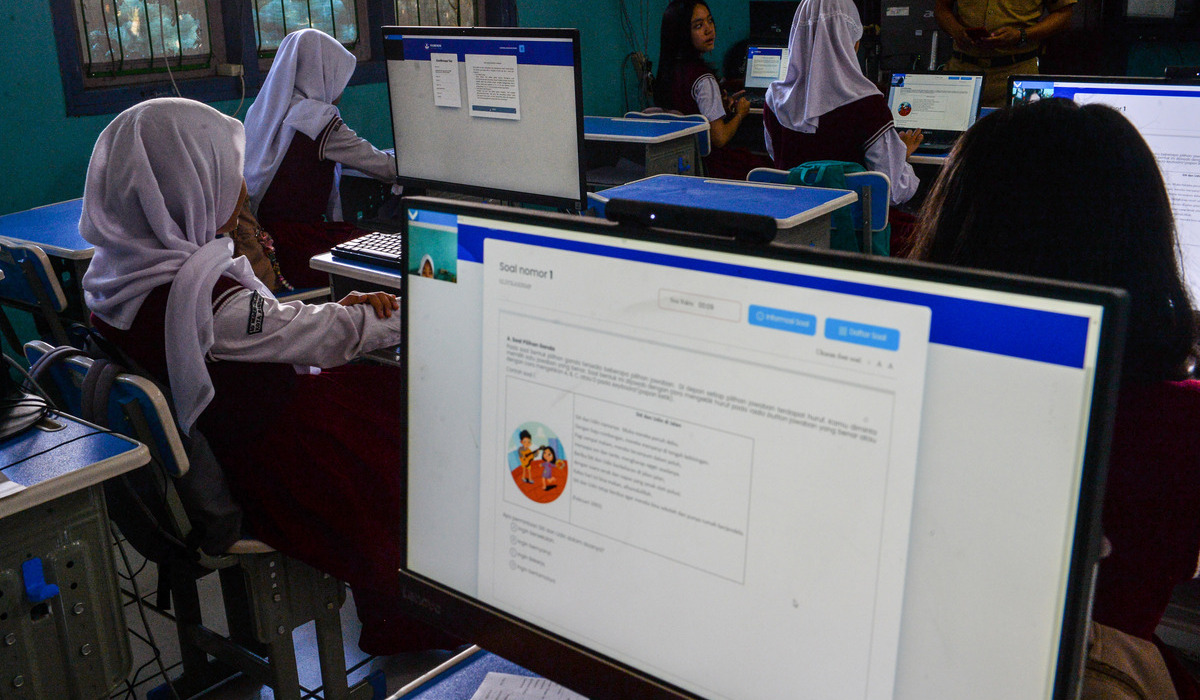
The Ministry of Basic and Secondary Education (Kemendikdasmen) has emphasised the importance of implementing the Teaching at the Right Level (TaRL) approach following the 2026 Academic Competency Test (TKA) results. This step aims to address the wide variation in student abilities across regions and schools in Indonesia.
Toni Toharudin, Head of the Education Standards, Curriculum, and Assessment Agency (BSKAP) at Kemendikdasmen, explained that the extensive data from the 2026 TKA serves as a crucial instrument for mapping national learning quality.
“Regarding Teaching at the Right Level, teachers can understand their students’ initial conditions and how to improve their learning quality,” Toni stated during the 2026 TKA press conference in Jakarta on Tuesday (26 May).
In response to the assessment results, the government plans to revise teacher training methods to better align with students’ real-world needs. Toni noted that training will focus on teacher experiential learning methods.
Additionally, the Directorate General of Teachers and Education Personnel (Ditjen GTK) has begun preparing mentors, supervisors, and school principals to act as mentors in improving learning quality.
“This will be implemented as soon as possible to change the training approach for our teachers,” he stressed.
Meanwhile, Rahmawati, Head of Kemendikdasmen’s Education Assessment Centre, clarified that the 2026 TKA results were not designed to label negatively or rank regions and schools. Instead, the data should form the basis for differentiated learning strategies.
“If there’s a stark contrast, the same teaching strategy will miss the mark. Differentiated learning strategies are needed,” Rahmawati said.
She highlighted that the TKA results revealed significant disparities: some regions have a majority of students in the ‘good’ category, while others have most students in ‘below average’ or ‘adequate’ categories.
Schools are urged to use the TKA results as an initial assessment to map new students’ abilities. If most students are in the ‘good’ category, schools can proceed directly with Year 10 curriculum. However, if many are struggling, teachers must revisit essential concepts.
According to released data, the national average for Indonesian language at primary and junior secondary levels is around 60. Mathematics scores, however, remain a significant challenge, particularly at SMP level with an average of approximately 40.
The 2026 TKA achieved a high participation rate of 98.51%, involving over 8.7 million students nationwide.