
Ministry of Basic and Secondary Education Provides Focus on Enhancing Teacher Competency and Welfare in Indonesia
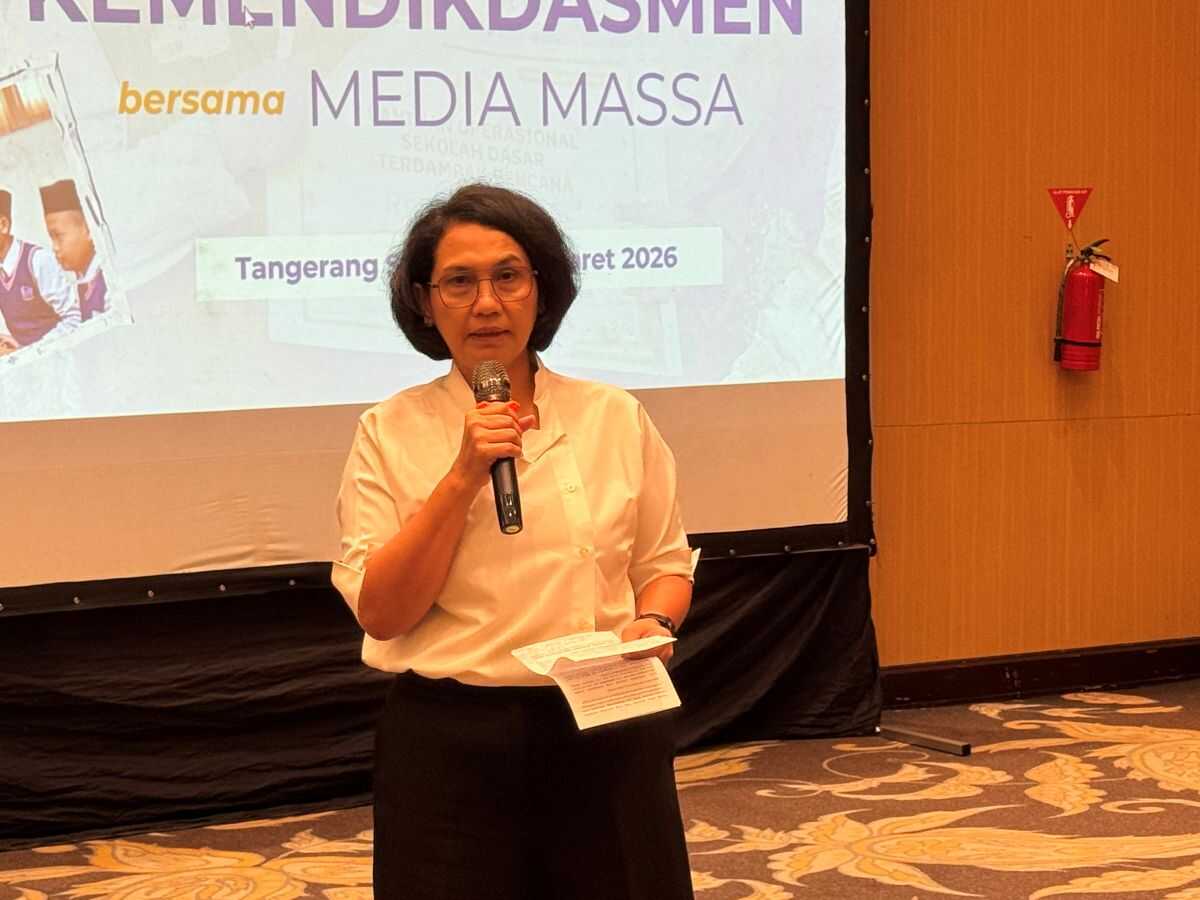
The Secretary-General of the Ministry of Basic and Secondary Education, Suharti, has affirmed that the ministry is providing considerable attention to efforts aimed at improving teacher competency and welfare in Indonesia, encompassing both civil servant (ASN) and non-civil servant educators.
“For civil servants, we provide various allowances, professional allowances, special teacher allowances, and additional income through non-physical direct allocation to regions (DAK non-fisik), and these have already been allocated,” she stated during a Policy Dialogue event between the Ministry and media representatives in Tangerang on Sunday (1 March).
From the central government budget, the Ministry of Basic and Secondary Education has allocated Rp14.1 trillion this year for various teacher allowances, including professional allowances for non-civil servant teachers at Rp11.58 trillion, special allowances for non-civil servants at Rp723.5 billion, and incentives for non-civil servant teachers at Rp1.8 trillion.
“In 2025 the total was only Rp12.48 trillion (for non-civil servant teacher incentives), so this represents a substantial increase,” Suharti explained.
For regional governments, teacher allowances for civil servants in 2026 have been allocated at Rp74.76 trillion, an increase from 2025’s Rp70.06 trillion, encompassing professional teacher allowances, special teacher allowances, and additional teacher income funds.
Suharti emphasised that the Ministry’s other priority this year is strengthening the Indonesia Smart Programme (PIP) by expanding its coverage, extending beyond primary, junior secondary, senior secondary, and vocational schools to include kindergarten level.
“We have proposed and allocated budget for 888,000 kindergarten children to receive PIP assistance in 2026,” she noted.
Another priority involves continuing the Education Unit Revitalisation Programme, which will receive additional budget allocation from the President currently under discussion with the Finance Ministry.