
Ministry of Basic and Secondary Education confirms TKA grading method will not disadvantage students
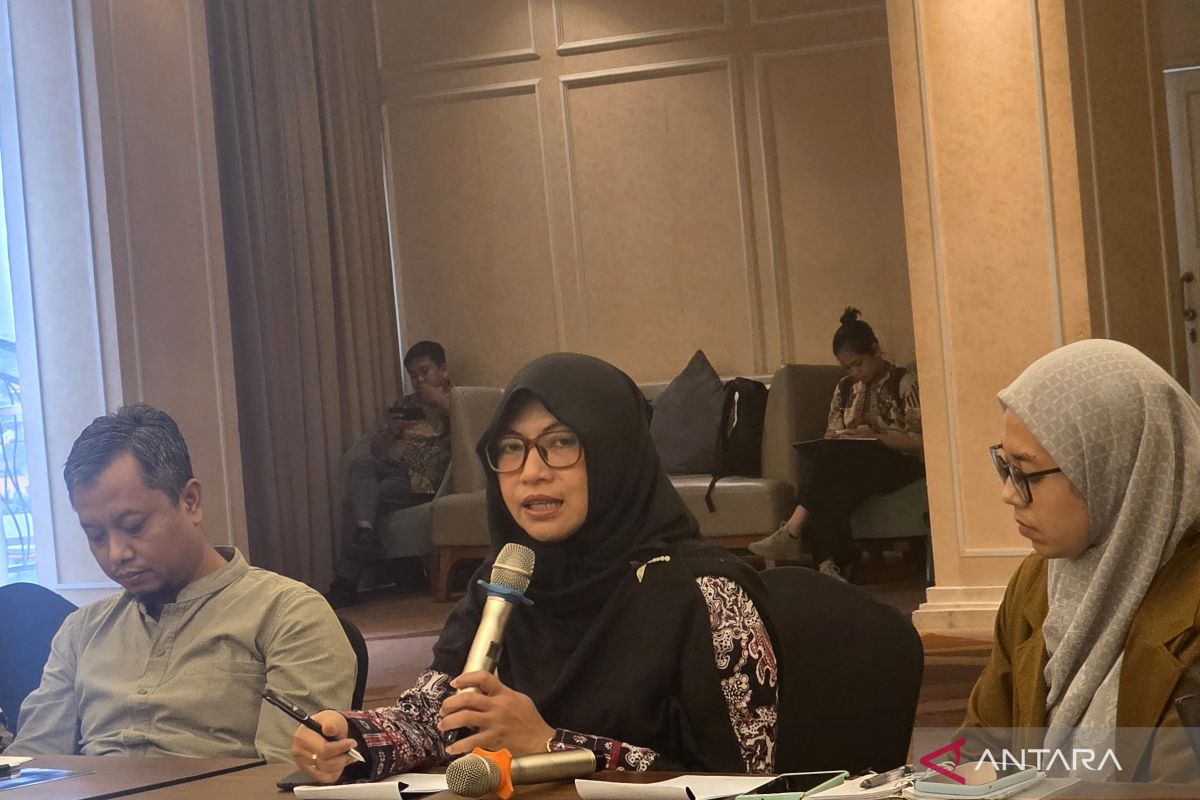
Jakarta - The Ministry of Basic and Secondary Education (Kemendikdasmen) has confirmed that the Academic Ability Test (TKA) grading method will not disadvantage any test-takers, as it has been adjusted to align with learning processes in each province. Rahmawati, Head of the Education Assessment Centre (Pusmendik) at Kemendikdasmen, stated that for primary and secondary school levels, 70% of TKA questions are developed by the central government and 30% by regional authorities. ‘Thus, each province has different questions, and before scoring, we verify and validate all questions,’ Rahmawati said during a media briefing on TKA results for junior high school (SMP/MTs) and primary school (SD/MI) levels in Jakarta on Tuesday. ‘If a student receives 30 questions and answers 15 correctly, their score is 50. If they answer 27 correctly, it becomes 90. It’s similar to the old National Learning Evaluation (Ebtanas) system, where percentage correct is transformed into a 0-100 scale,’ she added. Rahmawati noted the ministry has empirical data to assess each question, question set, and student responses. This statistical data measures the difficulty level and variation of the test packages. TKA result processing takes these statistics into account, with checks conducted before and after the test to ensure no student is unfairly advantaged or disadvantaged. ‘This is to ensure no student is disadvantaged by receiving an extremely difficult question set or advantaged by an easier one,’ Rahmawati said. Following verification and validation, Kemendikdasmen proceeds with scoring. In addition to numerical scores, students receive achievement categories listed in the Academic Ability Test Results Certificate (SHTKA). ‘These categories indicate whether performance is inadequate or satisfactory. The thresholds for these categories are determined using academically rigorous standard-setting methods involving 140 subject teachers from across Indonesia,’ she explained. For primary and secondary TKA, a new ‘exceptional’ category has been introduced for students scoring 95 or above. Rahmawati emphasised that these categories aim to help students reflect on their abilities. If results are unsatisfactory, teachers and parents can develop strategies to improve learning in subsequent levels. ‘The primary focus of TKA is not just the scores and categories, but driving improvements and reflections on teaching strategies,’ Rahmawati said. As a reference, TKA categories for primary and secondary school subjects are: ‘Inadequate’ for scores below 50, ‘Satisfactory’ for 50 to less than 76.67, ‘Good’ for 76.67 to 94.99, and ‘Exceptional’ for 95 and above.