
Ministry of Basic and Secondary Education Appreciates Pekijing Literacy Village in Serang City
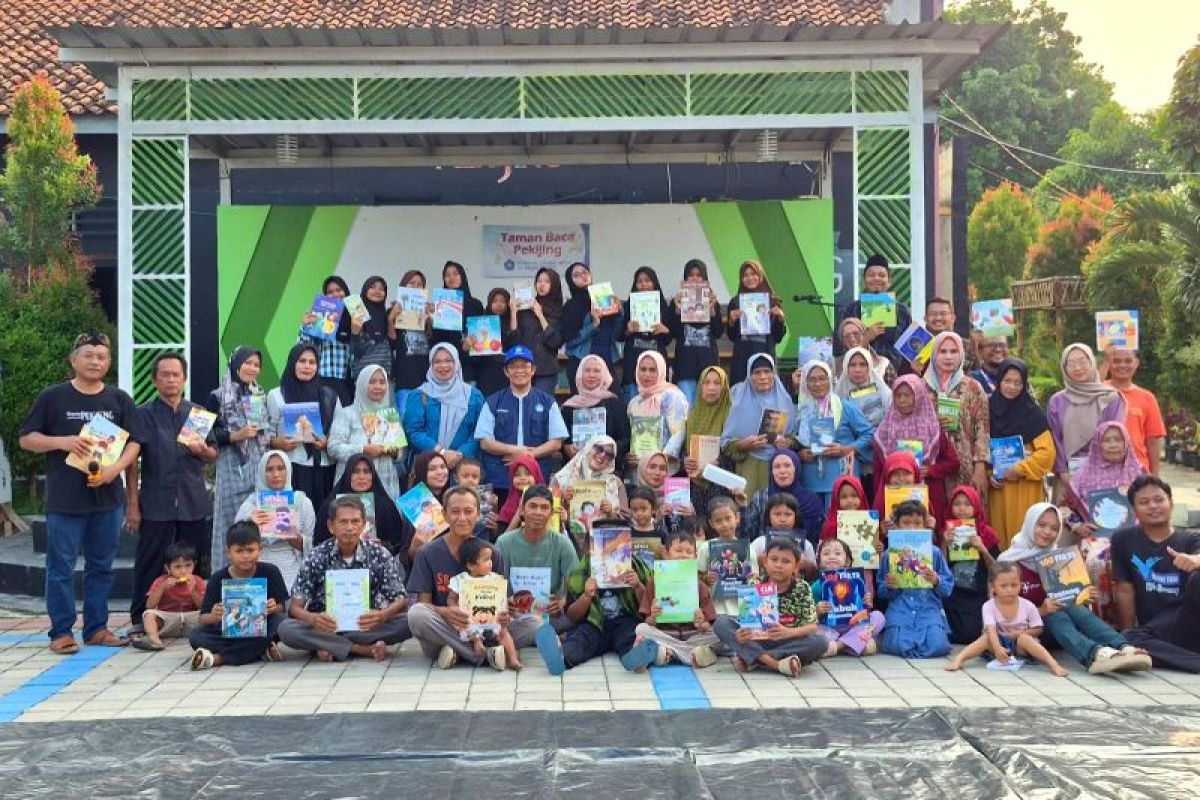
Jakarta (ANTARA) - The Ministry of Basic and Secondary Education (Kemendikdasmen) appreciates the initiative of the Pekijing Literacy Village in Serang City, Banten Province, which strengthens local community literacy based on community and family foundations.
Head of the Language Development and Cultivation Agency (Badan Bahasa) of Kemendikdasmen, Hafidz Muksin, in a written statement in Jakarta on Wednesday, emphasised that improving and strengthening literacy cannot be done by the government alone, but requires collaboration with society, communities, and families.
Therefore, he said, the existence of community reading gardens is considered to play an important role as government partners in building a reading culture in the community environment.
“We see that the Pekijing Literacy Village demonstrates how society can build a living and enjoyable literacy ecosystem. Children, parents, and the community are present together in various activities that encourage reading culture and creativity in their environment,” said Hafidz.
He explained that in the village, small box houses containing reading books have been built in residents’ yards, which can be accessed by anyone without binding regulations.
According to Hafidz, the good practices carried out by the Pekijing Literacy Village can serve as inspiration for other regions in providing literacy spaces that are close, open, and friendly to the community.
He added that his side provides attention and support to such literacy communities because their existence is an important part of strengthening community literacy.
“The presence of literacy communities in the form of community reading gardens and village libraries in Pekijing can become an example as well as a driver of reading culture in the surrounding environment,” said Hafidz.
In the Pekijing Literacy Village, literacy grows not only through book reading activities, but also through social interactions involving all age groups.
At the same time, the Coach of the Pekijing Literacy Village, Edi Suryadi, explained that the provision of books in residents’ homes was initially doubted whether it could run effectively and be accepted by the community.
However, this simple approach actually makes the community feel closer to books.
“When books are placed in front of houses and are easily accessible with attractive titles, the community starts to dare to hold and read books. From there, we realise that the community actually needs reading materials that are close to their lives,” he said.
From that experience, residents then independently developed the provision of reading materials by building book houses on the side of the village road so that they can be utilised by the community as well as visitors who come.