
Ministry of ATR Emphasises Data Strengthening in Strategic Commodities Bill
Jakarta (ANTARA) - The Ministry of Agraria and Spatial Planning/National Land Agency (ATR/BPN) has emphasised the importance of strengthening data within the preparation of the Strategic Commodities Bill.
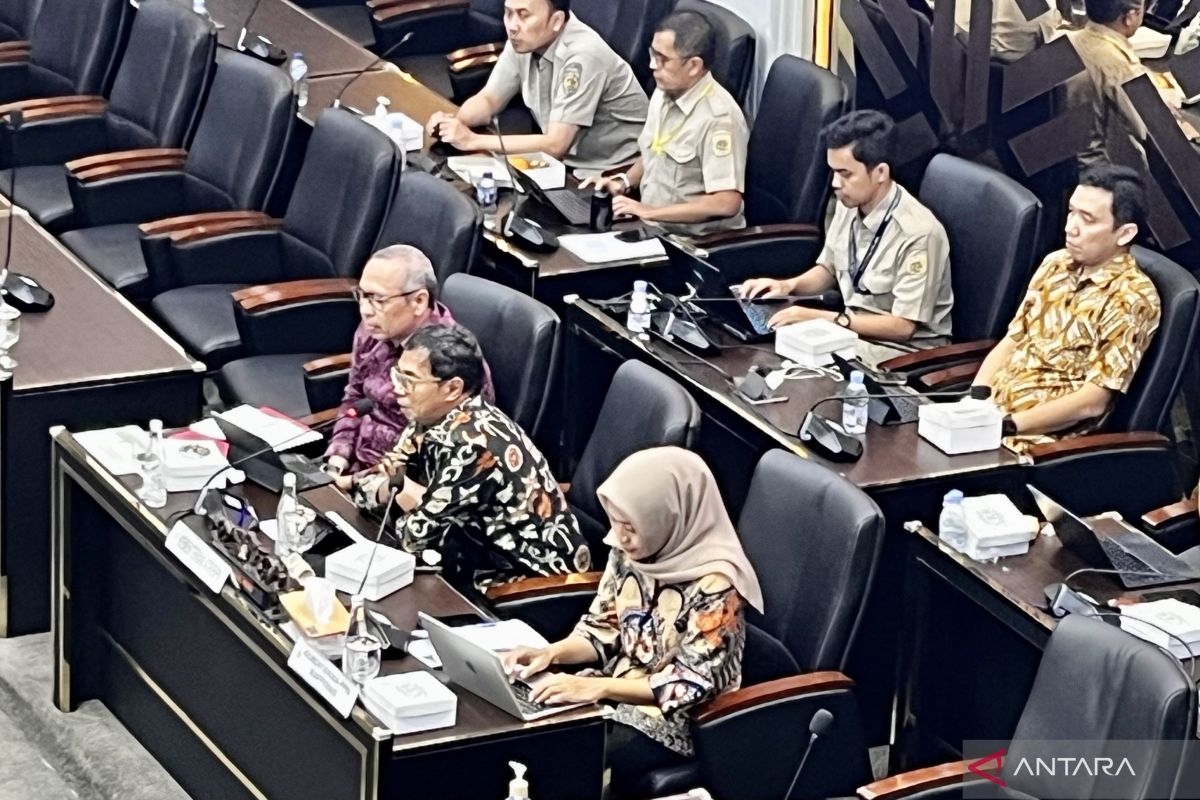
“We from the Ministry of ATR/BPN strongly support this Strategic Commodities Bill. However, regarding the input requested, our first proposal is that we begin with data strengthening,” stated Virgo Eresta Jaya, Director General of Land and Spatial Survey and Mapping (SPPR) at the Ministry of ATR/BPN, during a meeting with the House of Representatives (DPR RI) Legislative Body at the Parliament Complex in Senayan, Jakarta, on Monday.
Virgo believes that relevant ministries and agencies must be mandated to ensure transparency and the accuracy of actual and factual data, so that the regulations currently being drafted can be finalised in the interest of the public and stakeholders.
“In our opinion, every institution should be obligated to publish its data. We ourselves have already published this data, which can be accessed via bhumi.atrbpn.go.id,” he said.
He also encouraged the strengthening of integrated spatial-based land and information management as a foundation for the planning, location determination, and development of strategic commodities. To this end, Virgo proposed that the policy model or instruments within the Bill focus on the digitalisation of land data (land availability and land sustainability), the identification of potential land for strategic commodities, and the integration of land, spatial planning, and thematic strategic commodity data.
“Identification is necessary. Currently, our data is limited to land rights, land value, spatial planning, and development. If we add river flow data, rainfall data, disaster-prone area data, and various other datasets, it would be much better,” said Virgo.
Furthermore, he recommended that the Bill’s instruments include the strengthening of protection for strategic commodity land (such as Sustainable Food Agricultural Land/LP2B), Strategic Commodity-Based Zoning, and the integration of Regional Spatial Plans (RTRW), Detailed Spatial Plans (RDTR), and licensing. This, according to Virgo, is expected to strengthen the protection and designation of land use to guarantee the sustainability of strategic commodities.
Additionally, the Ministry of ATR/BPN proposed other policy models, including the optimisation of abandoned land use, land use consolidation, minimum ownership area through joint ownership schemes, reviews of absentee ownership versus licensing, and land-related fiscal incentives and disincentives. These steps are expected to strengthen land utilisation in accordance with regional potential and carrying capacity to support the development of strategic commodities.