
Ministry of Agriculture's Directorate General of Horticulture Enhances Video-Branding Skills in the Digital Era
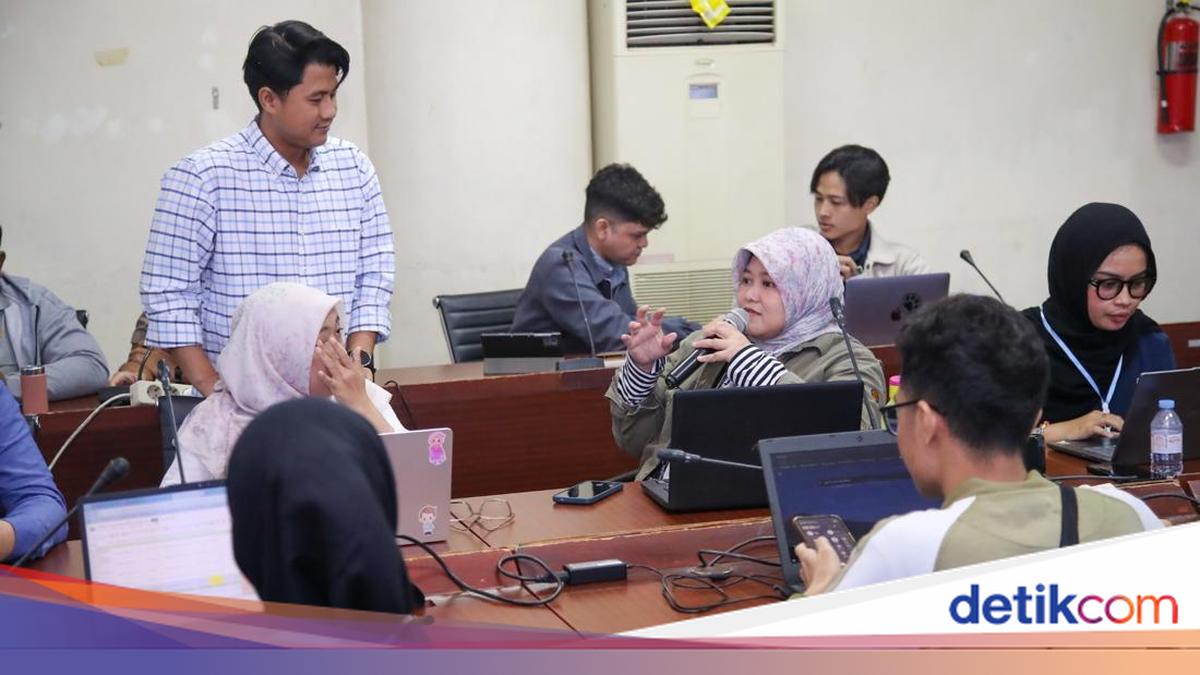
The Directorate General of Horticulture of the Indonesian Ministry of Primary Affairs (Kementan), in collaboration with detikcom, continues to enhance the capacity of human resources in delivering government programme information to the public. One such initiative is the intensive training ‘The Classroom by detikcom’, held from 23-25 September 2026.
During the training, participants received instruction not only on journalism and news writing but also on developing informative and engaging video content for the digital era through a Video Creation session. This session was designed to support the participants’ ability to produce communicative and creative videos that meet the publication needs of the Directorate General of Horticulture.
Head of Brand Studio at detikcom, Okta Marfianto, explained that the session focused on maximising audio-visual elements in the video-making process. “This morning, we conducted a classroom session on video, specifically how to maximise audio-visuals during production. My hope is great for them, so they can step up the quality of their content, from pre-production and production to post-production,” Okta stated at Wisma Pertanian Cipayung, Bogor, on Thursday (24/9/2026).
Okta noted that a common mistake in content creation is capturing as much footage as possible first, only to figure out the story during the editing process. In reality, production should begin with planning. Content creators must first determine the type of video they wish to create, the message to be conveyed, and the target audience.
According to Okta, the pre-production process is a vital foundation for both short-form social media content and documentaries. A framework can be designed using four main elements: Character, Reason, Solution, and Goals. These four elements help creators determine the narrative direction before filming begins. Even during spontaneous reporting, this framework serves as a guide for formulating interview questions and structuring the storyline.
During reporting, questions can be developed based on the background of an activity, the reason for a programme, the solutions offered, and the expected impact on the community. This ensures that public relations officers maintain a clear vision of the necessary field material. “Then, what is the goal? What is the impact on the community? These can be general questions that are already prepared in your head, even for spontaneous coverage, using these four elements,” Okta added.
Okta hopes that participants can improve the quality of their work, especially since government agency content must compete with various other platforms that have already advanced visually and creatively. “I have high hopes that the content they produce next will have more value and better image quality,” he said.
Beyond pre-production, the session also dissected how to make production and post-production more engaging. For government public relations, these skills are relevant because information regarding government programmes and activities must be packaged according to the character of the audience and the platforms used.
Digital Storytelling for Institutions
In addition to technical video production skills, ‘The Classroom’ participants also received training on strategies for building narratives for social media during the ‘Strategic Design, Storytelling & Social Media’ session. This session provided an understanding of message packaging and narrative development to strengthen public communication channels.
Lead Social Media Analyst and New Program at detikcom, Octavianus Tri Endiarto, explained that content needs a ‘hook’ to capture audience attention. Once attention is secured, the content must maintain viewer interest until the end and provide added value. With this approach, the public is expected not only to view and ‘like’ the content but also to understand the message and be encouraged to interact with it.
“So, people don’t just see content passing by, like ‘oh, they have this activity,’ but they understand that the activity actually has an impact or is for whom?” explained Endik.
Endik added that content creators need to explore information from the audience’s perspective. Thus, the message does not stop at reporting an activity but also explains the context, benefits, and the parties affected. In addition to understanding the audience, participants were equipped with various formulas to assist in the content crafting process. These formulas can serve as an initial framework before being developed through various tools and social media research.
Endik hopes the provided formulas will make it easier for participants to determine content structure, especially when responding to trending issues or topics. “Hopefully, we shared various formulas today. I hope these formulas will be useful in simplifying their work when crafting content. They won’t be confused about the structure or how to speak; they can use these formulas and elaborate them with various tools,” said Endik.
Research is also a crucial part of the process. According to Endik, public relations officers can monitor what is being widely discussed by the public to identify ‘pain points’ or issues of concern to the audience. From there, information can be elaborated and delivered effectively.
Source: jawawa.id (https://jawawa.id/newsitem/ministry-of-agricultures-directorate-general-of-horticulture-enhances-video-branding-skills-in-the-digital-era-1790654222)
Originally published by detikcom (https://news.detik.com/berita/d-8683732/ditjen-hortikultura-kementan-asah-skill-video-branding-di-era-digital), translated from Indonesian