
Ministry of Agriculture urges businesses to accelerate feeder cattle imports
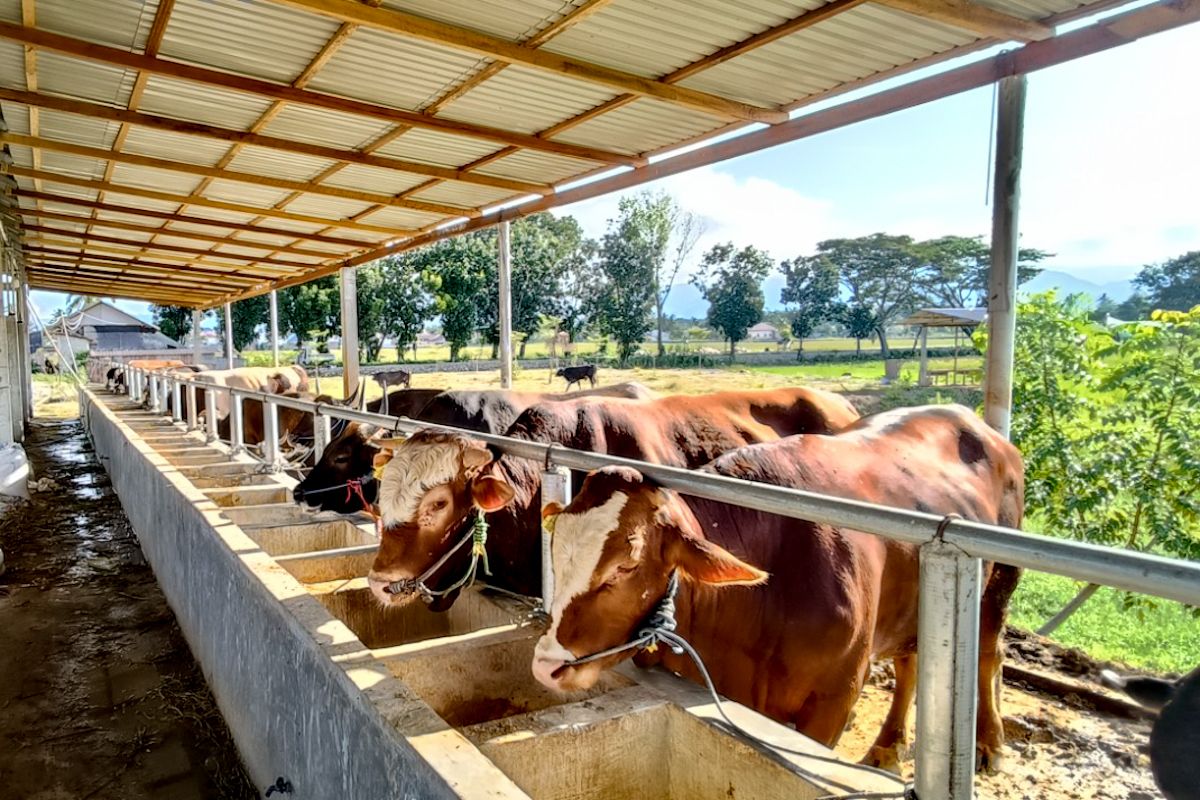
The Ministry of Agriculture is encouraging businesses to accelerate the import of feeder cattle to strengthen national meat availability, maintain supply stability, and support sustainable food security.
Director General of Livestock and Animal Health at the Ministry of Agriculture, Agung Suganda, stated that businesses still have time until the end of September 2026 to optimise the realisation of feeder cattle imports according to established commitments. “We urge all importing businesses to accelerate the realisation of feeder cattle imports in line with the commitments that have been set. There is still time to increase realisation,” Agung said in Jakarta on Saturday.
He emphasised that this is important so that the realisation of imports does not fall below the previous year’s level. “This is very important in maintaining the availability of national beef supply and also serves as one of the government’s evaluation indicators,” he stated.
Agung explained that the current national beef supply is supported by three main sources: production from the slaughter of local cattle and buffalo, which remains the largest contributor; the import of live cattle (feeder cattle) that are fattened and slaughtered domestically; and imports of beef and buffalo meat to complement national needs.
He stressed that the government’s priority remains increasing local cattle and buffalo production as the backbone of national meat supply. However, to maintain supply balance and price stability, the government also manages the import of feeder cattle and meat in a measured manner according to needs.
These efforts were discussed during a monitoring and evaluation meeting held by the Directorate General of Livestock and Animal Health with importing businesses online on Friday, 26 June. According to Agung, accelerating the import of feeder cattle is part of a short-term strategy to maintain supply continuity. In the medium and long term, the government continues to strengthen programmes to increase cattle and buffalo populations through breeding, animal health, livestock investment, and empowering smallholder farmers as the foundation for food self-sufficiency.
Based on data from the National Commodity Balance System and confirmation from businesses as of 26 June 2026, the realisation of feeder cattle imports reached 180,371 head, or approximately 25.8 percent of the national target of 700,000 head. This figure is expected to increase as the realisation period runs until the end of 2026.
Director of Animal Health at the Directorate General of Livestock and Animal Health, Hendra Wibawa, added that the government continues to monitor developments in the field while assisting businesses so that targets can be achieved on schedule. “There is still time in July, August, and September to accelerate realisation in the third quarter,” he said. He expressed hope that all businesses would demonstrate their best performance in fulfilling the established import commitments.
Hendra added that the achievement up to September will serve as a basis for evaluating business performance and projecting realisation capabilities for 2027. The Ministry of Agriculture emphasised that maintaining the national beef supply requires collaboration from all stakeholders. The government will continue to strengthen local cattle production through breeding, productivity improvements, investment, and empowering smallholder farmers, while ensuring that the management of feeder cattle imports and beef imports is carried out in a measured manner to maintain supply balance, price stability, and affordability for the public.
This synergy is expected to become the foundation for a more independent, competitive, and sustainable Indonesian livestock industry. Chairman of the Advisory Board of the Indonesian Beef Cattle Business Association, Didiek Purwanto, confirmed that its members are ready to accelerate realisation according to the set targets. “We will mobilise all Gapuspindo members to realise this commitment so that the established targets can be achieved,” Didiek said.