
Ministry of Agriculture: Smallholder palm oil replanting programme faces farmer participation hurdles
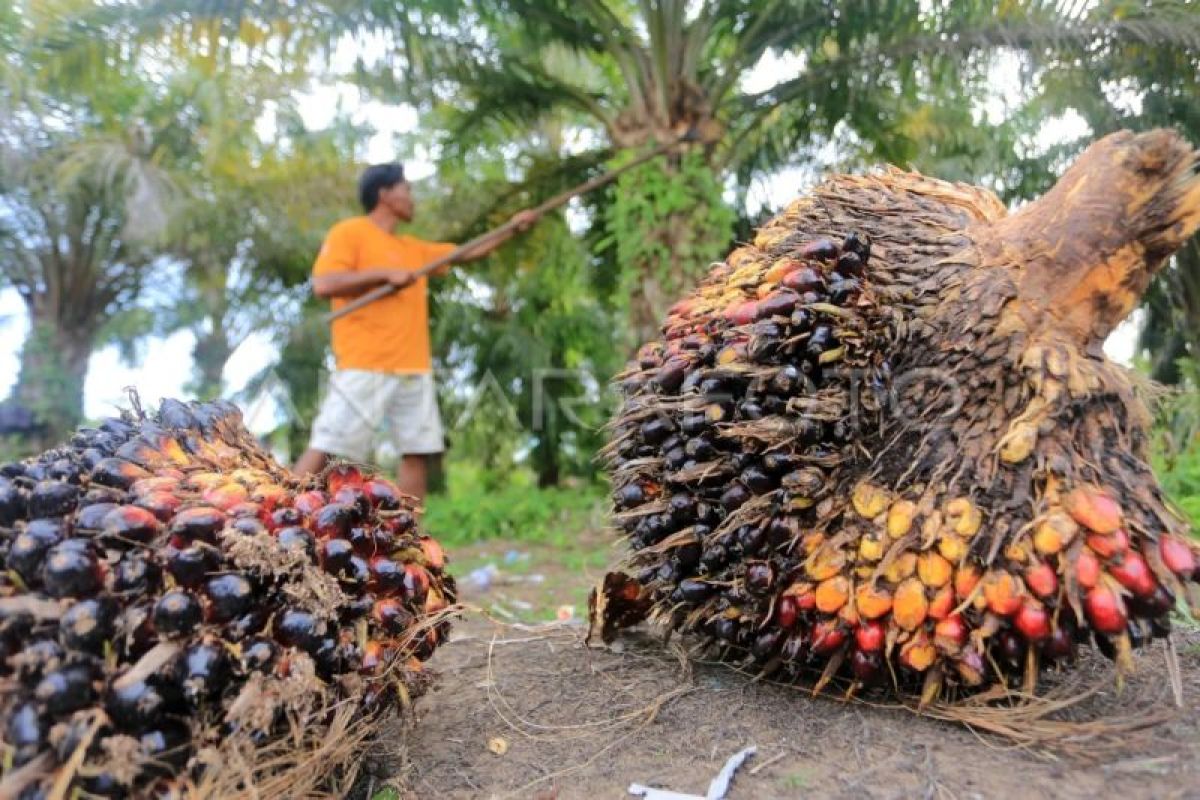
Jakarta — ANTARA reported that the Palm Oil Replanting Program for Smallholders (PSR) is still facing a number of field obstacles, notably because farmers are reluctant to participate, especially when palm oil prices are high, a senior official at the Ministry of Agriculture said. Iim Mucharam, Director of Oil Palm and Palmae Crops at the Directorate General of Plantations, Ministry of Agriculture, disclosed that many farmers are choosing to delay replanting because they do not want to lose short-term income. Meanwhile, some palm trees currently in operation are old and their productivity is declining. “Farmers are reluctant to undertake replanting, especially when prices are high now; they do not want to lose their income,” Iim said during a Forwatan discussion at the Ministry of Agriculture office, Jakarta, on Tuesday. He explained that this condition is one of the factors behind PSR’s less-than-optimal realization, even though the government has prepared funding through the BPDP (the Indonesian Plantation Fund Management Agency). Data from the Ministry show that the national area of smallholder palm oil plantations stands at about 6.9 million hectares, or around 41 percent of total palm oil area. However, productivity remains relatively low, at about 2–3 tons of crude palm oil (CPO) per hectare per year, far below the optimal potential of 4–6 tons per hectare per year. Iim explained that besides farmer behaviour, a number of structural problems also hinder progress. Among them, many trees are old and unproductive, uncertified seed use exceeding 60 percent, and unresolved land legality issues, including plantations within forest areas. On the other hand, many smallholder palm oil farmers are not yet part of farmers’ institutions, nor have they adequately mapped their land. A long chain in the fresh fruit bunch (TBS) supply chain also affects efficiency and farmers’ incomes. Another challenge, according to Iim, is farmer concerns about legal processes. He said that in several cases, farmers who had applied for PSR ended up withdrawing after being summoned by law enforcement authorities. “Even though they had fulfilled the requirements, because they received a summons, they chose to withdraw,” he said. The government has increased support for the PSR program, including raising aid from Rp25 million to Rp60 million per hectare. Nevertheless, program realization is considered not yet optimally absorbed. Data from the Ministry show that in 2024 PSR realization reached only about 49,658 hectares or 41.38 percent of the target 120,000 hectares. In 2025, realization stood at around 37,499 hectares or 31.25 percent of the same target. As of May 2026, PSR realization had reached about 9,063 hectares or 18.13 percent of the target of 50,000 hectares.