
Ministry of Agriculture Ready to Oversee Yield Increase in Ratoon Clearance Programme
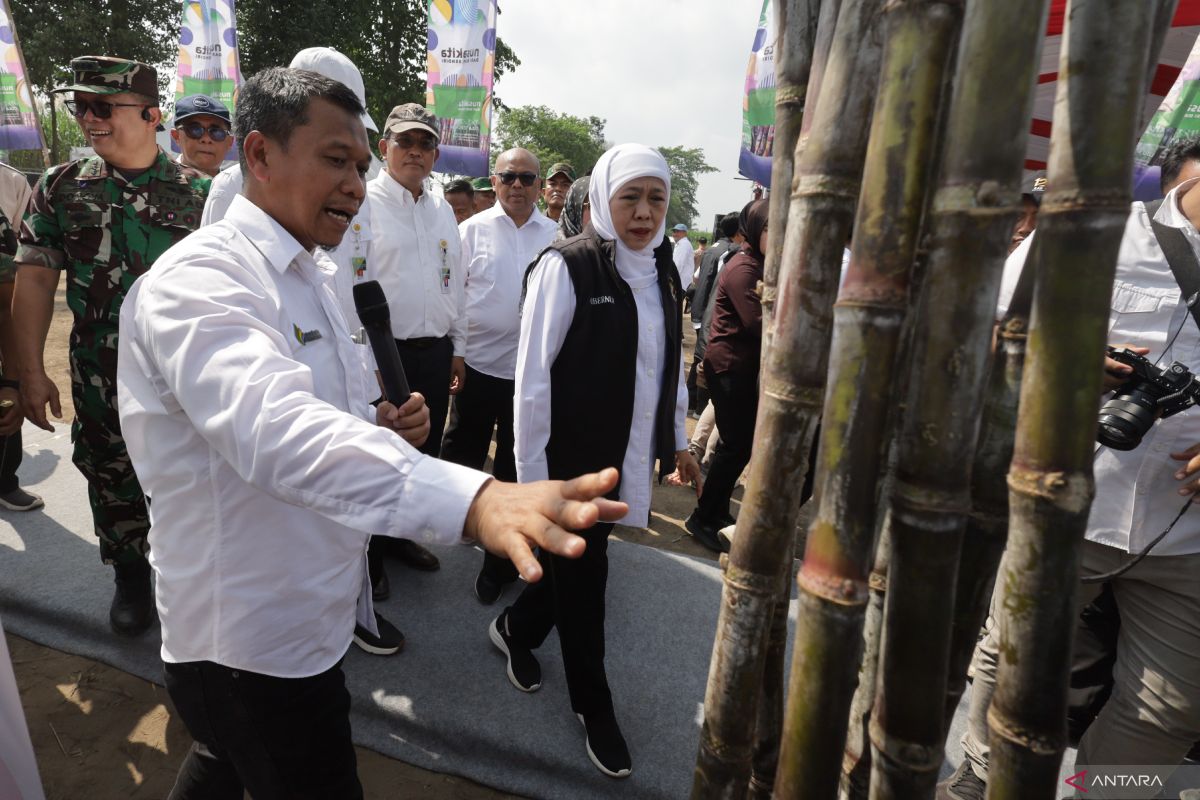
Jakarta (ANTARA) - The Ministry of Agriculture (Kementan) is ready to oversee the increase in sugar content (rendemen) for the ratoon clearance (bongkar ratoon) programme and the expansion of sugarcane planting areas to achieve sugar self-sufficiency by 2028.
Staf Ahli Menteri Pertanian Haris Bahrun stated that the ministry would deploy competent teams to assess production achievements and rendemen levels at the farmer level. “The target figure to be achieved is a production increase of 40 to 50 percent from productivity before joining the programme, with rendemen increasing by 2 percent,” he said in a statement in Jakarta on Monday.
For the Java region, he continued, production is expected to exceed 1,000 quintals per hectare with rendemen ranging from 8 to 10 percent. In order to realise self-sufficiency in consumption sugar, the government has been conducting ratoon clearance and sugarcane planting area expansion activities since 2025.
He added that a number of planting areas receiving assistance will soon enter the milling season, making the achievement of increased production and rendemen a key indicator of the programme’s success. Regarding this, Haris stated that the government will conduct field investigations in cooperation with competent institutions and oversee the harvest in Java, Lampung, and South Sulawesi.
The follow-up to these studies will involve monitoring rendemen at the factory level, particularly at state-owned sugar mills (PG) that support the programme. “There should be a significant increase in sugarcane rendemen, which will impact the rise in sugar production,” he said.
Meanwhile, Maryono, an official from the Indonesian Sugarcane Farmers Association (APTRI) for Central Java Province, stated that there is a significant rendemen gap between private and state-owned sugar mills. He noted that in the last milling season, rendemen at private mills averaged 7 to 7.5 percent, while state-owned mills only achieved 5 to 6 percent, with production of 300 to 500 quintals per hectare.
According to the farmer from Rembang Regency, for the ratoon clearance and expansion activities covering 1,500 hectares in the area, production is estimated to reach over 700 quintals per hectare with rendemen of 7 to 9 percent, as farmers have planted new superior varieties.
Meanwhile, Budi Susilo, Chairman of KUD Sumber Bahagia, mentioned that in 2025, around 6,000 hectares of member plantations are participating in the ratoon clearance and expansion programme. Production is estimated to increase to over 1,200 quintals per hectare with rendemen of 8 to 9.5 percent.
“The success of ratoon clearance is not only determined by the provision of quality seeds, production inputs, and the area rejuvenated. Here, rendemen becomes the determining factor. However, it is also determined by the certainty of income after harvest,” he said.
Therefore, his party proposed to the Minister of Agriculture to provide special oversight on the determination of sugarcane rendemen for farmers participating in the ratoon clearance programme, particularly in 2025, as well as a Minimum Rendemen Guarantee (JRM) for participants. “If this is implemented, it will provide an incentive for farmers to participate in the government programme in the following year,” said Budi.
Sri Haryono, a farmer participating in the ratoon clearance programme in Karanganyar, Central Java, admitted that before the programme, his productivity was only 600 quintals per hectare, with rendemen of 5 to 6.5 percent. He hopes that with the ratoon clearance, productivity can increase to 900 quintals per hectare with rendemen of 7.5 percent.
Meanwhile, the Executive Director of Learning Centre Indonesia, Ichi Indrawa, stated that the institution has conducted studies and mapped the potential for productivity increases in various sugarcane-producing regions. “We have carried out preliminary data collection regarding the potential for increasing production and rendemen, which will be reported to the Minister of Agriculture,” he said.