
Ministry of Agriculture Proposes Building Special Kitchens to Supply Milk for Free Nutritious Meal Programme, Requiring Rp5 Billion Capital
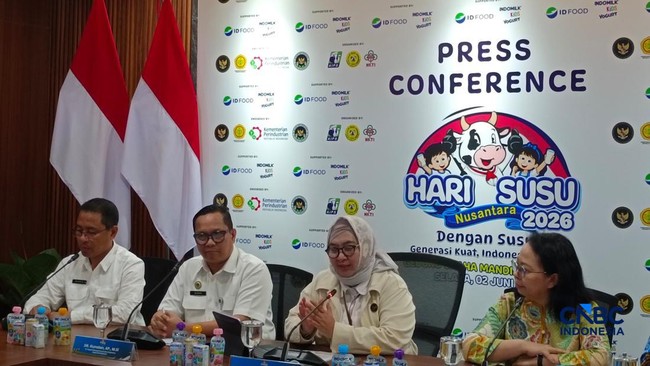
The Ministry of Agriculture (Kementan) is opening new business opportunities in the dairy cattle sector through the development of the ‘Indonesia Milk Kitchen’ (DASI), aimed at supplying milk requirements for the Free Nutritious Meal (MBG) programme. With capital of less than Rp5 billion, a single milk kitchen unit is reportedly capable of supplying the needs of 5 to 10 Nutrition Fulfilment Service Units (SPPG).
“This is what we want to encourage; we have created a prototype. With capital perhaps below Rp5 billion, one unit of a milk kitchen can be established, which can then supply around 5-10 nearby SPPGs,” stated Makmun, Director of Livestock Downstreaming at the Ministry of Agriculture, during a press conference at the National Milk Day event in Jakarta.
He noted that the MBG programme serves as a vital momentum to drive the equitable development of dairy cattle farming outside of Java, while simultaneously creating a more certain market for farmers. Currently, the national dairy cattle population is recorded at approximately 540,657 head, with over 90% managed by smallholder farmers.
Historically, dairy development has been concentrated on Java, with only small amounts in Sumatra. The Ministry hopes that new dairy hubs will emerge across various regions of Indonesia. Makmun explained that a primary obstacle has been the lack of a strong local milk processing industry, which makes farmers hesitant to increase production due to market uncertainty.
The MBG programme provides this much-needed certainty, as milk is a mandatory component of the programme’s nutritional guidelines. The demand for milk in the MBG programme can be met through UHT, pasteurised, or sterilised products, providing opportunities for cooperatives and local entrepreneurs to build small-scale processing units near farming centres.
“The guarantee lies in the off-take by the National Nutrition Agency (BGN), as milk is a mandatory menu item… at least twice a week,” he added.
The Ministry has prepared an economical DASI prototype that can be replicated in various regions. This small-scale model allows dairy farming to expand more evenly; for instance, with a local population of 100-200 cows, farmers can establish a DASI unit to supply the nearest SPPG directly.
This model also addresses the logistical challenges of transporting fresh milk from remote areas to consumption centres. By establishing local processing industries—essentially MSMEs—the need to transport raw milk over long distances is minimised. Makmun emphasised that the government is preparing an integrated approach from upstream to downstream to encourage investment, noting that a pilot project integrating industry, farming, and downstream processing is currently being tested in South Sulawesi.