
Ministry of Agriculture: People's Farmers Remain Priority in National Industry Development
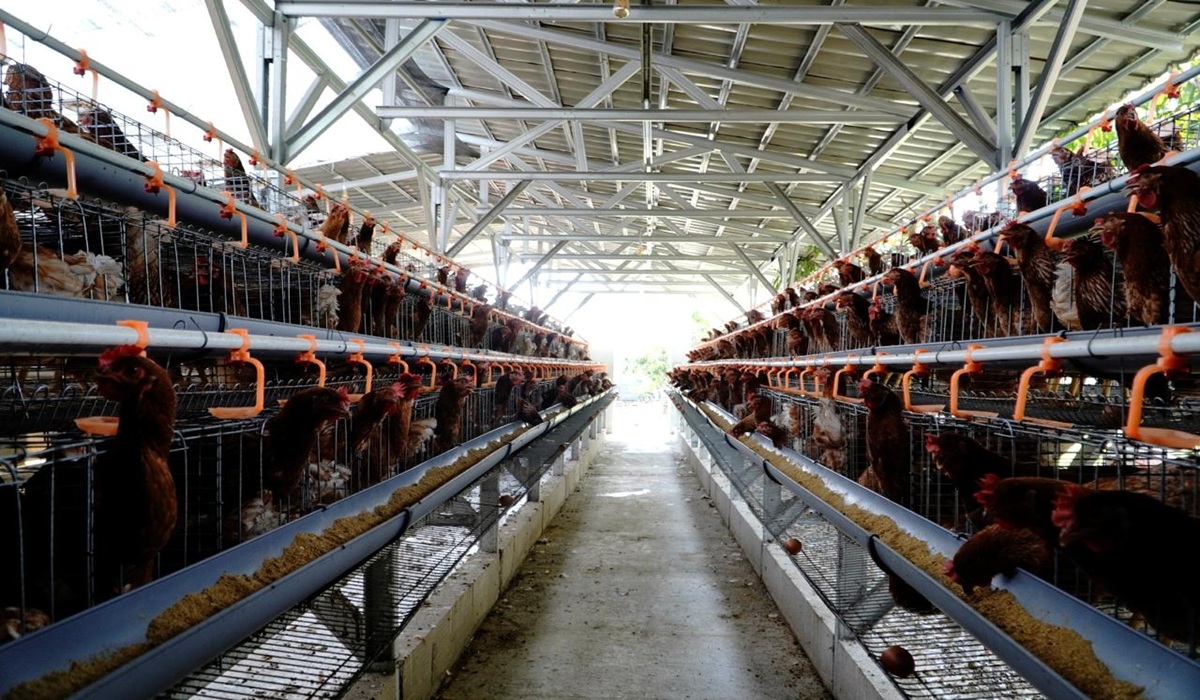
The Ministry of Agriculture (Kementan) has affirmed that people’s farmers remain the primary priority in the development of the national poultry industry. The government ensures that poultry investments must provide tangible benefits to domestic farmers, strengthen national production, create jobs, and maintain food security.
This affirmation comes amid the dynamics of the national poultry industry, from price fluctuations to growing public attention on investment plans in the poultry sector. The government views strengthening the national ecosystem as a crucial step to keep Indonesia’s poultry industry healthy, competitive, and not leaving people’s farmers—who form the backbone of national food production—behind.
The Director General of Livestock and Animal Health at the Ministry of Agriculture, Agung Suganda, stated that the development of the livestock subsector must be carried out in a measured manner through strengthening national partnerships involving people’s farmers, cooperatives, local businesses, and state-owned enterprises in the food sector.
“The national poultry ecosystem must be built fairly. The Minister of Agriculture’s directive is clear: strengthening is carried out through a national ecosystem involving SOEs, people’s farmers, cooperatives, and local partners,” said Agung in Jakarta on Saturday (9/5/2026).
According to Agung, the government is opening up investment opportunities, but such investments must strengthen the national industry structure from upstream to downstream and prioritise the interests of domestic farmers.
“We want this industry to grow healthily. Therefore, the government encourages a partnership model involving local players, people’s farmers, and SOEs as part of strengthening the national supply chain,” he said.
He emphasised that the directive from the Minister of Agriculture, who also serves as Head of the National Food Agency, Andi Amran Sulaiman, is very clear: investments must not sideline people’s farmers in their own country.
“The Minister of Agriculture has repeatedly reminded that investments must involve local partners. Investments must provide growth opportunities for national farmers, rather than widening domestic inequalities,” said Agung.
Currently, the Ministry of Agriculture continues to strengthen the integrated chicken downstream model (HAT) based on national partnerships, from breeding, feed, processing, distribution, to absorption of animal protein food products. In this scheme, people’s farmers are positioned as the main part of the national production chain.
The government is also strengthening the role of food sector SOEs in absorbing farmers’ production outputs, stabilising prices, and enhancing distribution to make the national poultry industry run more healthily and balanced.
“We want investments that create jobs, strengthen national production, and improve farmers’ welfare. That is the main principle,” he said.
Strengthening the national ecosystem is deemed important because the current national egg production is in a surplus condition. Therefore, the main challenge for the poultry industry is no longer increasing production, but strengthening markets, distribution, and protection for people’s farmers.
In response to the Ministry of Agriculture’s push to strengthen the national poultry ecosystem through the involvement of SOEs, people’s farmers, and local partners, Senior Economist at the Institute for Development of Economics and Finance (INDEF), Tauhid Ahmad, views this step as crucial for maintaining the sustainability of the national poultry industry while strengthening domestic food security.
Tauhid said that the government and business world need to prioritise strengthening the national poultry farming industry to support various strategic programmes, including fulfilling the supply chain for the Free Nutritious Meals (MBG) programme, both for egg needs, chicken meat, and other animal protein products.
“I think the domestic industry and independent farmers are actually capable of handling that without having to rely on cooperation with foreign parties,” said Tauhid Ahmad.
According to him, if this major opportunity is instead given to foreign investors in a sector that the national industry can handle itself, then the potential domestic economic value added will largely flow out of the country.
“If this big opportunity is given to foreign investors for matters that we can actually do ourselves, then the economic value added will largely flow out, from technology, labour, poultry medicines, to breeding stock. Meanwhile, independent farmers around the MBG programme could potentially lose their market,” he said.
Tauhid also warned that dependence on external parties could increase import flows and put pressure on the national economy.
“Such conditions could enlarge import flows and worsen our trade situation. In the first quarter of 2026 alone, imports grew by 7.18 percent, while exports only grew by 0.90 percent. If left unchecked, the country’s foreign exchange reserves will also be further eroded,” he said.
Therefore, he views efforts to maintain national food security, especially in the poultry sector, should prioritise domestic production capabilities and empowerment of people’s farmers.
“Food security should not only talk about production, but also the welfare of its farmers. The business world, government, and representatives of independent farmers must sit together to find a middle way so that food security is achieved without making people’s farmers the disadvantaged party,” said Tauhid.
A similar view was expressed by Professor Budi Guntoro, Professor of Livestock Socio-Economics at Gadjah Mada University, who believes that strengthening people’s farming must be the top priority amid the current structural surplus in national egg production.
“This means Indonesia is not short of eggs, but facing a structural surplus,” said Prof Budi, as quoted by Antara on Thursday (30/4/2026).