
Ministry of Agriculture: Land constraints and PSR are key to boosting palm oil production
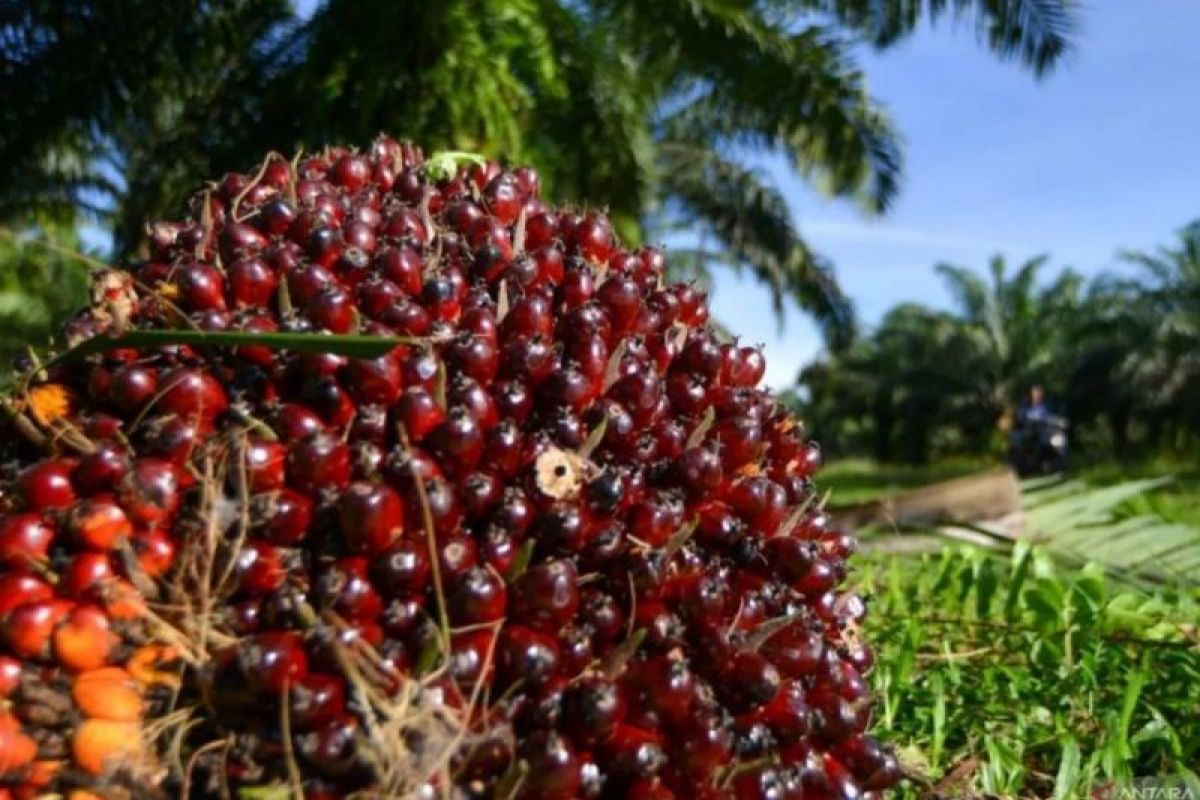
Jakarta — The Indonesian Ministry of Agriculture (Kementan) has reiterated that the Smallholder Palm Oil Replanting Programme (PSR) remains the main solution for increasing production and productivity of oil palm crops amid current land constraints. Iim Mucharam, Director of Oil Palm and Other Palma Crops at the Directorate General of Plantations, said that productivity enhancement is one of the options for the national palm oil industry amid limited land and global pressure on plantation expansion. ‘Expansion is no longer feasible because land is limited and there is international pressure and global issues. That is why PSR is the key,’ Iim said in Jakarta on Thursday. He noted that the nation’s oil palm estates cover about 16.8 million hectares in 2025, with around 51% owned by private companies and 41% by smallholder plantations. The large share of smallholders is seen as harbouring great potential to raise national production through the PSR programme. ‘Imagine 41% of 16 million hectares—that is a huge potential,’ Iim said during the discussion ‘Mandatori PSR: Solusi Peningkatan Produktivitas’. He added that the government initially targeted PSR to reach 180,000 hectares per year, but it was later reduced to 150,000 hectares, with current progress around 50,000 hectares to keep the target realistic. Meanwhile, the government has increased funding support from the Estate Crop Fund Management Agency (BPDP). PSR aid rose from Rp25 million per hectare in 2017–2019 to Rp30 million per hectare in 2020–August 2024, and has stood at Rp60 million per hectare since September 2024. However, he said PSR has never reached government targets due to multiple factors, including land legality and overlapping forest areas, which remain major obstacles. In addition, data on smallholder palm farmers remains very limited, as does the weakness of the partnership model between companies and farmers. To date, partnerships operate only in a minority of large companies, while the supply chain for Fresh Fruit Bunches (TBS) remains too long. Iim stressed that PSR was designed as a voluntary programme rather than a mandatory obligation; therefore, the idea of making it mandatory requires stronger regulation and cross-ministerial coordination. GAPKI (Indonesian Palm Oil Producers Association) policy head Muhammad Iqbal noted that national palm governance involves multiple ministries and agencies, thus requiring comprehensive coordination. Regarding PSR, Iqbal highlighted several technical challenges on the ground that require ongoing refinement, such as requirements for coordinates, spatial data support, and validation of farmer data, which is a time-consuming process, especially in areas with limited access. He added that document collection and fund disbursement for PSR take a considerable time, given the need to ensure data accuracy and validity. In practice, administrative barriers exist, such as updating land ownership data when owners have died or population data that is no longer valid. Additionally, farmers face economic pressures during the non- productive period (TBM) of about 48 months. ‘If a farmer only has four hectares and all are replanted, they practically have no income during TBM. Therefore, in the partnership channel, companies typically help provide a living guarantee through bank financing support,’ he said. Aspekpir (Association of Palm Oil Growers Plantations by State-Run Companies and Public‑Private Partnerships) head Setiyono said many plasma estates, especially in Riau, have urged replanting because they were planted since the 1980s. He argued that farmers generally support PSR, including if it becomes mandatory, as long as there is clear mapping and strong institutional support. ‘Aspekpir supports mandatory PSR, but there must be mapping and strengthening of farmer institutions first. Do not leave farmers behind when facing legal issues,’ he said during a remote Forum of Agricultural Journalists (Forwatan) discussion. He also highlighted the number of plasma plantations with land certificates that are now within forest areas. The issue, he noted, must be resolved quickly by the government to accelerate PSR momentum.