
Ministry of Agriculture Facilitates Commitment from Business Actors to Stabilise Soybean Prices, HAP of Rp11,500 Agreed
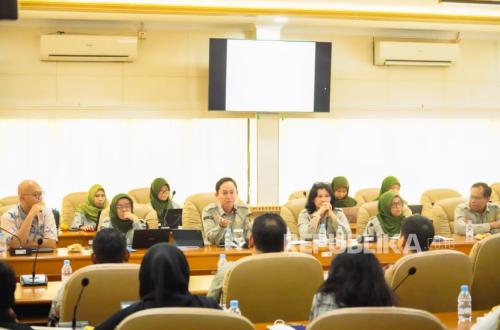
The Ministry of Agriculture (Kementan) has facilitated an agreement between importers and tofu-tempeh producers to maintain soybean price stability through the implementation of a Reference Selling Price (HAP) of Rp11,500 per kilogram at the importer level. This agreement ensures that soybean prices at the producer level remain below Rp12,000 per kilogram until any subsequent policy changes. Thus, the stability of soybean-based food prices is maintained amid global geopolitical pressures affecting the world supply chain. The agreement was reached during a coordination meeting of the Directorate General of Food Crops under Kementan with associations and business actors on Thursday (9/4/2026). This reaffirms the joint commitment to ensuring the availability of soybean supplies as raw materials for the tofu and tempeh industry. Director General of Food Crops, Yudi Sastro, stated that issues circulating in society have been verified and are untrue, and the joint commitment from all parties remains intact. “We have directly verified with business actors, and information claiming soybean prices have reached Rp20,000 is untrue. Prices remain below the HAP, even at the importer level around Rp11,500,” Yudi emphasised. He assured that the current supply and price conditions are still under control. “Supplies are still sufficient, prices are also controlled according to government references. So there is no need to worry,” he said. Yudi explained that global dynamics are indeed exerting pressure, particularly on logistics costs, transportation, and other supporting components. “There is indeed an impact from geopolitical changes causing increased production and distribution costs. But for the current conditions, supplies are still sufficient and prices controlled. This is what we need to convey to prevent public concern,” he clarified. He also emphasised that the government continues to strengthen coordination with all stakeholders. “We have committed together to ensure the implementation of the HAP in the field runs smoothly. This is important to maintain food stability,” he said. Based on data from Gakoptindo processed by the National Food Agency as of 8 April 2026, soybean prices in various regions remain within reasonable ranges and in line with the HAP. In Jakarta, the average soybean price is around Rp10,500-Rp11,000 per kg, Java Rp10,555 per kg, Bali and NTB Rp10,550 per kg, Sumatra Rp11,450 per kg, Sulawesi Rp11,113 per kg, and Kalimantan Rp10,908 per kg. These figures are still below the HAP for imported soybeans at the consumer level (tofu-tempeh producers), set at a maximum of Rp12,000 per kg. From the importer’s perspective, Director of PT FKS Multi Agro Tbk, Tjung Hen Sen, stated that soybean prices and supplies remain controlled despite global pressures. “I think at the importer level now it’s reasonable, perhaps around Rp10,100 to Rp10,300 per kilogram depending on the region. At the producer level, it’s now around Rp10,500 to Rp11,000 per kilogram,” he said. He emphasised that business actors continue to strive to maintain stability amid external challenges. “Currently, we are trying very hard to maintain the stability of soybean commodity prices. But it should be noted that there are factors like geopolitics impacting logistics costs, ship insurance, and supporting materials,” he revealed. According to him, all parties must continue to synergise to maintain soybean price stability. “Maintaining stability is not the responsibility of one party alone, but all parties, both private and government. We need to work together so that the business environment becomes more conducive,” he added. Meanwhile, General Secretary of Gakoptindo, Wibowo Nurcahyo, said that tofu and tempeh product prices at the producer level remain stable. “We guarantee that tofu and tempeh prices will not rise, but there might be adjustments in volume. In terms of taste and quality, we maintain them. From our monitoring, tofu and tempeh prices remain stable around Rp12,000 to Rp13,000, with no significant increases,” Wibowo said. He also assured that soybean prices as the main raw material remain within safe limits. “For soybeans, we buy from importers at Rp10,200, which is still far below the HAP (reference selling price), so our prices remain stable. Actually, the slight issue is not with the soybeans but with the supporting materials like plastic,” he explained. According to Wibowo, his side along with importers have committed to maintaining price and supply stability. “Yes, we have agreed on the HAP of Rp11,500 at the importer level and Rp12,000 at our level (tofu-tempeh producers), and we think that’s still a reasonable figure. We hope the public does not get swayed by inaccurate news,” he stated. Separately, Minister of Agriculture Andi Amran Sulaiman emphasised the importance of importers’ role in maintaining price stability amid uncertain global situations. “Regarding soybeans, we have asked importer friends not to take large profits. It’s okay to increase, but not to the point of pressuring our brothers who need it,” the Minister stressed. According to him, the current situation is a momentum for all business actors to show favouritism towards the nation. “When else will we do good for the nation? This is a golden opportunity to do good for our country that we love,” he concluded. Kementan assures it will continue to monitor the implementation of this agreement and encourage increased domestic soybean production. “This year we have a soybean development programme covering around 37,500 hectares. We will continue to push this so that in the future, dependence on imports can be reduced,” Yudi said.