
Ministry of Agriculture Expands Kerinci Arabica Coffee by 650 Hectares, Strengthening Upstream to Market Chains
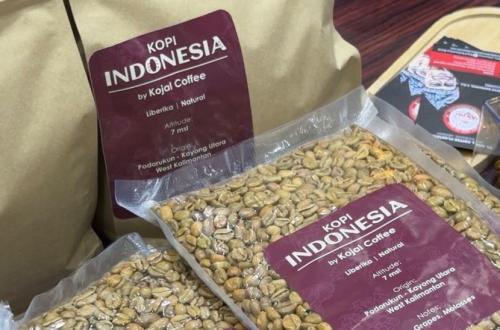
The Ministry of Agriculture, through the Directorate General of Estate Crops, is providing assistance to expand Arabica coffee plantations by 650 hectares for farmers in Kerinci Regency, Jambi. The programme is designed not only to increase planting areas but also to strengthen the position of coffee as a key economic driver for the Kerinci community.
Heru Tri Widarto, Director General of Estate Crops at the Ministry of Agriculture, stated that opportunities for coffee commodity development remain vast. However, he emphasised that increasing plantation areas must be accompanied by improved cultivation techniques and the ability to maintain product quality.
“The development potential for the coffee commodity is still very large, so it must be utilised through the strengthening of cultivation, maintaining product quality, and ensuring production sustainability,” Herting said in a statement in Jambi on Saturday.
The programme is primarily focused on strengthening the upstream sector. For the Ministry of Agriculture, success at the cultivation level serves as the foundation for meeting coffee needs in both domestic and export markets.
In the first phase, Arabica planting is being carried out on 320 hectares. A total of 46 farmer groups are beneficiaries of the programme, which is funded by the State Budget (APBN).
The Kerinci Regency Government, in an official statement on Friday, 18 September 2026, noted that the initial planting was conducted alongside the community in Jernih Jaya Village, Gunung Tujuh District. This first phase is part of a total expansion programme covering 650 hectares throughout 2026.
Beyond Simply Opening New Land
Kerinci Regent Monadi stated that the local government will continue to promote coffee as a strategic sector to increase agricultural productivity and community welfare. He noted that Kerinci possesses the geographical, climatic, and soil characteristics necessary to support high-quality coffee production. The region currently develops three types of coffee: Arabica, Robusta, and Liberica.
“The added value of the coffee commodity can grow even larger, and the economic benefits can be felt directly by the people of Kerinci,” said Monadi.
He added that coffee development should not end once the seedlings have been planted. An entire ecosystem must be built, ranging from the provision of superior seeds, plant maintenance, and pest control to post-harvest processing, marketing, and the development of processed products.
“This assistance is not merely about increasing plantation area, but is a long-term investment to increase productivity, income, and the welfare of farmers,” Monadi remarked.
The Kerinci Regency Government also positions farmers as key actors in regional economic development. During the initial planting event, Monadi emphasised that as farmer incomes grow, the economic circulation within the community and villages is expected to accelerate.
1.4 Million Seedlings for Coffee Zones
The expansion programme has been prepared regarding seed availability. The Jambi Agricultural Modernisation Application Centre (BRMP Jambi) reported on 29 June 2026 that it had monitored the readiness of Gayo 3 variety Arabica coffee seeds at a breeder site in Sanggaran Agung Village, Danau Kerinci District.
During the monitoring, approximately 1.6 million Arabica seedlings, aged six months post-sowing, were available. Of these, 1.4 million seedlings have been contracted for a coffee zone development programme covering 1,400 hectares across three regions.
From this total area, Kerinci Regency has received the largest portion, amounting to 650 hectares. The remainder is allocated to Merangin Regency (350 hectares) and Sungai Penuh City (400 hectares).
Ensuring a large supply of seeds is vital, as land expansion is not determined by area alone. The uniformity and quality of the seeds will determine crop productivity several years after the programme commences.
This presents the next challenge for the 650-hectare programme. As coffee is a perennial crop, the economic impact of plantation expansion cannot be felt immediately. Plant maintenance during the non-productive period, farmer assistance, and consistent application of cultivation techniques will be the deciding factors in the success of this investment.
Source: jawawa.id (https://jawawa.id/newsitem/ministry-of-agriculture-expands-kerinci-arabica-coffee-by-650-hectares-strengthening-upstream-to-market-chains-1789811570)
Originally published by Republika (https://republika.co.id/berita//tllmvm451/kementan-perluas-kopi-arabika-kerinci-650-hektare-perkuat-hulu-hingga-pasar), translated from Indonesian