
Ministry of Agriculture encourages transition to cage-free poultry farming
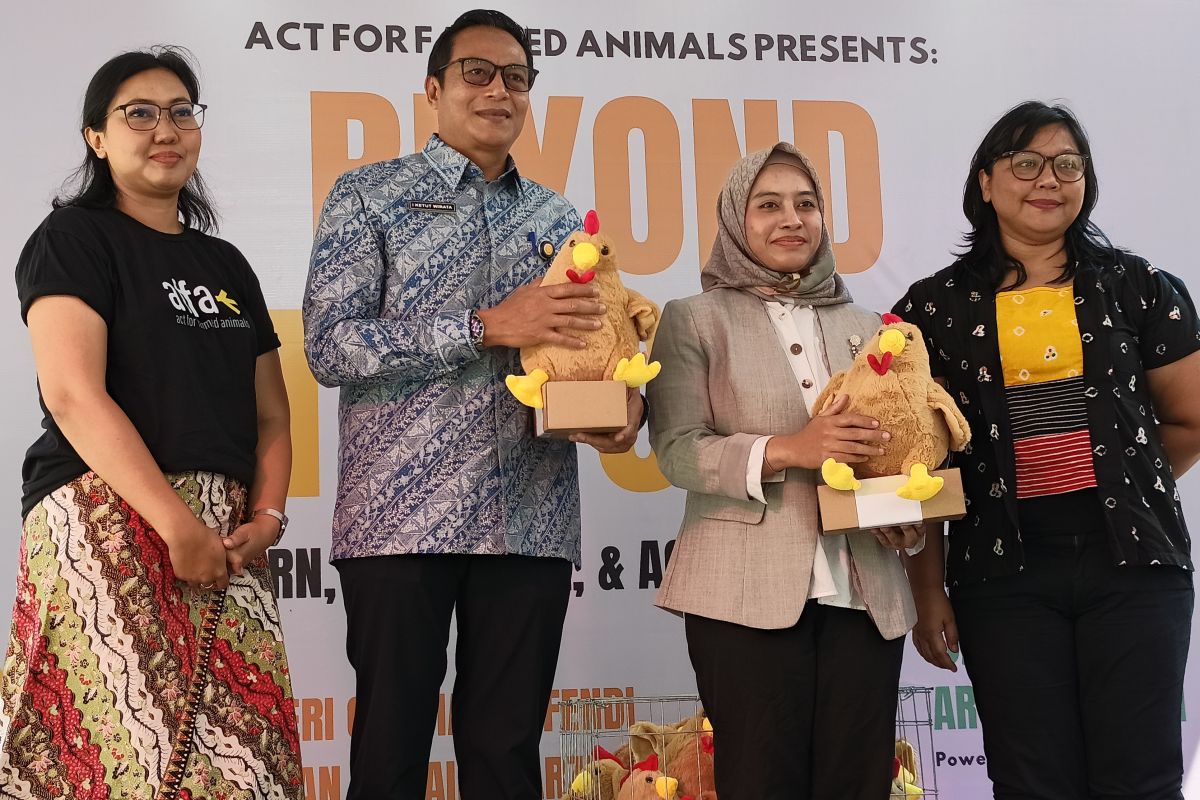
The Ministry of Agriculture is encouraging the transition of egg-laying chicken maintenance systems from battery cages to cage-free systems to ensure animal welfare and food security.
I Ketut Wirata, Director of Veterinary Public Health at the Directorate General of Livestock and Animal Health, stated that antimicrobial resistance resulting from the excessive use of antibiotics in intensive farming poses a serious threat if not addressed immediately.
“Antimicrobial resistance is a very feared phenomenon. In fact, there is a study suggesting that if this is not anticipated and solutions are not found, antimicrobial resistance will become a terrifying specter by 2050,” said Ketut during the ‘Beyond the Cage’ event at Taman Ismail Marzuki, Jakarta, on Saturday.
In battery cage systems, the movement space for each chicken is only about 450 square centimetres, which is smaller than an A4 sheet of paper, preventing chickens from flapping their wings, perching, dust-bathing, or nesting. A 2019 study by the European Food Safety Authority (EFSA) noted that the prevalence of Salmonella in eggs from battery cage systems was 25 per cent higher than in cage-free systems.
“There are five animal freedoms, ranging from freedom from hunger, thirst, disease, and stress, to the freedom to express natural behaviour,” he added.
The implementation of cage-free systems has already begun in several regions, such as West Java and Bali. The government has also issued Minister of Agriculture Regulation Number 32 of 2025 as the legal basis for implementing animal welfare in poultry farming.
Roby Gandawijaya, a cage-free farmer from PT Inti Prima Satwa Sejahtera, noted that this system is now easier to implement due to the availability of a training centre in Yogyakarta.