
Ministry of Agriculture develops 300-hectare coconut area in Wonosobo
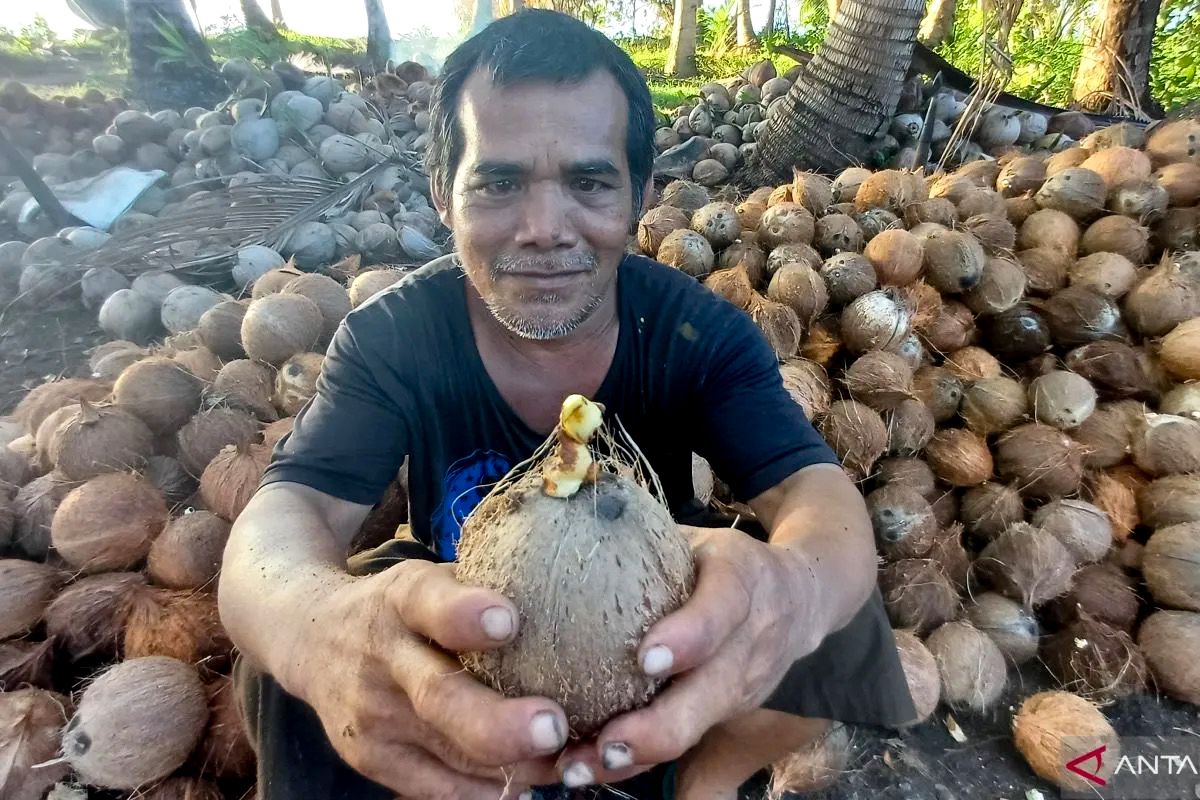
Jakarta – The Ministry of Agriculture is developing a 300-hectare coconut area in Wonosobo District, Central Java, to strengthen area-based production and promote value-added processing of commodities at the farmer level.
“The development of a 300-hectare coconut area in Wonosobo involves 61 farmer group federations (gapoktan),” said Iim Mucharam, Director of Coconut and Mixed Palm Crops at the Ministry of Agriculture’s Directorate General of Plantations, in a statement in Jakarta on Thursday.
He stated that the programme forms part of accelerating the implementation of the 2025 Annual Perennial Crop Agribusiness Development Plan (RPATA) for Coconut, conducted at the Kalpataru Farmer Group (Poktan) in Wadaslintang District.
Iim confirmed he had directly observed the operations of Poktan Kalpataru, which processes coconut sap into pressed coconut sugar. This derivative product is deemed capable of providing economic added value to farmers whilst serving as an example of coconut commodity value-added processing at the village level.
“Coconut development should not stop at increasing production in the field, but must also be encouraged through product processing to provide greater added value to farmers,” he said.
According to him, the area-based approach is an important strategy for strengthening national coconut production centres, ranging from cultivation strengthening, orchard productivity improvement, to developing product processing enterprises.
Acting Director General of Plantations Abdul Roni Angkat stated that farmer group-based coconut area development is a strategic step to strengthen the national coconut commodity value chain.
Through strengthening farmer institutions, improving orchard productivity, and developing downstream enterprises such as coconut sap processing into coconut sugar, commodity added value is expected to be directly enjoyed by farmers.
Roni stated that through synergy between the central government, regional government, extension workers, and farmer groups, coconut development in various regions is expected to increase productivity whilst strengthening community economy based on plantation commodities.
“The activity in Wonosobo is a concrete example of how government programmes can directly reach farmers through cultivation strengthening and product value-addition,” said Roni.
Through these efforts, Roni continued, coconut commodity becomes not only a raw material source but also a driver for improving the welfare of rural communities.
Separately, Minister of Agriculture Andi Amran Sulaiman stated that the government continues to strengthen the plantation subsector to increase farmer welfare whilst driving rural economy.
“What is most important is ensuring that farmers can live happier and more prosperous lives,” Amran said.
According to him, through harmonious synergy amongst various parties and strong commitment, his office can drive farmer economies to continue developing.
“What we need to do is open opportunities widely for them to obtain fair profits,” Amran said.