
Ministry of Agriculture and Local Governments Strengthen Egg Price Stabilisation for Farmers
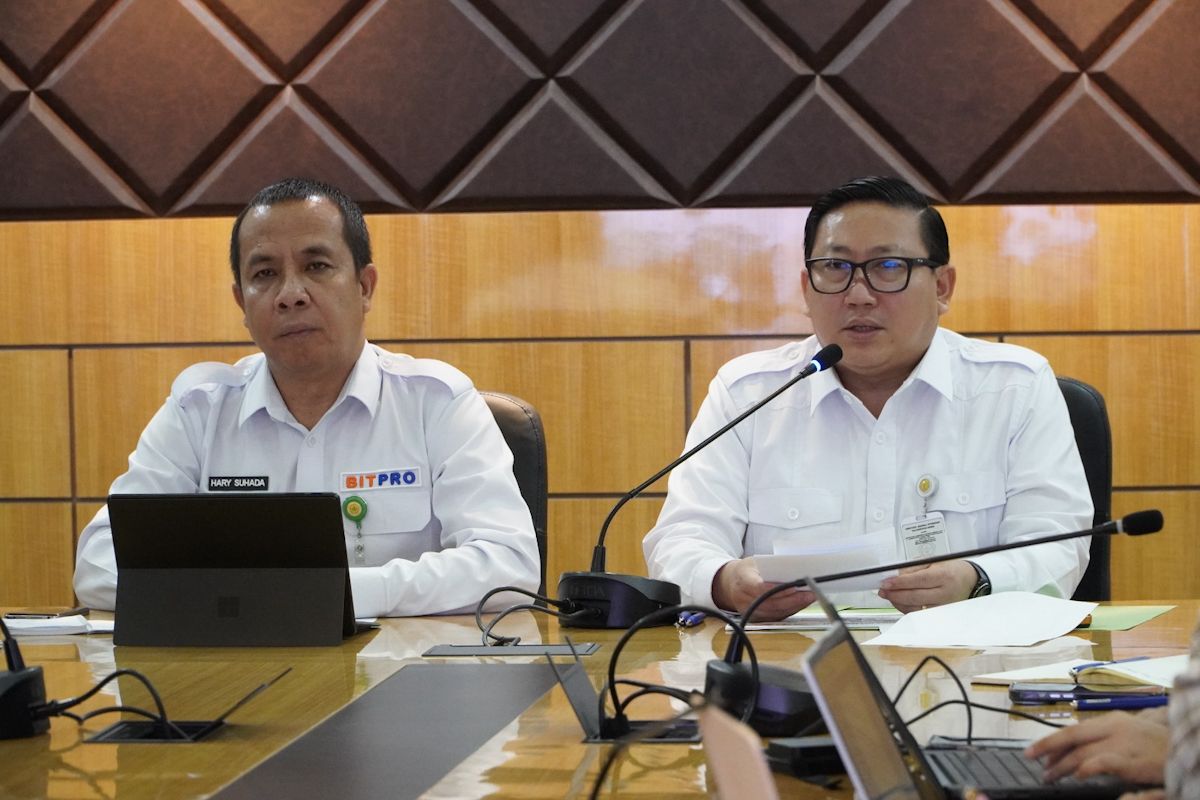
The Ministry of Agriculture (Kementan) is strengthening synergy with local governments to maintain the stability of chicken egg prices at the farmer level through the supervision of the supply and distribution of this food commodity.
The Director General of Livestock and Animal Health at the Ministry, Agung Suganda, stated that this supervision is aimed at ensuring business management operates according to regulations, while strengthening guidance for farmers and business actors. This includes maintaining the balance between production and market needs so that egg prices at the farmer level can return to reference prices, he said during a National Poultry Coordination Meeting in Jakarta on Wednesday.
He noted that price stabilisation requires collective effort as most egg production comes from smallholder farmers. The government aims to ensure selling prices remain balanced with production costs to maintain the sustainability of farming businesses.
During the meeting, the East Java Provincial Livestock Service reported that average egg prices in the region on 5 October 2026 were Rp21,800 per kilogram. The lowest price was recorded in Blitar Regency at Rp20,100 per kilogram, while the highest was in Lumajang at Rp22,500 per kilogram.
According to Agung, price pressure occurs primarily in production centres with abundant supplies. Therefore, distribution from surplus areas to regions in need must be strengthened, accompanied by production adjustments to maintain the supply-demand balance.
The Ministry of Agriculture is also encouraging measured production adjustments through the regulation of poultry populations and the culling of chickens that have reached the end of their productive period. This step is intended to ensure production aligns with market absorption capacity and to prevent oversupply.
The Ministry is strengthening the implementation of Minister of Agriculture Regulation Number 10 of 2024 regarding the Provision, Distribution, and Supervision of Broiler Chickens and Consumable Eggs, in a tiered manner alongside local governments.
In its implementation, local governments play a primary role in supervision within their respective regions. Local governments need to develop and run supervisory instruments according to regional characteristics, including monitoring population and production, mapping supply-demand conditions, supervising egg distribution, and monitoring business capacity growth to prevent supply imbalances in the market.
Furthermore, local governments must strengthen guidance and supervision regarding licensing for layer poultry businesses, ensuring that business development and production capacity in the region are recorded, monitored, and aligned with the carrying capacity and market needs.
The scope of supervision also includes business actors’ compliance with the provisions of Permentan 10/2024, such as the use of Poultry Slaughterhouses (RPHU) and cold chain facilities, fulfilment of distribution documents, and the implementation of partnerships.
Specifically for broiler businesses with a total weekly chick-in of at least 60,000 DOC FS, supervision is directed at ensuring the obligation to possess and/or control RPHU that holds a Veterinary Control Number (NKV) and is equipped with cold chain facilities, including ensuring that live bird slaughter in RPHU complies with regulations.
Permentan 10/2024 mandates the fulfilment of slaughter capacity gradually until reaching 100 per cent of the total chick-in.
Supervision also covers the implementation of partnerships, including compliance with provisions for the provision and distribution of DOC FS, fulfilment of the rights and obligations of all parties, and ensuring that no practices detrimental to partner farmers occur. Permentan 10/2024 specifically includes partnerships as an object of guidance and supervision.
“Supervision is conducted routinely and incidently through business reports and field inspections,” he explained.
In Permentan 10/2024, Agung added that routine supervision is conducted at least once every three months, while incidental supervision can be carried out based on community reports or suspected compliance deviations.
Supervision must be conducted in a tiered manner, starting from regencies/cities, provinces, up to the central government. Data and results from regional supervision serve as the basis for the Ministry of Agriculture to conduct guidance, evaluation, inter-regional coordination, and to formulate national poultry policies.
Thus, the Ministry of Agriculture plays a role in ensuring the consistency of policy and supervision nationally, while local governments serve as the spearhead for direct implementation, guidance, and supervision on the ground.
“Regarding Permentan 10 of 2024, socialisation like this must be intensified, especially in production centres,” said Agung.
According to Agung, resolving egg price issues must be done in an integrated and data-driven manner. “We will facilitate and synergise this together,” he concluded.
Source: jawawa.id (https://jawawa.id/newsitem/ministry-of-agriculture-and-local-governments-strengthen-egg-price-stabilisation-for-farmers-1791363913)
Originally published by Antara (Indonesian) (https://www.antaranews.com/berita/5775096/kementan-dan-pemda-perkuat-stabilisasi-harga-telur-di-peternak), translated from Indonesian