
Ministry of Agriculture and Java-wide agencies strengthen livestock business stability
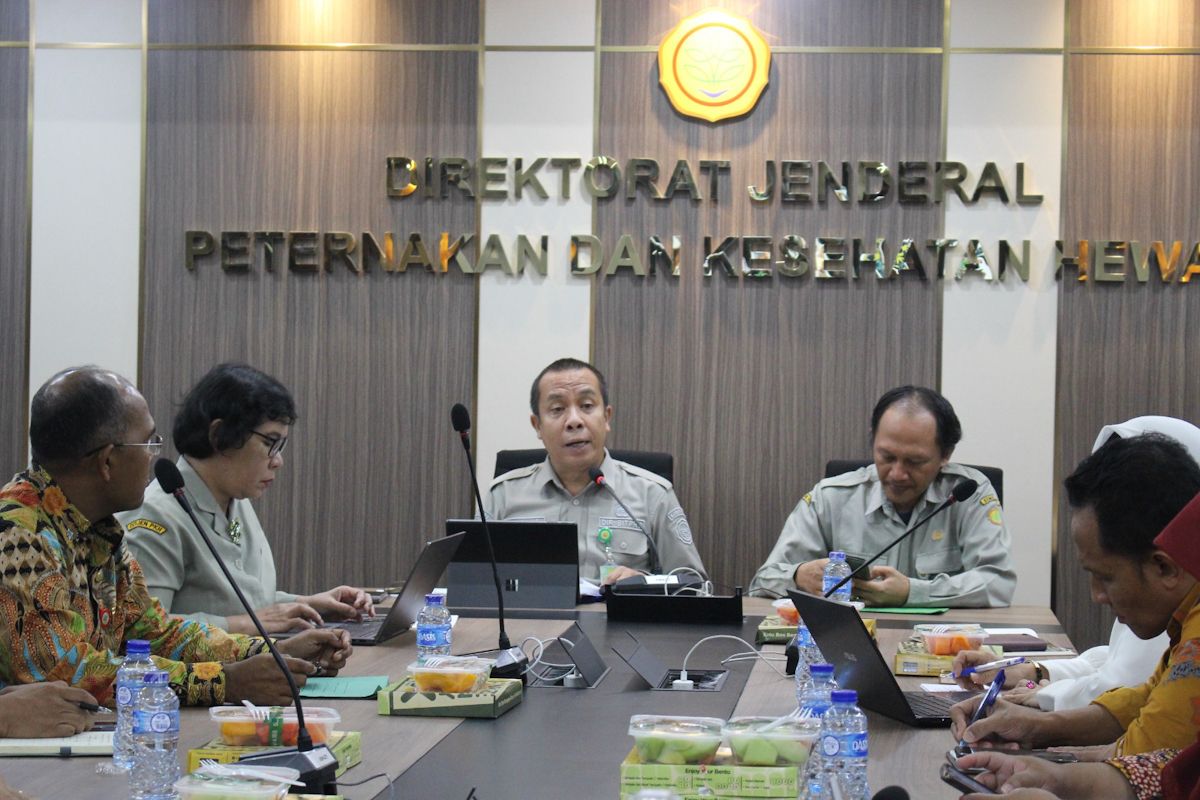
The Ministry of Agriculture, together with livestock agencies across Java, is strengthening national poultry data to support targeted policies, maintain the stability of livestock businesses, and balance poultry supply and prices.
“We, together with agencies responsible for livestock functions across Java, are strengthening measures to control the decline in live bird and egg prices at the farm level that has occurred recently,” said Hary Suhada, Director of Breeding and Livestock Production at the Directorate General of Livestock and Animal Health of the Ministry of Agriculture, confirmed in Jakarta on Saturday.
He stated that the price decline was influenced by supply conditions being higher than market absorption capacity, causing prices in several regions to fall below the farmers’ basic production costs. According to Hary, this situation requires joint handling between central and regional governments so that the various policies pursued can run effectively. The Ministry of Agriculture then coordinated with relevant agencies in a meeting held at the Ministry’s headquarters on Thursday (25/6).
“We have therefore invited all agencies responsible for livestock in Java to jointly find solutions,” he said. He noted that the problem cannot be solved by the central government alone. Collaboration, coordination, and a shared sense of responsibility between central and regional authorities are needed so that the condition of farmers can improve soon.
He added that the government has taken various steps to assist farmers and maintain the stability of the poultry business. These include encouraging the absorption of live birds and eggs, controlling the production of broiler day-old chick (DOC) final stock (FS), and issuing an appeal to cull laying hens that have reached an age of more than 90 weeks. “As well as various policy adjustments to create a healthier and more sustainable poultry business chain,” he explained.
The Ministry of Agriculture also highlighted the importance of accurate and integrated poultry data between central and regional governments. This data is considered the main foundation for formulating holistic policies that match conditions on the ground. “We hope there will be synchronised data between the central and regional governments. Therefore, we need the active involvement of relevant agencies to jointly develop mechanisms and technical steps for obtaining accurate poultry data,” said Hary.
He revealed that the initial coordination phase is focused on Java because the region is the main centre of national poultry production. “We are starting with Java first because approximately 63 per cent of the national supply of chicken meat and eggs comes from Java,” he said. In the future, similar coordination will be expanded to provinces outside Java so that the data system and policies built can cover all regions of Indonesia.
On the occasion, the Head of the Food Security Agency of Banten Province, Nasir, expressed support for the various steps taken by the central government. According to him, the Banten Provincial Government is also strengthening supervision and implementation of regulations in the poultry sector. “We are committed to enforcing the regulations that have been set by the government. For the time being, we are not issuing new business permits in the poultry sector. In addition, the Governor of Banten has also invited business actors and farmers to discuss finding solutions to the current market conditions,” said Nasir.
Meanwhile, the Head of the Livestock Agency of East Java Province, Indyah Aryani, assessed that the problems currently faced by farmers require the involvement of all parties to resolve. “The current poultry problems are quite complex. Farmers are not only facing a decline in the selling price of chickens and eggs, but also still have to bear bank credit obligations, while production costs, including feed, have also increased,” said Indyah.
According to her, the regional government has made various efforts to help absorb farmers’ production. However, market conditions still require support for further measures to maintain the balance between supply and demand. “We have taken various steps, such as appealing to civil servants to increase egg consumption and encouraging the Nutrition Fulfilment Service Units (SPPG) to absorb eggs from farmers,” she said.