
Ministry of Agriculture and HKTI Distribute 49 Sacrificial Animals for Eid al-Adha 1447 AH
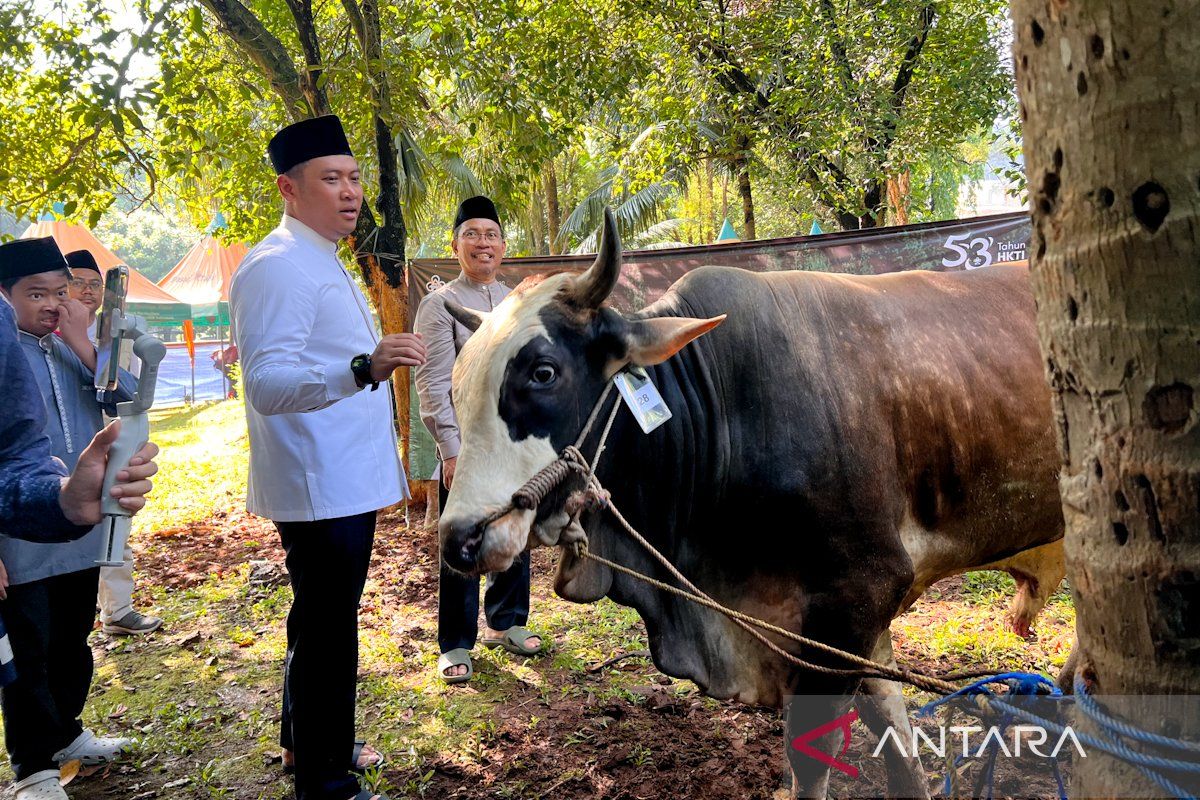
Jakarta (ANTARA) - The Ministry of Agriculture and the Indonesian Farmers’ Harmony Association (HKTI) have distributed 49 sacrificial animals to the public as a gesture of social care and sharing blessings during the Eid al-Adha 1447 Hijriyah/2026 Gregorian celebrations. Deputy Minister of Agriculture and HKTI National Leadership Council Chairman Sudaryono stated the aid comprised 41 cattle and eight goats distributed to communities around the Ministry and its staff. ‘Insha’Allah, this (through the Qurban practice) is a sign that our nation is indeed doing well. So when people say our country is like this or that, as if it’s about to collapse tomorrow, that’s not true. Insha’Allah, our country is doing well,’ Sudaryono said in Jakarta on Wednesday. The slaughter and distribution of sacrificial animals by the Ministry of Agriculture and HKTI for Eid al-Adha 1447 AH were centred at the Nurul Iman Mosque complex within the Ministry. Sudaryono noted the number of sacrificial animals at the Ministry has been increasing, from two cattle and 15 goats in 2024 to nine cattle and 10 goats in 2025. In 2026, this rose to 41 cattle and eight goats, reflecting heightened participation and social concern. He assessed that the increase reflects a stable society and national economy despite global challenges and uncertainties. Sudaryono said Indonesia remains relatively stable as the government continues to maintain food security, economic stability, and societal welfare across various sectors. According to his reports, the national livestock supply projection for cattle, buffaloes, and goats totals approximately 3.2 million head, exceeding the estimated national demand of 2.5 million. Sudaryono stated the surplus demonstrates the national livestock sector’s ability to meet public demand and serves as an indicator of rising economic capacity and purchasing power. Sudaryono noted that Qurban teaches the example of Prophet Ibrahim’s sincerity in prioritising love for Allah over material possessions, status, and worldly affairs. He stressed that Eid al-Adha serves as a reminder that nothing in this world is eternal, urging people to strengthen sacrifice, piety, and gratitude. He called on the public to appreciate these achievements, noting many countries still face pressures from conflicts, energy supply disruptions, and global economic slowdowns. Sudaryono also praised the Halal Slaughterers (Juleha) for ensuring Qurban processes adhere to religious guidelines, safety, and professionalism. Juleha were instructed to conduct final health checks on sacrificial animals before slaughter to ensure no diseases, injuries, or reportable conditions. He emphasised all slaughter processes must be hygienic, clean, and meet health standards to ensure safe consumption and optimal benefits for the public. At the same event, Directorate General of Livestock and Animal Health Agung Suganda stated national sacrificial animal supplies are sufficient, safe, and well-managed. ‘The total supply projection is 3.2 million head, comprising 860,000 cattle, 34,000 buffaloes, 1.4 million goats, and 935,000 sheep,’ Agung said. Meanwhile, national demand for sacrificial animals this year is estimated at 2.4 million head, leaving a surplus of approximately 800,000. Agung said the surplus demonstrates the national livestock sector’s capacity to meet public demand during Eid al-Adha without significant supply issues. To ensure sacrificial animals meet health and Halal standards, the central and local governments have issued guidelines and conducted communication, information, and education campaigns for Qurban committees nationwide. The education activities covered animal health, veterinary public health, animal welfare, and slaughter procedures compliant with religious and regulatory requirements. Agung stressed ongoing monitoring to ensure slaughter outside designated slaughterhouses meets health, cleanliness, and food safety standards for the public. All distributed sacrificial animals came from contributions by various parties, including Agriculture Minister Andi Amran Sulaiman, Deputy Minister and HKTI Chairman Sudaryono, Indonesian Quarantine Agency (Barantin), Ministry of Agriculture Level I and II officials, and agricultural sector partners. Of the total distributed animals, HKTI contributed 15 cattle as part of its commitment to sharing with the public during Eid al-Adha.