
Ministry of Agriculture aims to boost horticultural farmers' competitiveness through Economic Institutions
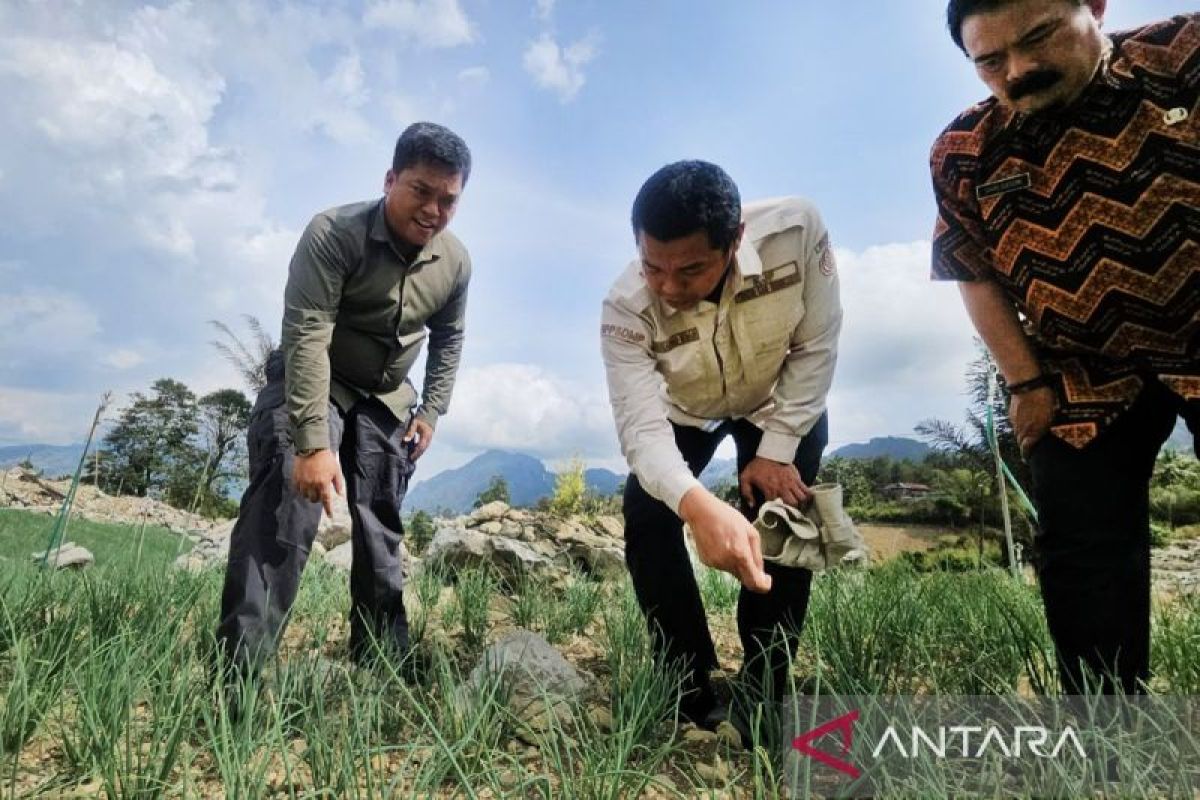
Jakarta (ANTARA) - The government is striving to increase the competitiveness of horticultural farmers through the development of farmer economic institutions (KEP) under the Horticulture Development in Dryland Areas Project (HDDAP).
The Director of Horticulture Downstreaming at the Ministry of Agriculture, Freddy, stated that through the HDDAP programme, the government will build an upstream-downstream agribusiness ecosystem in dryland areas. The goal is to establish economic institutions that ultimately elevate the status of horticultural farmers.
“If previously farmers only focused on being producers, moving forward they will engage in everything from agricultural product management to marketing,” he said in Jakarta on Thursday.
The HDDAP programme receives support from the Asian Development Bank (ADB) and the International Fund for Agricultural Development (IFAD), targeting 10,000 hectares across 7 provinces in 13 regencies. At the project sites, 1,000 clusters will be established, involving 25,000 poor and near-poor farmers, including 5,000 women farmers.
“The main object of this project is horticulture, but the main actors are the farmers. Therefore, we are working to upgrade the class of horticultural farmers by building economic institutions,” he said during a webinar on the Development of Horticultural Farmer Economic Institutions organised by Tabloid Sinar Tani.
Freddy noted that the bargaining position of horticultural farmers has been weak, especially when operating individually. Furthermore, the government finds it difficult to provide programme assistance to farmers who are not organised into groups or institutions.
While Farmer Groups (Poktan) and Farmer Group Unions (Gapoktan) currently exist, he believes improvements are needed so that these institutions become profit-oriented. “Government assistance requires farmer institutions to have profitable businesses. If farmer institutions are not profit-oriented, it is difficult for them to grow and for the government to provide aid,”
he added.
Consequently, the government is encouraging Poktan to upgrade to Gapokton, and Gapoktan to evolve into KEP in the form of companies or cooperatives. The development of farmer institutional capacity is directed towards increasing economic scale, business efficiency, and bargaining power.
“Agricultural business will become effective on a large scale based on clusters, managing multi-commodities through the integration of on-farm and off-farm activities. The management will be corporate and professional,” Freddy explained.
According to Freddy, the form of these KEP farmer institutions will be standardised under a single identity: Horticulture Cooperatives. However, the distinction will lie in the specific commodities managed in each of the 13 regencies covered by the HDDAP programme. “At the very least, approximately 250 horticulture cooperatives will be formed under the HDDAP programme,” he said.
HHDDAP Institutional Consultant, Wayan Ediana, stated that the HDDAP programme will encourage the strengthening of existing farmer institutions, both Poktan and Gapoktan, to meet economic business scales. This will be achieved by consolidating farmers within a single area through the creation of clusters, within which Horticulture Cooperatives will be formed.
Once these business entities are established, the cooperatives will include business units ranging from upstream to downstream that partner with one another, eventually building independence and business growth. “The main principle is that farmers become the owners, users, managers, and beneficiaries of their economic institutions,” said Wayan.
Lasiono, treasurer of the KEP Pisang Maskirana in Lumajang, East Java, said that in building the KEP, they are working to change the farmers’ mindset from being mere producers to becoming value-added agripreneurs. “Farmers are becoming able to think like entrepreneurs with a focus on business profit,” he said.
In the governance of the KEP, he added, professional and transparent management is implemented, with a clear separation of functions between administrators and managers. Having an active board of administrators ensures the cooperative remains directed and can carry out organisational duties with full responsibility.
Currently, the KEP Pisang Maskirana is already able to supply bananas to modern markets. Furthermore, they are currently exploring export markets to Singapore and are presently conducting trial shipments.
Source: jawawa.id (https://jawawa.id/newsitem/ministry-of-agriculture-aims-to-boost-horticultural-farmers-competitiveness-through-economic-institutions-1790254729)
Originally published by Antara (Indonesian) (https://www.antaranews.com/berita/5757029/kementan-tingkatkan-daya-saing-petani-hortikultura-melalui-kep), translated from Indonesian