
Ministry Launches GAMAS Programme to Strengthen Fathers' Role in Childcare
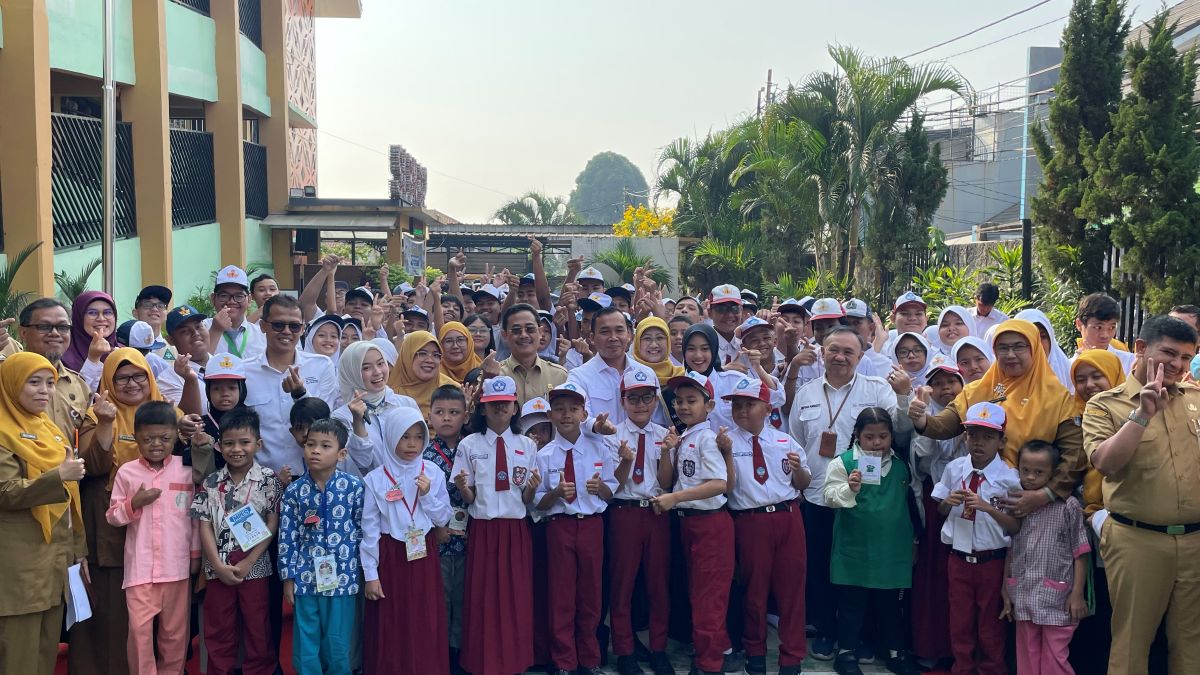
Minister of Population and Family Development/Head of BKKBN Wihaji has invited fathers to set aside time to escort their children to school on the first day of the new school year through the Fathers Escorting Children to School Movement (Gerakan Ayah Mengantar Anak Sekolah, or GAMAS). According to him, a father’s presence at this moment is a form of psychological support that will leave a lasting impression on the child while also strengthening family resilience.
He made the remarks while reviewing the implementation of GAMAS at SLB Negeri 02 DKI Jakarta on Monday (13 July). The visit was also a gesture of support for families with children with special needs.
Wihaji explained that the implementation of GAMAS has been supported through coordination with the Ministry of State Apparatus Utilisation and Bureaucratic Reform (KemenPANRB). According to him, KemenPANRB has issued a circular to all ministries and agencies asking them to grant dispensation to fathers with school-age children so they can escort their children on the first day of school.
“I have coordinated with the MenPANRB, and the MenPANRB has also issued a circular to all ministries and agencies across Indonesia so that fathers who have children are given the opportunity and dispensation to take their children to school on the first day,” Wihaji said.
On that occasion, Wihaji chose to visit SLB Negeri 02 DKI Jakarta as a form of appreciation for children with special needs and their families. He judged that parents who accompany children with special needs are remarkable figures, given their crucial role in the child’s growth and development.
“They are extraordinary people. Their children have special needs and also special strengths, so their parents must be remarkable too,” he said.
Wihaji revealed that, according to government data, there are nearly 250,000 children with special needs receiving formal education in Indonesia. Meanwhile, in DKI Jakarta there are around 6,000 children with special needs attending school.
According to him, the family is the smallest unit and the primary foundation in building the nation. Therefore, the state must be present to support all families, including those with children with special needs.
“The smallest unit in a nation is the family. So fixing the nation together must start with the family, including those who have children with special needs. The state must also be present,” he said.
He also expressed appreciation to the DKI Jakarta Provincial Government for providing educational facilities for children with special needs. In his view, the good facilities at SLB Negeri 02 DKI Jakarta give hope that these children can develop and enjoy a better future.
Furthermore, in a dialogue with parents, Wihaji received various pieces of input, one of which concerned job opportunities for graduates with disabilities. He expressed hope that more businesses will open up employment opportunities for people with disabilities in accordance with their abilities.
“I also ask friends who run businesses, as long as the work can be carried out by persons with disabilities, please give them the opportunity,” he said.
Wihaji once again emphasised the importance of the father’s role in child-rearing. He noted that around 25 per cent of children in Indonesia experience the phenomenon of fatherlessness, or the absence of a father figure in daily life.
“Today, 25 per cent of our children experience fatherlessness. That is why I ask you: make time on this special day to take your children to school. It may only be brief, but it will be remembered forever by the child — that their parent was present psychologically and gave them attention,” he explained.
He cautioned that if parents are absent from their children’s lives, that space risks being filled by mobile devices, which now dominate children’s time.
“Be careful — if we are not present, a new family member will be, namely the mobile phone. Eight to ten hours a day influencing the algorithms of our children’s minds and behaviour,” he said.
For children who do not have a father, Wihaji stressed that this role can be filled by other figures in the family or surrounding environment, such as an uncle, grandfather, mother, or community figure. According to him, what matters most is the continued presence of a companion who provides attention and support to the child.
Through the Fathers Escorting Children to School Movement, the government hopes that more fathers will become actively involved in child-rearing, creating stronger families and enabling Indonesian children to grow and develop optimally.
Source: jawawa.id (https://jawawa.id/newsitem/ministry-launches-gamas-programme-to-strengthen-fathers-role-in-childcare-1783929058)
Originally published by Media Indonesia (https://mediaindonesia.com/humaniora/910305/lewat-gamas-kemendukbangga-perkuat-peran-ayah-dalam-pengasuhan-anak), translated from Indonesian