
Ministry Holds Large-Scale Coordination Meeting to Prevent Forest Fires Ahead of El Niño
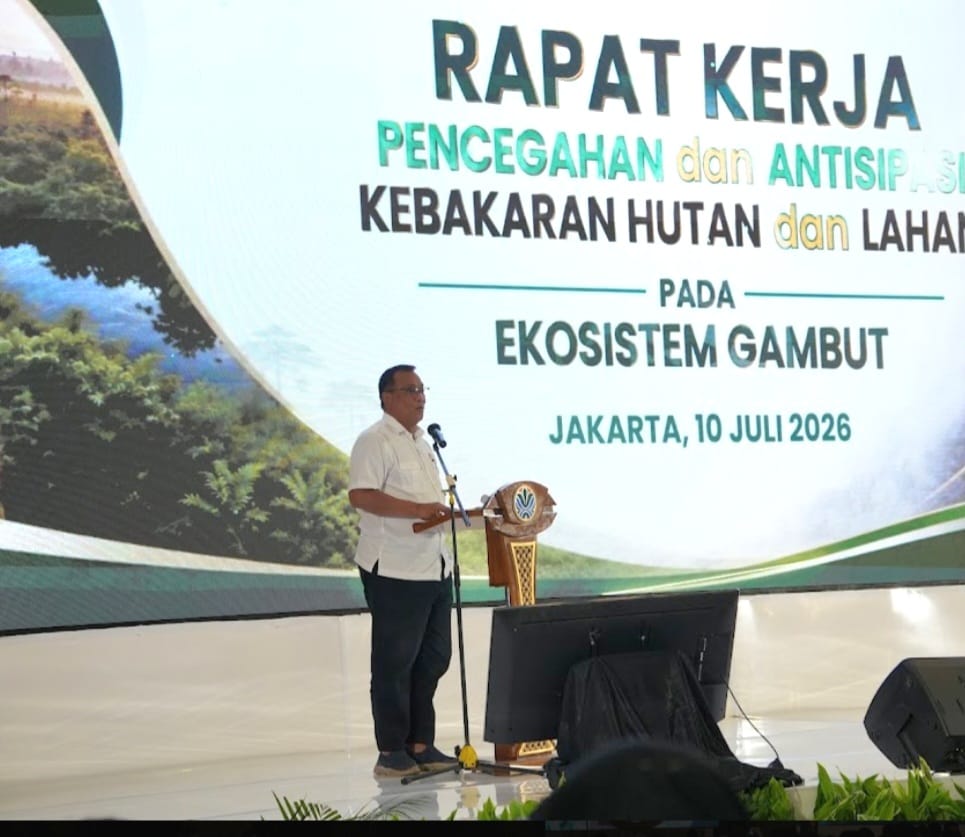
The Ministry of Environment and the Environmental Control Agency (BPLH) held a large-scale coordination meeting on the prevention and anticipation of forest and land fires in peatland ecosystems, themed “Preventing Peat Fires in the Face of El Niño 2026,” in Jakarta on Friday. Minister Moh Jumhur Hidayat opened the meeting, emphasising that the government is conducting a major working meeting held in parallel across various locations, underscoring the scale and urgency of preventing fires in land, peat, and final waste processing sites during the prolonged dry season. The meeting was part of a broader coordination process involving government agencies, companies, regional governments, and the community.
Minister Jumhur Hidayat revealed that a prior meeting had taken place in Bali with three other ministers under the ASEAN forum, discussing forest and land fires as well as potential fires in coastal or marine areas. He noted that each country has its own steps and strategies for addressing fire risks, and Indonesia’s national efforts are part of a wider regional response to transboundary haze, prolonged drought, and recurring forest and land fires.
The meeting involved nearly 400 companies that control concession areas, each potentially covering around 100,000 hectares, collectively spanning millions of hectares including plantations and industrial zones. The Minister’s primary instruction to these companies was clear: fires must not occur within their concession areas, and all potential hotspots must be prevented from developing into fires. Companies are expected to manage their land proactively rather than merely reacting after a fire has started, placing direct responsibility on concession holders to ensure their areas are protected, monitored, and maintain adequate moisture levels during the dry season.
A key mitigation method highlighted was raising and maintaining high groundwater levels, especially in areas with canals or drainage systems. This involves blocking, narrowing, or controlling canals to prevent water from flowing too quickly out of the landscape into rivers or downstream areas. The goal is to retain water within the concession and keep surrounding land moist. In peat ecosystems, uncontrolled drainage causes the water table to drop, drying out the peat and making it highly flammable. Minister Jumhur linked canal management to maintaining the moisture of rivers and land, viewing rewetting as a crucial way to prevent the land from becoming dry enough to burn while also supporting sustainable vegetation growth.
Minister Jumhur Hidayat stated that corporate responsibility extends beyond the formal boundaries of their concessions. Companies are expected to exercise social and environmental responsibility in surrounding areas, working with communities, local leaders, and regional governments within a radius of several kilometres from their concession borders. This cooperation includes assisting communities in building canal blocks, managing drainage channels, and carrying out rewetting activities outside the areas directly controlled by the company. While legal responsibility lies primarily within the concession, the government has assigned a broader prevention role up to a five-kilometre radius, recognising that water systems and fire spread do not follow administrative or concession boundaries. Dry areas outside a concession can pose a fire risk to the company, and conversely, drying within a concession can affect neighbouring villages and ecosystems, necessitating landscape-scale cooperation.
Minister Jumhur Hidayat indicated that many canals still require attention, with more than 20,000 canal management or rewetting actions estimated to be needed in the coming months during the prolonged El Niño period. This statement highlighted the massive scale of physical work and the high urgency caused by the extended dry season, stressing that canal blocking and other water retention measures must be implemented immediately to halt further land drying. The Minister also reiterated the importance of building a joint movement, instructing deputies to gather all relevant parties and ensure their involvement in fire prevention and environmental recovery activities. The government possesses the authority to convene companies and other stakeholders, reinforced by the severe consequences that can be imposed on companies if fires occur due to negligence, including heavy penalties that could threaten their financial viability and potentially lead to bankruptcy.
Source: jawawa.id (https://jawawa.id/newsitem/ministry-holds-large-scale-coordination-meeting-to-prevent-forest-fires-ahead-of-el-nino-1783781462)
Originally published by Media Indonesia (https://mediaindonesia.com/humaniora/909933/klh-gelar-rakor-berskala-besar-aksi-nasional-terkoordinasi-cegah-kebakaran), translated from Indonesian