
Ministry: Deep learning makes parents partners in early childhood education
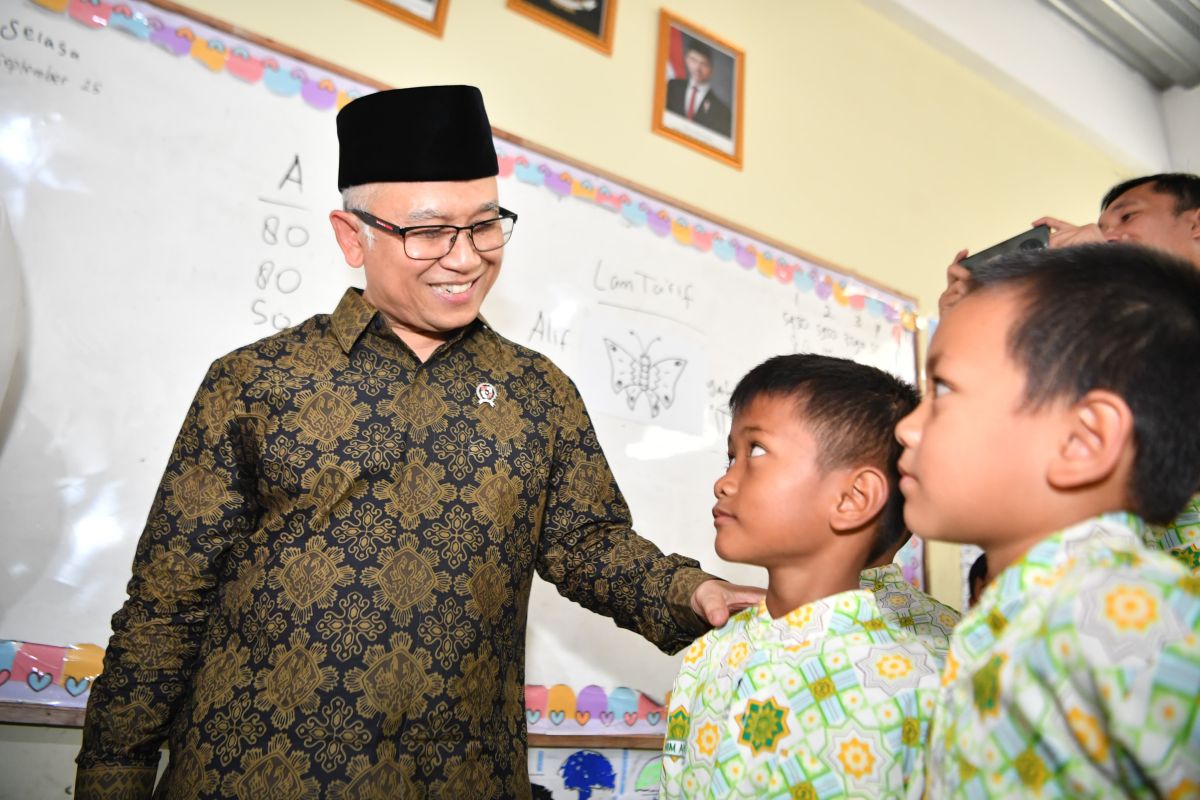
The Ministry of Primary and Secondary Education (Kemendikdasmen) has stated that the deep learning approach can be effectively applied at the early childhood education (PAUD) level, because it centres learning on the child and positions both schools and parents as partners in building children’s curiosity and creativity.
Deputy Minister of Primary and Secondary Education Atip Latipulhayat said deep learning is a paradigm that needs to be adopted in the national education system.
“Deep learning is a learning approach that emphasises deep understanding, not memorisation. We want our children not only to read but to understand, not only to count but to analyse, not only to memorise but to be able to apply and innovate,” Atip said in a written statement in Jakarta on Thursday.
The statement aligns with the experience of Susi Hindayani, head of Bunda Ganesha Kindergarten in Bandung, West Java, who said the school interprets deep learning as a shift from memorisation to meaningful understanding. According to Susi, the approach is realised through project-based learning, contextual activities, freedom to choose activities, and the use of loose parts media that stimulate exploration and sensorimotor development.
“For us, playing is learning. Activities in the centres are designed to be meaningful, mindful, and joyful,” she said.
Parental involvement is also a crucial part of the approach. For the 2026 National Children’s Day commemoration, for instance, the school involved parents and children together in processing recycled waste into works of art. “We involve parents as learning partners, so that the child’s learning experience continues at home,” Susi said.
A similar experience was shared by Catur Wulandari, head of Gagas Ceria Kindergarten, who believes deep learning helps children understand and find meaning through real experiences. “Children learn through experiences close to their lives, so that curiosity, thinking skills, and character grow as provisions for the future,” she said.
Catur added that teachers act as facilitators who pose open-ended questions and provide challenges appropriate to the child’s developmental stage. “Play is the most natural way of learning. Through play, children learn to solve problems, cooperate, communicate, manage emotions, and at the same time understand various concepts,” she said.