
Ministry boosts family quality to face ageing population
Jakarta (ANTARA) - The Ministry of Population and Family Development (Kemendukbangga)/BKKBN continues to improve family quality and resilience to face the phenomenon of an ageing population.
Based on the results of the 2020 Population Census and projections by BPS, Bappenas and UNFPA regarding the composition of Indonesia’s population from 1970 to 2040, a structural change is evident: the population aged 65 and above tends to increase, while the productive-age population (15-64 years) and those aged 0-14 years are steadily declining.
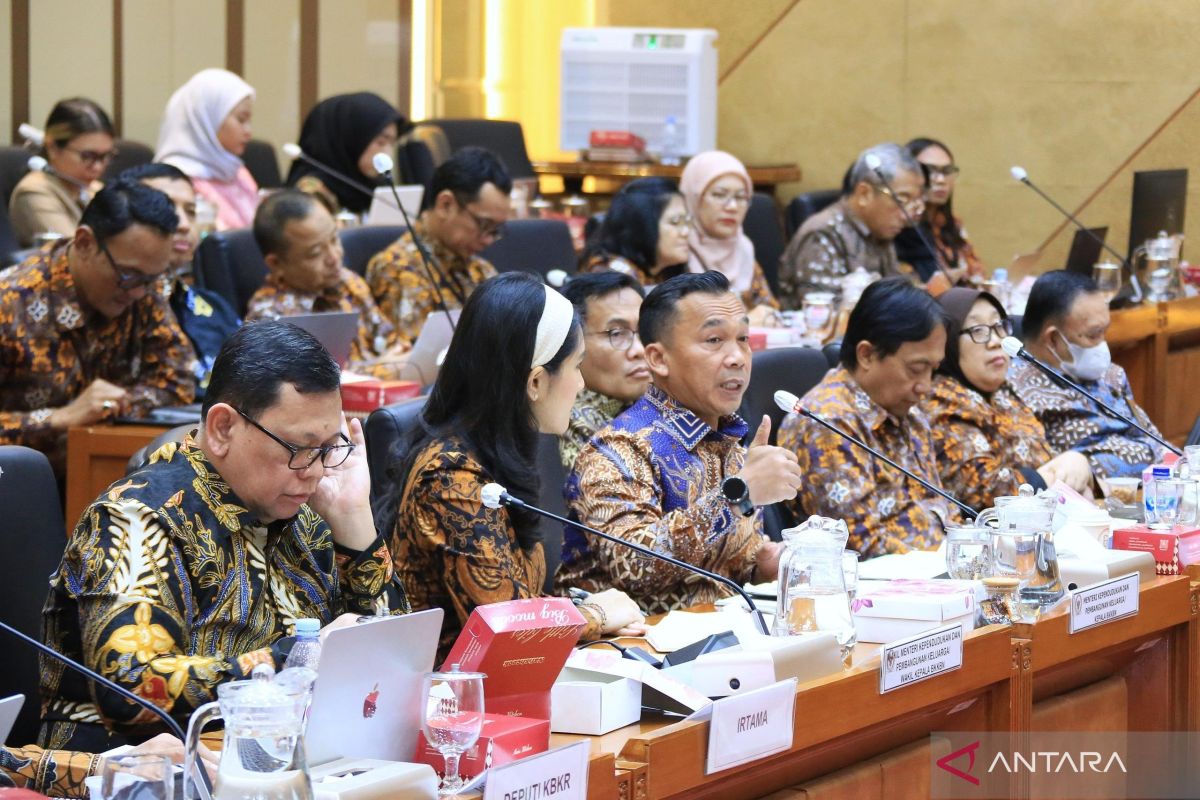
Minister of Population and Family Development/Head of BKKBN Wihaji conveyed several policy strategies during a working meeting with Commission IX of the House of Representatives (DPR RI) in Jakarta on Tuesday, including shifting the meaning of family planning from the original “two children are enough” towards building family quality.
“The strategic role of the Family Development, Population and Family Planning Programme (Bangga Kencana) in facing changes in population structure is to maintain structural balance through population quantity management, as well as strengthening population quality and family resilience,” said Wihaji.
Other measures include strengthening the synchronisation of asymmetric policies on managing population quality and quantity, as well as culture-based family planning campaigns and outreach involving religious figures, customary leaders and young people.
“To strengthen population quality and family resilience, Kemendukbangga/BKKBN is focusing on family resilience and independence through various programmes,” he explained.
These programmes include Bina Keluarga Balita (BKB, Toddler Family Guidance), Taman Asuh Sayang Anak (TAMASYA), and Usaha Peningkatan Pendapatan Keluarga Akseptor (UPPKA, family income improvement scheme); Quality Family Villages; adolescent resilience and elderly empowerment through the Gerakan Ayah Teladan Indonesia (GATI, Exemplary Father Movement); and the Indonesia Family Academy.
Wihaji also reported progress on efforts to accelerate stunting reduction through the Genting programme. Based on data recapitulation from all provinces as of 3 September 2026, around one million families at risk of stunting have received assistance through the programme, covering education, nutrition, clean water, economic empowerment, decent housing and sanitary toilets.
To date, foster parent partners (Orang Tua Asuh, OTA) involved in the Genting programme total 159,587, with an estimated Rp72 billion in assistance contributed by these partners.
Kemendukbangga/BKKBN and Commission IX of the DPR RI have also committed to continuing to strengthen the implementation of family development policies, expanding the coverage and quality of family planning services, strengthening support for families at risk of stunting, and improving coordination and integration of stunting reduction acceleration efforts.