
Ministries of Cooperatives and Social Affairs to Elevate PKH Recipients as Employees of Red and White Village Cooperatives
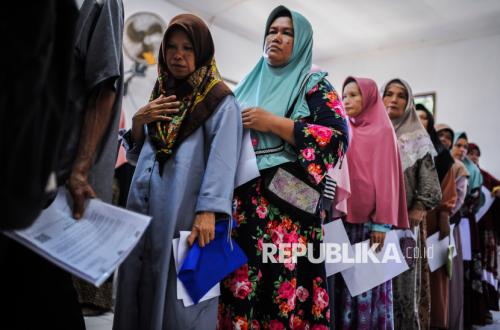
The Ministry of Cooperatives (Kemenkop) and the Ministry of Social Affairs (Kemensos) are planning to open up employment opportunities for 15-18 individuals from Beneficiary Families (KPM) of social assistance, particularly the Family Hope Programme (PKH), to work as employees in the Red and White Village/Urban Village Cooperative (KDKMP). This step is a strategy for optimising community empowerment, especially from decile 1 society and beyond.
Cooperative Minister Ferry Juliantono explained that the plan to open employment opportunities in KDKMP for social assistance beneficiaries such as PKH is a follow-up to Presidential Instruction (Inpres) No. 8 of 2025 on Optimising the Implementation of Poverty Alleviation and the Eradication of Extreme Poverty. Ferry conveyed this after receiving a visit from Social Affairs Minister (Mensos) Saifullah Yusuf on Monday (13/4/2026).
“Today we discussed how PKH recipients can become managers or work in Village Cooperatives. The hope is that each cooperative can open opportunities for around 15-18 people from beneficiary families in each village,” Ferry stated in a written statement in Jakarta on Tuesday (14/4/2026).
With this scheme, Ferry continued, Kemenkop estimates that nearly 1.4 million PKH recipients can be absorbed as workers in village cooperatives. This is based on the assumption that if the 83,000 KDKMPs spread across Indonesia operate by absorbing 15-18 workers from PKH families.
Ferry emphasised that this step can also help PKH beneficiary families exit the extreme poor category. Therefore, Kemenkop will soon issue special regulations to facilitate PKH beneficiaries becoming employees in KDKMP.
He also explained that Kemenkop will issue new regulations regarding the obligation burdens for KDKMP members from PKH beneficiary families to make them lighter. This is because cooperatives have provisions for mandatory dues, principal dues, and voluntary dues.
“This legal umbrella is important so that beneficiaries are not burdened by membership costs. We want them to be independent, not just reliant on social assistance,” Ferry stressed.
Ferry added that the inclusion of PKH beneficiary families as cooperative members and employees is expected to increase their income. Another benefit is that at the end of each year, PKH beneficiary families can receive Remaining Business Results (SHU).
“This SHU will be a significant additional income for beneficiary families. With SHU, they can exit decile 1 and move up,” said Ferry.
As an effort to implement all these ideas, Kemenkop will conduct deeper discussions with Kemensos, including the integration of PKH beneficiary family data.
“That data will be used to determine which PKH recipients are eligible to work in Village Cooperatives,” said Ferry.
Meanwhile, Deputy Cooperative Minister (Wamenkop) Farida Farichah added that the recruitment of 15-18 workers per KDKMP is being finalised. Positions needed include drivers, security guards, and warehouse keepers. She emphasised the importance of integration with Kemensos data, particularly for beneficiaries from deciles 1-4. This way, the recruited workers truly match the needs.
“The concept is owned by residents and urban villages, so workers are prioritised from the local domicile,” said Farida.
Social Affairs Minister Saifullah Yusuf stated that there are currently around eight million KPM from the Ministry of Social Affairs who will be encouraged to become KDKMP members. From that number, not all will be recruited as KDKMP employees, but all will be encouraged to become members.
“To become employees in Village Cooperatives, priority is given to productive ages according to the capacity and abilities of the beneficiaries. We will map beneficiary families, then conduct workforce training,” said Saifullah.
Saifullah affirmed that KDKMP is the right economic institution for community empowerment, especially from PKH KPM. He is optimistic that this collaboration between Kemenkop and Kemensos will accelerate poverty alleviation.
“With this cooperation, we can measure how many PKH recipients successfully become independent families and exit extreme poverty,” said Saifullah.