
Minister's Academic Address Highlights University's Role in Producing High-Impact Generations
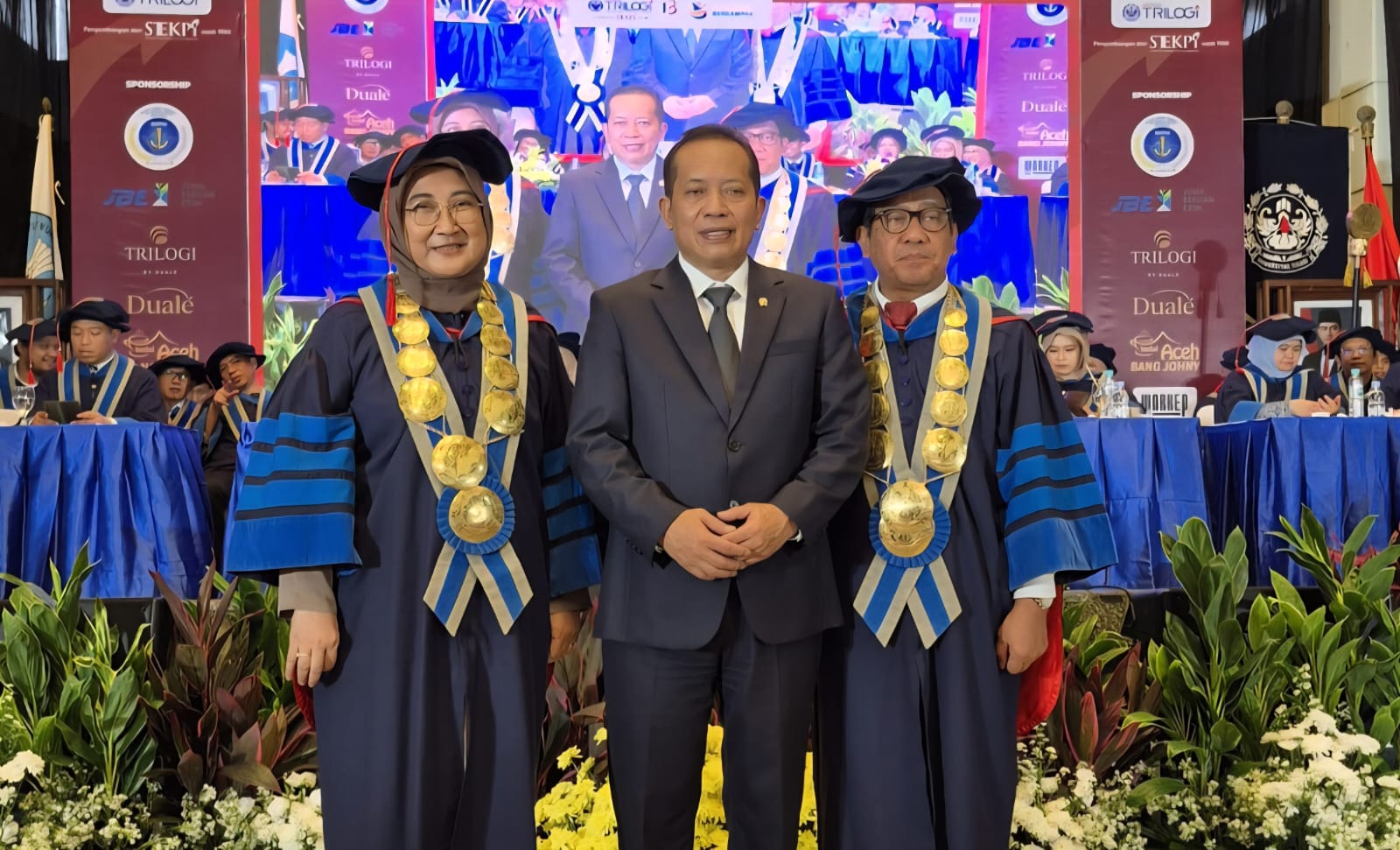
Cooperatives Minister Ferry Joko Juliantono stated that Universitas Trilogi plays a strategic role in producing young generations not only adaptable to technological advancements but also socially conscious and collaborative to create widespread societal impact. He made the remarks during his academic address at Universitas Trilogi’s graduation ceremony in South Jakarta on Saturday, 23 May 2026. The graduation, themed ‘Accelerating Impactful Technosociopreneurship for Indonesia’, saw the Minister deliver a speech on the same theme, reflecting on challenges facing youth amid economic shifts and digital transformation. ‘I view Universitas Trilogi as strategically positioned to produce graduates who not only leverage technology but also demonstrate social concern and collaborative spirit to generate broad societal impact,’ he said. According to Ferry, Indonesia does not lack ideas or young talent. However, the biggest challenge now is fostering the courage to innovate, building collaboration capabilities, and creating ecosystems that accelerate the emergence of works that bring tangible benefits to society. Therefore, higher education institutions play a crucial role in nurturing creative, innovative generations with a social orientation. At the same event, Universitas Trilogi Rector Pramono Hari Adi stated that today’s graduates are expected not only to be job-ready but also capable of creating opportunities amid evolving economic challenges. He said the technosociopreneur spirit is a key foundation for building young people’s courage to face changing times. ‘I believe Universitas Trilogi graduates have the capacity to become a new generation of change-makers. A generation capable of addressing economic challenges with creativity and courage. A generation that does not easily surrender to circumstances but can spot opportunities amid difficulties,’ he said. Meanwhile, Universitas Trilogi’s Vice Rector for Learning and Student Affairs, Anies Lastiati, explained that technosociopreneur development is integral to the campus’s learning design, previously known as STEKPI. She said the university’s mission is to produce graduates capable of creating jobs, mastering soft skills, and leveraging technology to address market challenges. ‘The ability to create jobs, possess soft skills for work readiness and independence, particularly in creative economy by using technology to meet market challenges, resulting in graduates who are job-ready, innovative, adaptable, and most importantly, have strong character based on Pancasila,’ she explained. This year, Universitas Trilogi graduated 616 students, comprising 479 undergraduate and 137 Master of Management graduates. With this addition, the university’s total alumni now stands at 9,644 from various study programs including Management, Accounting, Development Economics, Early Childhood Education, Primary Education, Food Science and Technology, Agribusiness, Information Systems, Informatics Engineering, Visual Communication Design, and Product Design. The graduation ceremony was attended by the Presidential Special Envoy for MSMEs, Creative Economy, and Digital Affairs and also Chairman of the STEKPI-Trilogi Alumni Association, Ahmad Ridha Sabana; Chairman of the YPPIJ Board of Trustees and former Coordinating Minister for People’s Welfare, Haryono Suyono; YPPIJ Chairman Arissetyanto Nugroho along with the foundation’s management and various strategic partners of Universitas Trilogi. Cooperatives Minister Ferry Juliantono praised KSP Nasari for its digital white label application innovation for Village/Urban Cooperatives Merah Putih (KDKMP). Minister of Cooperatives (Menkop) Ferry Juliantono emphasised the importance of cross-sector collaboration in accelerating rural economic independence. KDMP is not merely a business unit but a national instrument to ensure wealth redistribution. Around 2,000 products sold at KDMP outlets are expected to come from Muslim communities and Islamic organisations. According to Ferry, the Kopdes Merah Putih programme is a key part of the economic concept known as Prabowonomics, which places the people at the centre of economic policy.