
Minister Unveils Five Strategic Pillars to Strengthen Civil Servant Integrity
The integrity of the state civil apparatus (ASN) cannot be built instantly, but rather through a continuous learning process. Based on this principle, the government launched the E-Learning ASN Berintegritas programme, a digital-based anti-corruption training initiative aimed at equipping civil servants with moral understanding, rejecting gratuities, and implementing clean bureaucratic governance.
The programme was initiated by the Corruption Eradication Commission (KPK), which partnered with the Ministry of State Apparatus Empowerment and Bureaucratic Reform (PANRB), the National Institute of Public Administration (LAN), and the National Civil Service Agency (BKN).
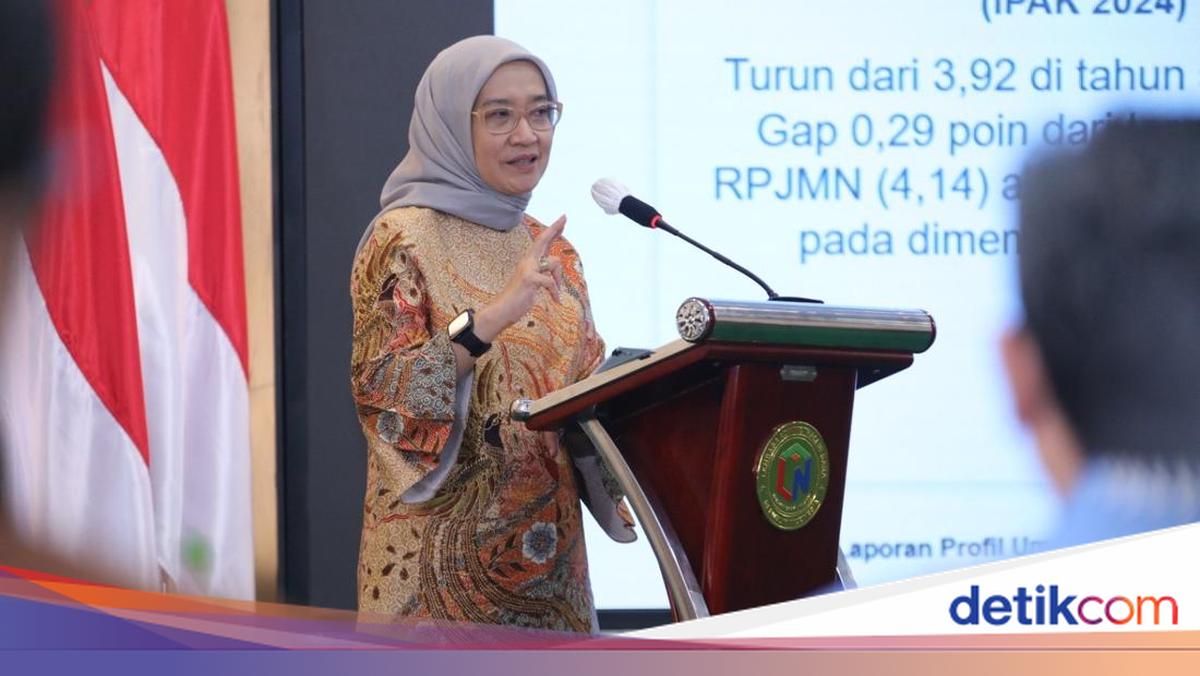
“The launch of the E-Learning ASN Berintegritas programme today is important as a joint effort to strengthen a culture of integrity in the execution of duties and public services,” said Minister of PAN-RB Rini Widyantini in a written statement on Wednesday (17/6/2026).
Rini outlined five strategic pillars to strengthen ASN integrity as public servants. First, integrity serves as the main pillar of national bureaucratic reform. When state officials design business process simplification, they should embed anti-corruption values.
Second, the ASN work culture must be professional and service-oriented, in line with the BerAKHLAK core values. “The e-learning modules are designed to erode the culture of wanting to be served and replace it with a culture of serving that is clean from gratuities,” Rini explained.
Third, integrity learning is treated as competency development. Through this programme, the government integrates the integrity aspect into the national competency development system. Every ASN who completes the e-learning series will receive an official certificate from LAN, which will be converted into lesson hours. This step proves that honing morals is valued equally with honing competencies.
Fourth, the pillar focuses on equalising access across government agencies. The KPK identified the obstacle that the majority of regional governments do not yet have adequate digital learning management systems to train their employees independently. “Therefore, the Ministry of PAN-RB together with LAN has prepared a single integrated national system, Smart ASN,” Rini stated.
The final pillar is national policy support and the strategic role of Personnel Development Officers (PPK). The Ministry of PANRB will issue a Ministerial Circular making participation in this e-learning programme mandatory for all government agencies. PPKs are urged to monitor their respective employees’ participation achievements through the KPK’s INDATA monitoring dashboard platform.
Rini emphasised that bureaucratic reform is not a pile of regulations. “When a citizen in a remote area receives fast service without ‘administration fee’ conditions, that is where our integrity speaks. There is no room for high-performing but low-integrity officials to manage this government,” Rini concluded.
“Previously, a learning trial was conducted in 12 pilot agencies. From a target of 56,788 ASNs, the realisation exceeded the target, with 62,750 ASNs having completed the training. In the training, ASNs were equipped with knowledge to recognise and avoid corruption, make ethical decisions, and become anti-corruption change agents,” she said.
Meanwhile, KPK Chairman Setyo Budiyanto asserted that integrity is the foundation that determines quality. Integrity is supported not only by strong regulations but also by its human resources. From there, good public services, professional bureaucracy, and a stronger future for Indonesia are born. “The state is perceived by the public through the ASN services they encounter every day. Integrity is the differentiator between services that deliver justice and services that wound public trust,” Setyo concluded.