
Minister: Universities to serve as spearhead for sustainable MSME development
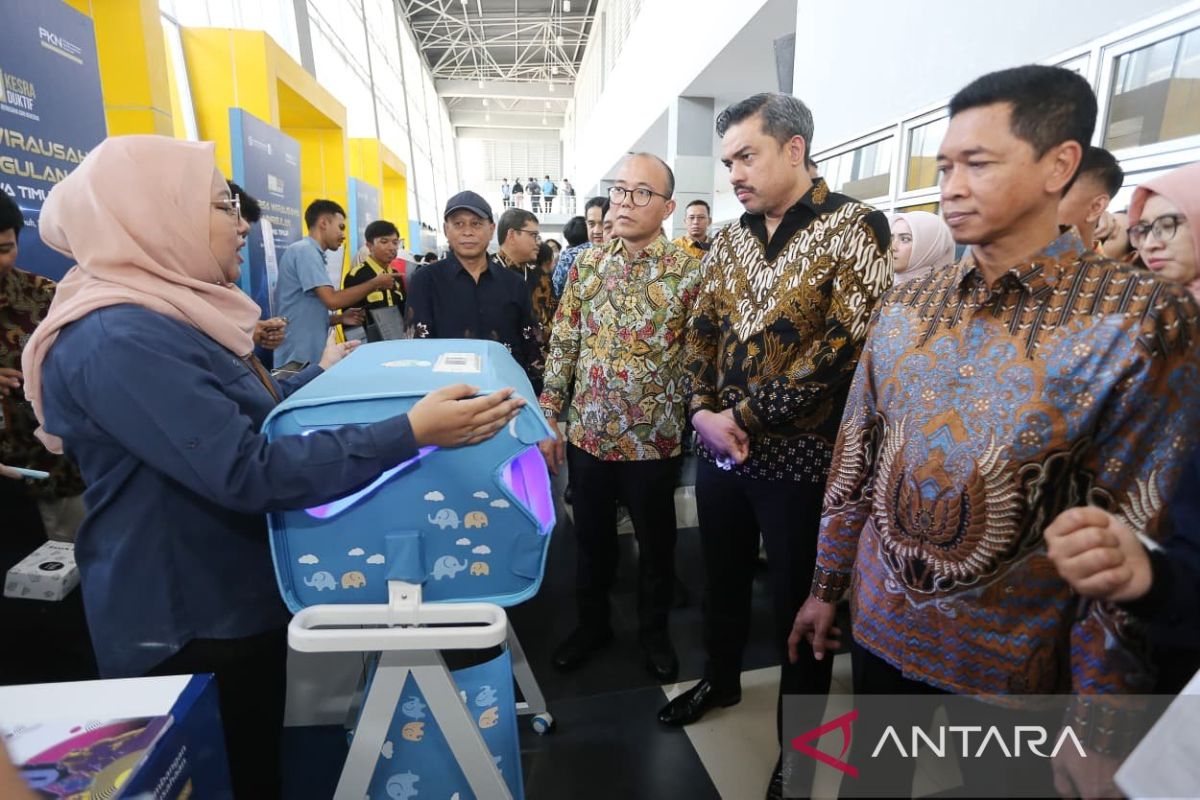
The Ministry of Micro, Small, and Medium Enterprises (MSMEs) is encouraging higher education institutions to strengthen the role of incubators as platforms for business coaching to ensure that MSME development is structured, sustainable, and integrated.
MSME Minister Maman Abdurrahman stated that the existence of incubators serves as a spearhead for the Entrepreneurship and People’s Economic Development Programme (Prokesra), which targets the creation of 10 million entrepreneurs and workers.
“The target is that we want to produce 10 million entrepreneurs and workers through this programme, and the spearhead is that we want to begin revitalising existing incubators across the country, both those under university supervision and those outside of campuses,” he said during the Leading Entrepreneurship Exchange and the 2026 East Java KUR mass contract signing at the Sepuluh Nopember Institute of Technology (ITS), Surabaya, on Wednesday.
University-based MSME incubators function to assist, guide, and accelerate the development of startups or MSMEs owned by students, alumni, or the general public, helping them become independent and profitable enterprises.
Maman noted that universities hold a strategic position as centres for the development of knowledge and innovation, which can be directed to meet societal needs while simultaneously creating business opportunities.
Therefore, he believes that incubators are necessary to extend assistance to MSME actors, ensuring that coaching does not merely stop at the provision of aid or financing.
This is because many MSME products possess potential but fail to grow due to a lack of support in research, development, and continuous mentorship.
“Because we need an extension of our reach so that the coaching of micro, small, and medium enterprises becomes more structured, systematic, integrated, and sustainable,” he remarked.
Through the strengthening of campus incubators, Maman said, the complex issues facing MSMEs—which involve not only capital but also licensing, certification, and market access—can be addressed.
He also warned that non-continuous coaching risks causing MSMEs to cease growing, even if they have previously received financial support.
He added that improving product quality is also a vital component to ensure that MSMEs are not only able to meet domestic market needs but also have the opportunity to expand into international markets.
“That is why, together with universities, we must revitalise incubators. Hopefully, through this policy, high-quality MSMEs will emerge to meet our domestic needs,” he concluded.