
Minister Trenggono: Merging 11 Polytechnics into Ocean Institute of Indonesia Strengthens Blue Economy
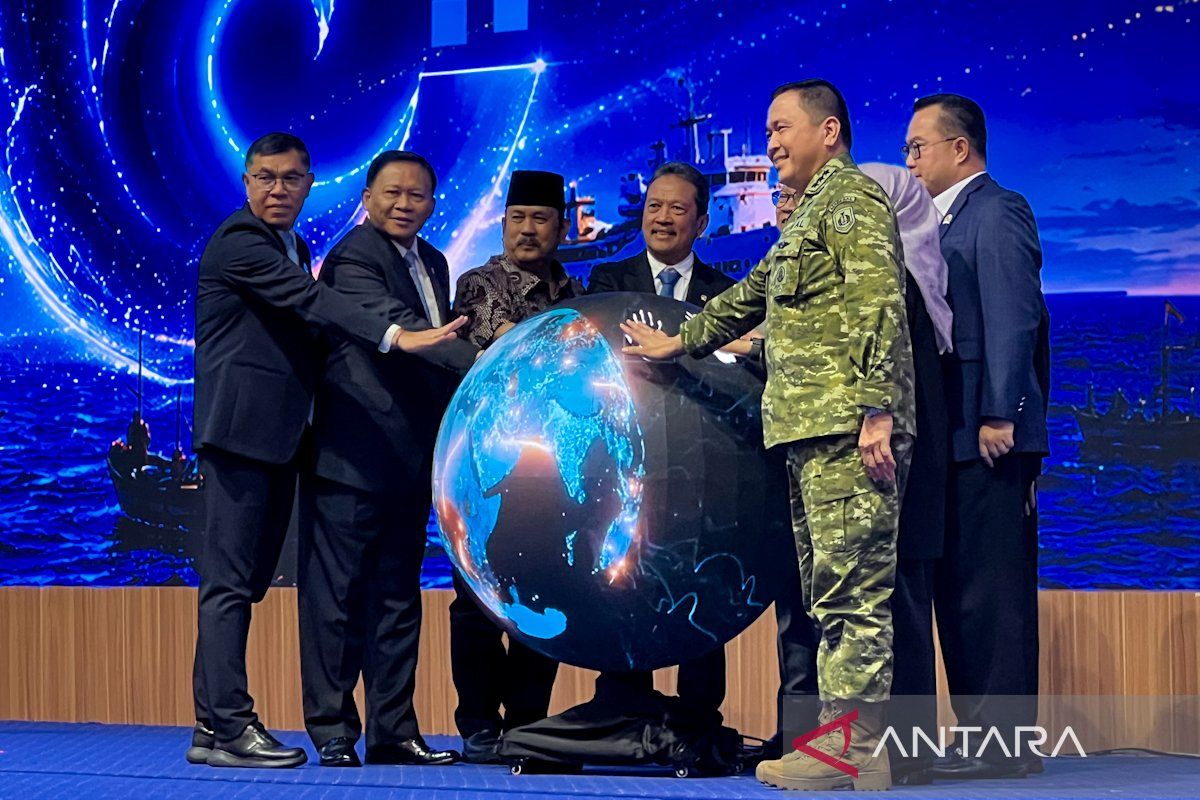
Jakarta (ANTARA) - Minister of Maritime Affairs and Fisheries Sakti Wahyu Trenggono said merging 11 polytechnics into a single institution named Institut Kelautan Indonesia (IKI), or the Ocean Institute of Indonesia (OII), can strengthen the quality of human resources in sustainable blue economy development.
“These 11 polytechnics are being unified and thoroughly transformed, starting from the education curriculum, because I will look at the measures of success. We want to move towards what is called the blue economy; we want to implement the blue economy,” Trenggono said in Jakarta on Tuesday.
He made the remarks at the inauguration of the Ocean Institute of Indonesia as a step to strengthen the higher education ecosystem and human resource development in Indonesia’s maritime and fisheries sector.
Trenggono said the formation of the Institut Kelautan Indonesia is a strategic step to unite maritime and fisheries vocational education so that it can produce graduates who are more adaptive to modern industrial developments.
According to him, the unification of all polytechnics was carried out after recognising the need for a comprehensive overhaul of the vocational education system, from the curriculum and organisation to graduate orientation, in line with the needs of the national maritime sector.
He assessed that the transformation of vocational education was necessary because the learning methods and practice facilities at a number of polytechnics had yet to keep pace with technological developments and the current needs of the maritime and fisheries industry.
Trenggono affirmed that the Institut Kelautan Indonesia is directed to give rise to innovations, technologies and new industries capable of accelerating the implementation of the blue economy through the sustainable and value-added use of maritime potential.
According to him, Indonesia has enormous blue economy potential, but this has not been matched by the emergence of research-based innovations and industries able to optimise the wealth of national marine resources.
He said the institute is also expected to produce skilled workers who meet the needs of the global maritime industry so that graduates have high competitiveness and are absorbed into the international market.
To support this transformation, the Ministry of Maritime Affairs and Fisheries is cooperating with a number of universities to strengthen academic quality, research and the development of maritime vocational education.
Trenggono added that each campus will have a specialisation according to regional potential so that it can support blue economy development and increase the contribution of the maritime and fisheries sector to the national economy.
“So going forward, if you want to find an expert in lobster cultivation, for example, you go to a polytechnic. If you want an expert in seaweed cultivation, for example in Kupang, and so on. So there is a specialisation,” he said.
“This means not all campuses are the same; the education is the same, but they have specialisations that we then direct towards,” Trenggono added.
At the same event, the Head of the Maritime and Fisheries Human Resources Development Agency (BPPSDM KP) at the ministry, I Nyoman Radiarta, said the vocational education transformation was carried out to improve quality, competitiveness and international recognition.
He said the transformation was marked by the issuance of the Minister of Maritime Affairs and Fisheries Decree Number 50 of 2026 on the use of the nomenclature Institut Kelautan Indonesia or Ocean Institute of Indonesia.
In addition, the ministry also issued Decree Number 51 of 2026 on the establishment of the Institut Kelautan Indonesia Council as a vehicle for synergy in vocational education.
According to Nyoman, the council unites 11 maritime and fisheries higher education institutions to strengthen collaboration, network development and the integrated improvement of vocational education quality.
He said the Institut Kelautan Indonesia will develop flagship programmes to meet the need for internationally standard maritime and fisheries human resources, as well as produce applied research that answers the sector’s needs.
Nyoman added that vocational higher education is also directed to support various government priority programmes, including the development of fishing villages, aquaculture zones, fisheries revitalisation, salt self-sufficiency, and the modernisation of the national fishing fleet.
According to him, the vocational education transformation is expected to strengthen the implementation of blue economy policies through the development of excellent human resources to support economic growth, food security and the welfare of coastal communities.
Source: jawawa.id (https://jawawa.id/newsitem/minister-trenggono-merging-11-polytechnics-into-ocean-institute-of-indonesia-strengthens-blue-economy-1784624159)
Originally published by Antara (Indonesian) (https://www.antaranews.com/berita/5658552/menteri-trenggono-penggabungan-11-politeknik-perkuat-ekonomi-biru-ri), translated from Indonesian