
Minister Trenggono Accelerates Mangrove Rehabilitation to Combat Critical Degradation
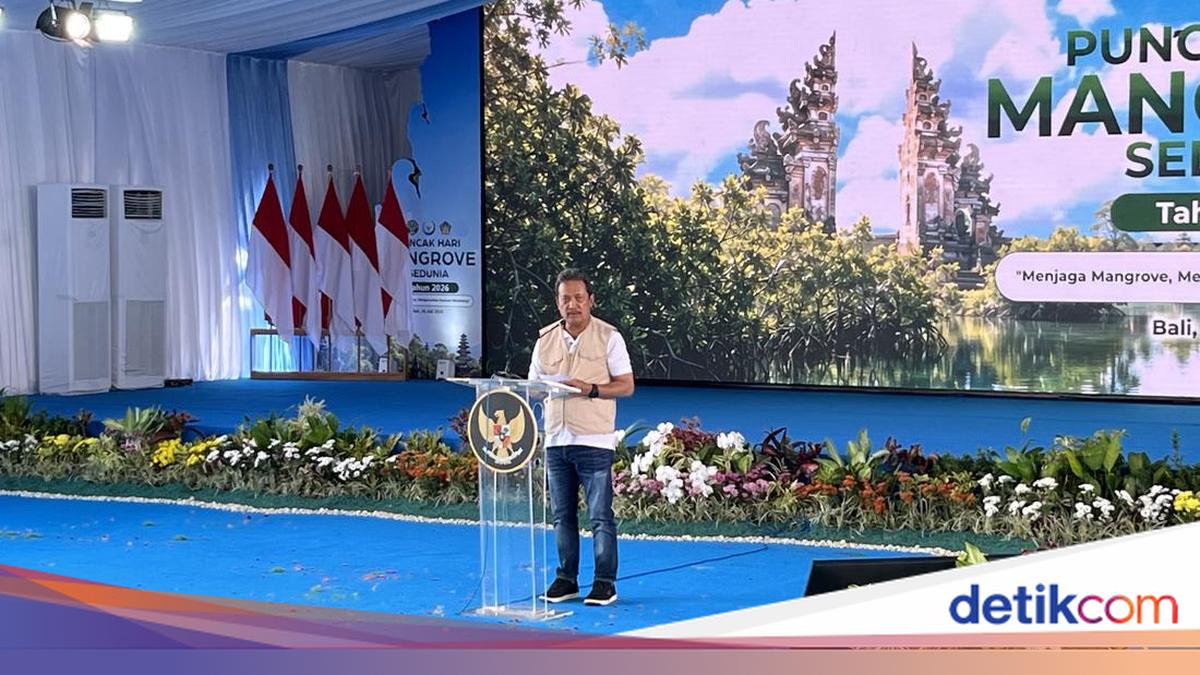
Minister of Marine Affairs and Fisheries, Sakti Wahyu Trenggono, revealed that Indonesia has lost around 40 per cent of its mangrove forests over the past three decades. The Ministry of Marine Affairs and Fisheries is undertaking various rehabilitation efforts.
“Over the last three decades, Indonesia has lost around 40 per cent of its mangroves, with a rate of damage of about 52,000 hectares per year, and around 19.2 per cent of mangroves are in critical condition,” said Trenggono during World Mangrove Day at the Ngurah Rai Grand Forest Park (Tahura), as reported by detikBali on Sunday (26/7/2027).
Trenggono said the extent of mangroves has declined since the 1980s, from 4.2 million hectares to 3.3 million hectares. Yet, he said, mangroves play a vital role as coastal protection, as habitat for various marine organisms, as a pillar of fisheries productivity and community livelihoods, and as carbon stores.
Trenggono revealed that degradation and abrasion are the main causes of Indonesia losing 40 per cent of its mangrove forests over the past three decades. Almost all mangrove areas across Indonesia have experienced degradation due to wave erosion.
Trenggono said the way to address the loss of mangroves is through restoration. Indonesia, he said, also plays a strategic role as one of the world’s major fisheries producers, with its vast marine resources. Around 23 per cent of the world’s mangrove ecosystems support fisheries productivity and food security.
“Therefore, mangrove rehabilitation must not stop at planting alone, but must be carried out on the basis of ecological suitability so that the ecosystem’s functions genuinely recover,” Trenggono explained.
Trenggono added that the Ministry of Marine Affairs and Fisheries is working in synergy with all policymakers to protect, restore, and manage Indonesia’s mangrove ecosystems. As many as 15,000 seedlings of the kurap mangrove tree (Rhizophora mucronata) were planted at the Batu Lumbang Mangrove Ecotourism site in Tahura Ngurah Rai, Denpasar.
“The success of mangrove recovery depends on collaboration among all stakeholders through integrated policies, the use of science, community empowerment, and the strengthening of funding, oversight, and public education,” said Sakti.