
Minister Tito Urges Local Governments to Speed Up Data Collection on Permanent Housing for Sumatra Disaster Survivors
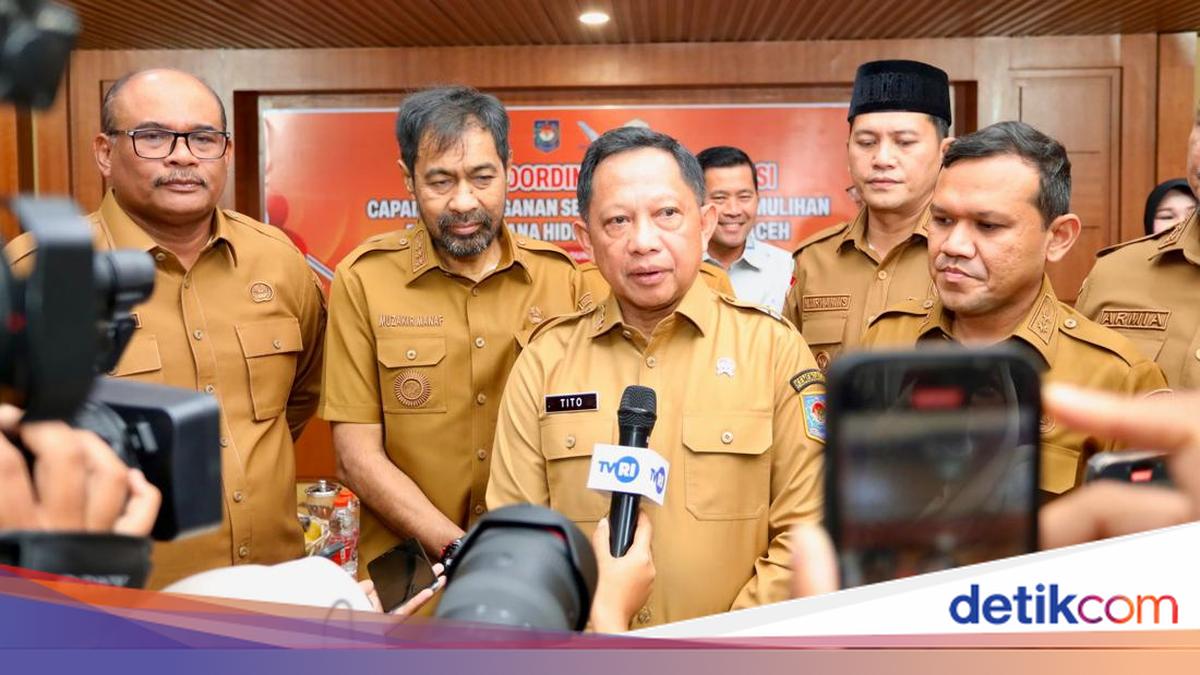
The Chairman of the Sumatra Post-Disirement Rehabilitation and Reconstruction Acceleration Task Force (Satgas PRR), Muhammad Tito Karnavian, has requested that local governments immediately compile data on recipients for permanent housing (huntap) for disaster survivors in Sumatra. Tito also urged local authorities to accelerate land preparation to support the construction of communal housing.
He emphasised that the issue of slow data collection for housing recipients, whether for in-situ or communal schemes, must not recur during the permanent rehabilitation and reconstruction phase. This is because the government intends for disaster survivors who have lost their homes to transition to permanent housing as soon as possible.
Tito revealed that the slow collection of valid housing data by local governments has previously caused difficulties for the central government in executing construction. Without valid and verified ‘by name, by address’ data, permanent housing cannot be built with precise targeting.
“All local government colleagues say their citizens need urgent care, especially regarding permanent housing, but they do not provide the data. They do not record who has heavily or lightly damaged homes, only those who have lost everything. Each individual must be asked whether they prefer in-situ housing on their own land, built by the BNPB with assistance of Rp60 million, or communal housing from the Ministry of Housing and Settlement Areas (PKP),” Tito stated in a written statement on Thursday (11/06/2026).
He made these remarks during the Coordination and Evaluation Meeting on Development Achievements and Post-Hydrometeorological Disaster Recovery Acceleration at the Aceh Governor’s Office on Tuesday (09/06/2026).
Tito explained that the acceleration of permanent housing construction can fundamentally be realised through collaboration between relevant agencies and local governments. Under this scheme, the BNPB is responsible for building in-situ housing on original plots or providing assistance of Rp60 million for survivors who wish to rebuild their homes independently.
Meanwhile, the Ministry of Housing and Settlement Areas (PKP) is tasked with building communal permanent housing in the form of residential areas or complexes.
On the other hand, local governments play a role in preparing land and access roads to the housing locations. This land may consist of local government-owned land, central government land, or government land with Right to Cultivate (HGU) status.
“The issue will indeed lie with the land and the ‘by name, by address’ data collection,” said Tito.
Tito added that the government will prioritise the construction of permanent housing for regions that first submit complete ‘by name, by address’ recipient data. Therefore, he requested regional heads to ensure that recipient data is complete, including the survivors’ preference for either the in-situ or communal housing scheme.
“If a regional head does not submit ‘by name, by address’ data—specifying who wants in-situ and who wants a complex—they will be left behind. Let the people be angry with their regional heads. We cannot work without data; we cannot calculate. So, if there is a region that has not sent the ‘by name, by address’ data, specifying in-situ or complex preferences, with all due respect, we will leave them behind,” he concluded.