
Minister Tito Reveals the Traces of the Indonesian Language on Penyengat Island
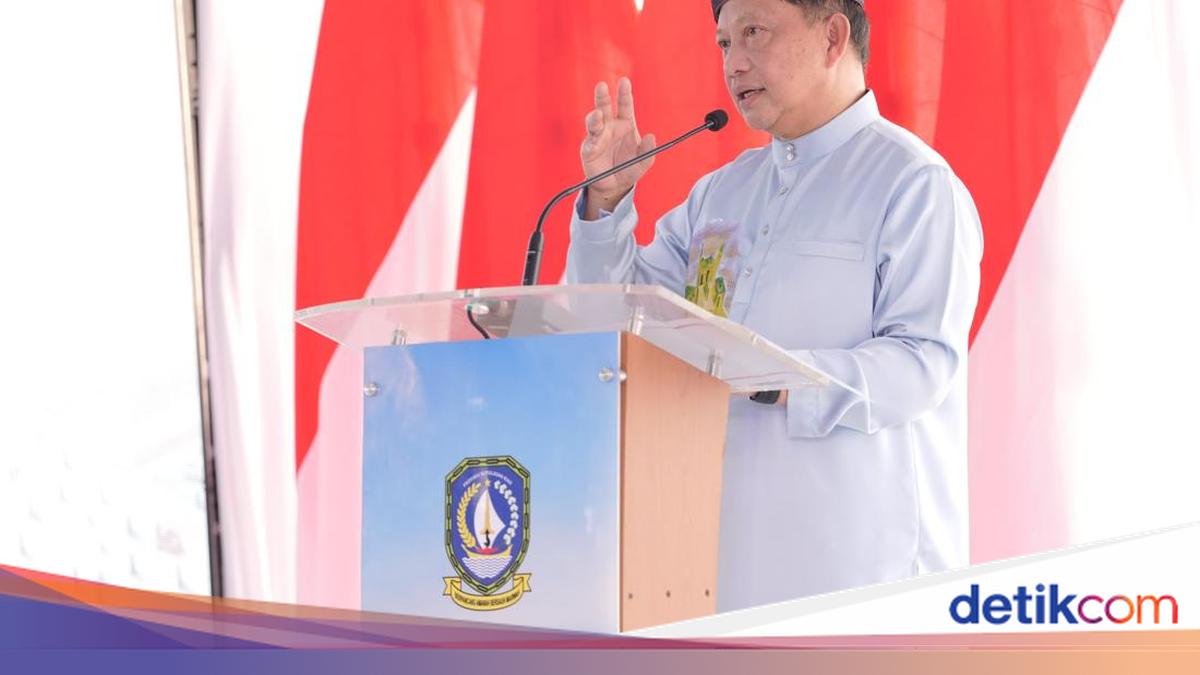
The Minister of Home Affairs, Muhammad Tito Karnavian, has commended the development of the National Language Museum and Monument on Penyengat Island, Tanjungpinang City, Riau Islands. According to him, this development is a vital step in preserving the historical traces of the Indonesian language while introducing its origins to future generations.
Tito made these remarks while attending the groundbreaking ceremony for the National Language Museum and Monument on Penyengat Island on Thursday (24/09). He noted that the museum and monument would serve not only as a historical tourism destination but also as an educational tool for the Indonesian people to understand the journey of their national language.
He stated that the Malay language played a historical role in the development of the Indonesian language. This language has long been used as a medium of communication between regions, subsequently securing an important position in the formation of Indonesia’s national identity.
“Currently, Malay has become Indonesian and is a compulsory part of the curriculum. From Sabang to Merauke, it is not just within the Malay, Sumatran, or Kalimantan regions, but also in Bali and Papua,” Tito said in a written statement on Thursday.
He added that the Indonesian language plays a strategic role as a communication tool between various ethnic groups and regions amidst Indonesia’s linguistic diversity. This, he continued, demonstrates that the Indonesian language functions not only as a means of communication but also as a vital component in maintaining national unity.
“This is our unifier. This museum and this monument will be our unifier,” he emphasised.
He believes the construction of the National Language Museum and Monument can provide a space to introduce the history of the Indonesian language to the younger generation. This is particularly significant as Penyengat Island has close ties to the development of the Malay language, including through the works of Raja Ali Haji.
“We are searching for all those traces. I honestly highly appreciate the Governor’s initiative. With this museum and the National Language Monument, this is where we can find the true traces, systematically recorded, that the Indonesian language originates from Malay, and all those traces will be collected in this museum,” he said.
He expressed hope that the development would continue and be maintained by future leaders. He noted that sustainability is crucial to ensure that the facilities do not merely end at the physical construction stage but truly provide benefits to the community.
Furthermore, the development of the National Language Museum and Monument is expected to further promote Penyengat Island, not only at a regional level but also nationally and internationally. He believes the presence of such facilities will strengthen Penyengat Island’s position as a vital part of Indonesia’s linguistic and cultural history.
Meanwhile, the Governor of Riau Islands, Ansar Ahmad, stated that the construction of the National Language Museum and Monument is a form of commitment to preserving the historical traces of the Indonesian language, which evolved from Malay in the Riau Islands, specifically on Penyengat Island.
“Particularly here on Penyengat Island, where in 2004, Raja Ali Haji was awarded the title of National Hero in the field of language by the President and the Indonesian government at that time,” said Ansar.
He added that the museum is targeted for completion by the end of 2027, with a budget of approximately IDR 101 billion. Its existence is expected to serve as an educational space for the youth while strengthening Penyengat Island’s status as a historical and cultural zone.
Source: jawawa.id (https://jawawa.id/newsitem/minister-tito-reveals-the-traces-of-the-indonesian-language-on-penyengat-island-1790262116)
Originally published by detikcom (https://news.detik.com/berita/d-8677951/mendagri-tito-ungkap-jejak-bahasa-indonesia-ada-di-pulau-penyengat), translated from Indonesian