
Minister Tito Optimistic Post-Disaster Social Assistance in Sumatra Will Boost Purchasing Power
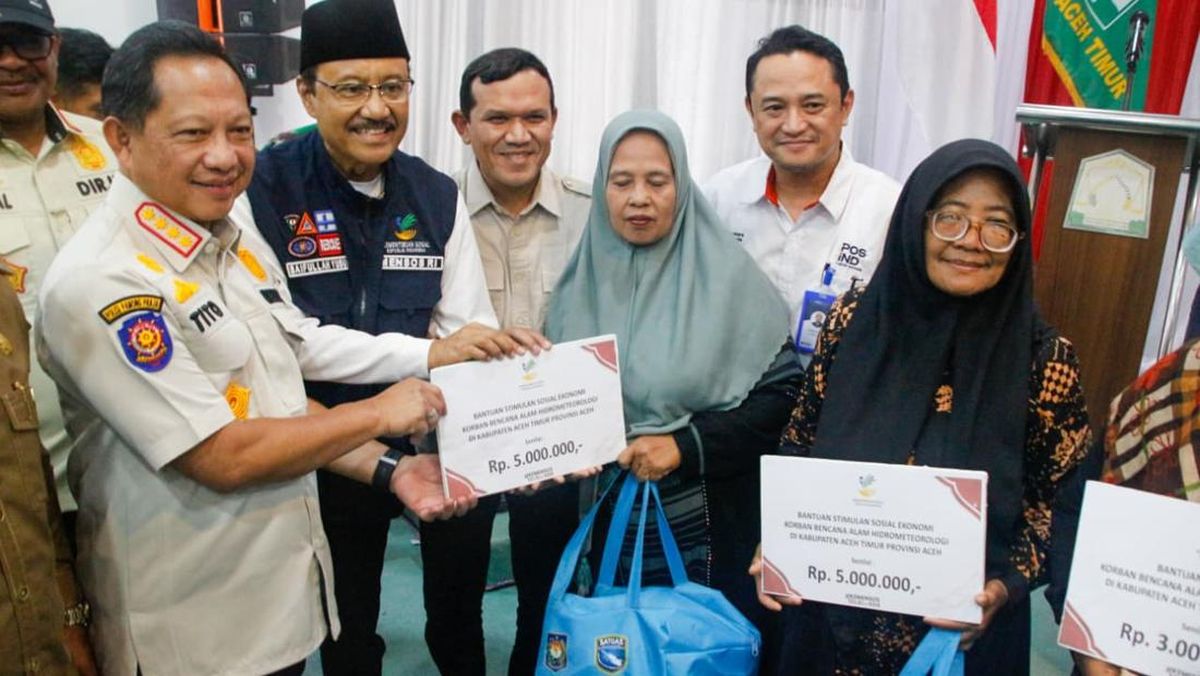
Indonesia’s Minister of Home Affairs (Mendagri) and Head of the Task Force for Acceleration of Rehabilitation and Reconstruction (PRR) following the Sumatra disaster, Muhammad Tito Karnavian, believes that the distribution of social assistance (bansos) in the region will have a tangible impact on communities, including boosting purchasing power.
“When people receive money, they can shop. When there is shopping, there will certainly be merchants. When there is demand, there will be supply, so supply can enter, trade can run, and markets can function,” Tito stated during the Handover of Government Assistance for Handling Natural Disaster Victims in the Sumatra Region at the Regent’s Building in East Aceh, Aceh, on Monday (16 March).
On the same occasion, Tito expressed appreciation to Social Minister Saifullah Yusuf for symbolically distributing assistance to East Aceh through PT Pos Indonesia (the state postal service).
He explained that the natural disasters affecting the Sumatra region, including East Aceh, have had a significant economic impact on local areas. The distribution of social assistance by the government not only helps communities but also stimulates the local economy.
“This is the same everywhere. All other regions are expected to see similar results. That is the purpose of assistance like this,” he said.
Tito assured that this distribution is not the final assistance. If vulnerable populations are identified in future assessments and the data can be verified, the government will increase the aid.
He outlined that the characteristics of natural disasters in Sumatra differ significantly from other natural disasters in Indonesia. The disasters affected 52 districts across West Sumatra, North Sumatra, and Aceh with uneven damage patterns. Consequently, the PRR Task Force conducts data collection in phases.
“If we wait until all data collection is complete before distributing assistance or building temporary housing, the recovery process will take too long,” Tito explained.
Based on the data assessment, the PRR Task Force has classified home damage into three categories: light damage, moderate damage, and severe damage or total loss. Affected residents receive economic stimulus assistance based on data submitted and verified by the Central Statistics Agency (BPS).
“Those needing economic stimulus assistance, those needing furniture aid, and those needing food allowances should receive support immediately. After BPS verification, we then hand over house-related assistance to BNPB (the National Disaster Management Agency) and personal assistance to the Social Minister,” Tito concluded.