
Minister Tito Encourages Matabesi Traditional Village to Become Cultural Heritage and Tourist Destination
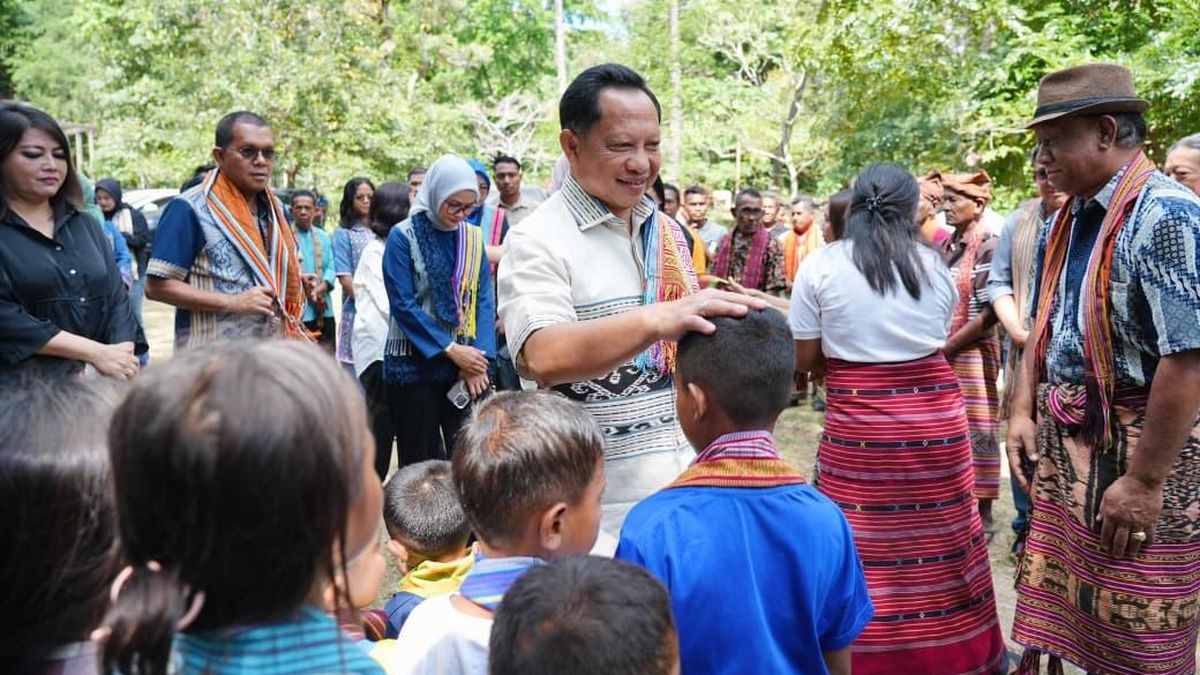
Home Affairs Minister Muhammad Tito Karnavian has expressed appreciation for the preservation of customs and culture in Matabesi Village, Belu Regency, East Nusa Tenggara (NTT), which remain intact amidst modern life. He made the statement during a visit to the traditional village on Sunday (28/6).
In a written statement from the Ministry of Home Affairs, Tito said Matabesi Traditional Village has great potential to be developed as a cultural heritage site as well as a tourist destination. Matabesi Village reminded Tito of Wae Rebo, which is also in NTT. However, Matabesi Traditional Village has its own characteristics, from traditional houses that have survived for hundreds, possibly even thousands of years, to a lush environment with ancient trees.
“This time I see something different here. It is similar to Wae Rebo, but it has its own uniqueness, its own history. To get there, you have to walk for two hours. Here, you can arrive directly by car. This means it is much easier for tourists,” Tito said.
Tito noted that the history of Matabesi Traditional Village would become even more interesting if it continued to be explored and documented. In this way, its existence can become a legacy for future generations to understand the history, customs and culture that have lived on for hundreds of years. He also expressed appreciation for the Belu Regency Government’s commitment to preserving the Matabesi Traditional Village.
Tito also visited the Fohorai Museum, which is under construction in Matabesi Traditional Village. According to him, the museum will be more attractive if it is continuously equipped with various collections depicting the life of the indigenous community, not only weaving but also traditions, agriculture, animal husbandry, and the candlenut processing process.
He added that cultural preservation cannot be separated from the role of traditional elders and the local community who continue to uphold the values of their ancestral heritage. “I give the highest respect to the traditional elders here, to this indigenous community. In the midst of modern life, we do not have to switch to modernity. We can maintain and preserve many philosophies from the past,” Tito said.
He compared this situation to his experience visiting Hawaii in the United States. According to him, areas in Hawaii that once had traditional villages have now undergone massive modernisation, so that traces of the original culture are mostly displayed as performances in hotels rather than remaining part of community life. As a result, traditional villages in Hawaii have disappeared and been replaced by high-rise buildings.
Reflecting on that experience, the Home Affairs Minister reminded that modernisation should not erase the cultural roots of society. “We can still modernise in certain areas, but in other parts we must preserve this. So that it becomes an attraction, a tourist destination, and also a historical monument that will be useful for our children and grandchildren. So they know where their grass roots are,” Tito said.