
Minister Tito: Dukcapil Data Integration Key to Accurate Social Protection
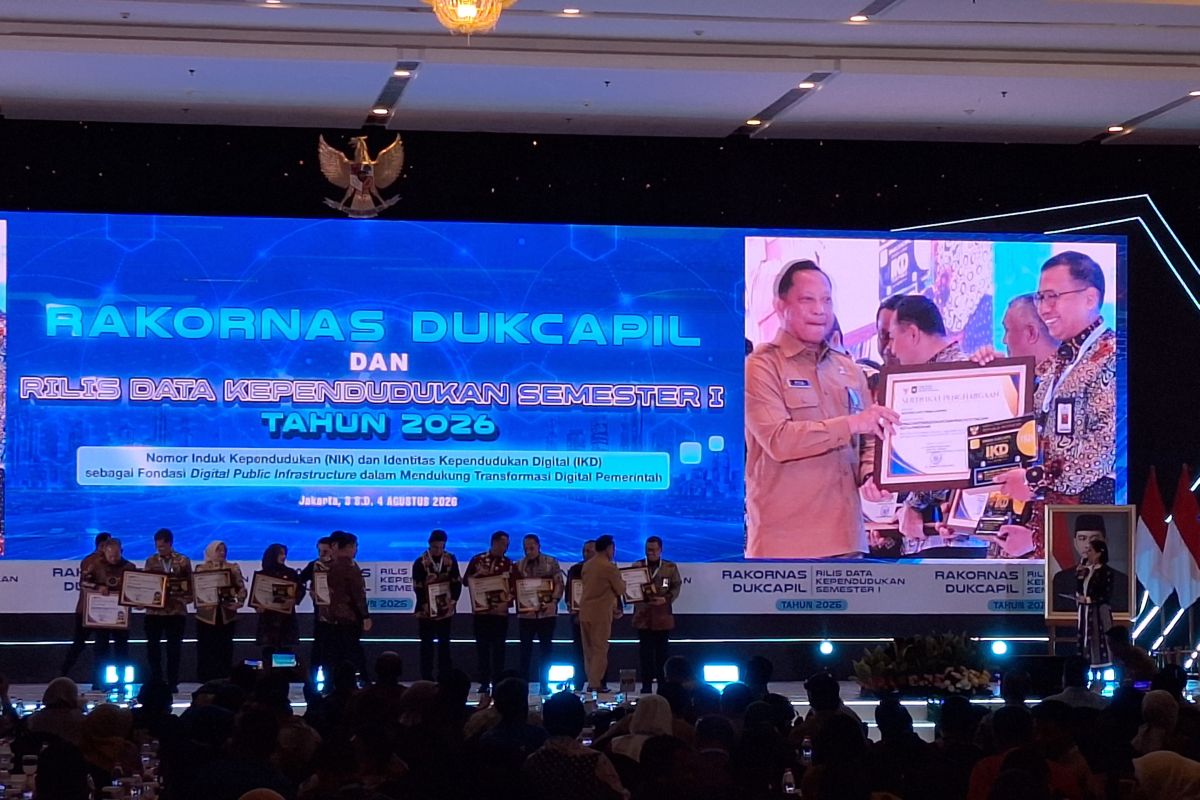
Home Affairs Minister Tito Karnavian has stressed the importance of data managed by the Directorate General of Population and Civil Registration (Dukcapil) to ensure the accuracy of social protection programme (Perlinsos) recipients. He explained that this was proven by the success of a pilot social protection programme in Banyuwangi Regency, which integrated Dukcapil data. Based on the pilot project results as of 30 June 2026, out of 323,339 family heads registered for Non-Cash Food Assistance (BPNT), 45.2 percent were identified as potentially eligible for assistance, while the remainder were potentially ineligible. Meanwhile, out of 290,967 family heads registered for the Family Hope Programme (PKH), 31.2 percent were potentially eligible and 68.4 percent were potentially ineligible. This demonstrates the importance of the Directorate General of Population and Civil Registration’s role as the foundation for e-government or the Electronic-Based Government System (SPBE). “The first phase of this e-government, we want to target the issue of social assistance first, so that social assistance is accurately targeted by integrating data from Dukcapil, which has face recognition, fingerprint, and retina eye data,” said the Minister when opening the National Coordination Meeting (Rakornas) of Dukcapil and the Release of Semester I 2026 Population Data in Jakarta on Monday. Tito explained that in implementing e-government, Dukcapil data is integrated with data from the Ministry of Agrarian Affairs and Spatial Planning/National Land Agency (ATR/BPN) to ascertain whether prospective social assistance recipients own land assets. This data is also matched with the Single Social and Economic Data (DTSEN) compiled by the Central Statistics Agency (BPS) through door-to-door surveys. In addition, Dukcapil data is also integrated with police data, specifically the One-Stop Single Administration System (Samsat), to verify vehicle ownership by prospective recipients. “[So] several ministries are joining together … but the initial data used is the individual data from Dukcapil,” he said. He added that this inter-ministerial and institutional data integration will produce more accurate data, ensuring that assistance is received by people who truly meet the criteria. “If it falls into the hands of those who are not entitled, it is a waste and causes social jealousy among those who do not receive it but are also struggling,” said the Minister. Furthermore, the Minister conveyed that the success of the Banyuwangi Regency Government has encouraged the government to replicate the implementation of e-government in other regions. He admitted to having directly reviewed the implementation of the system for the Social Protection programme in Gianyar Regency, Bali, on 4 July 2026. Based on the monitoring results, the system is capable of producing accurate, real-time, and transparent data. “If it falls into the right hands, social assistance is effective and efficient in helping the community, especially amidst the current economic pressures,” he explained. Therefore, the Minister is targeting the implementation of e-government for social protection in 143 districts and cities this August. The selected areas are those that meet several criteria, including having adequate internet infrastructure, a responsive Dukcapil office, and support from the regional head.