
Minister supports development of renewable energy-based cooperatives
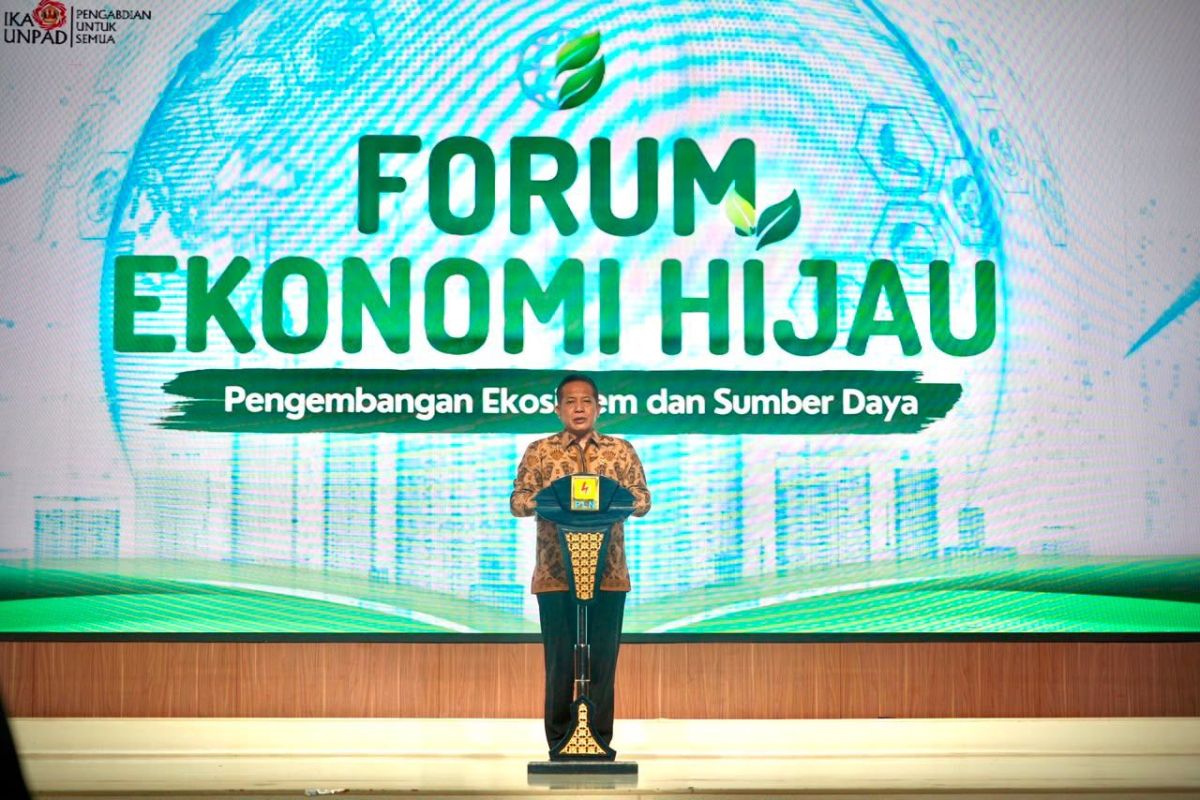
Jakarta (ANTARA) - The Minister of Cooperatives, Ferry Juliantono, is encouraging the development of renewable energy-based cooperatives as part of an effort to strengthen the green economy while simultaneously increasing the economic independence of communities at the village level.
Opening the Green Economy Forum of the Padjadjaran University Alumni Association in Jakarta on Wednesday, Ferry stated that cooperatives play a strategic role in supporting the sustainable development agenda. He noted their ability to manage resources productively, fairly, and sustainably, while strengthening community participation in the national economic transformation.
“To strengthen this role, the Ministry of Cooperatives is encouraging various development activities for renewable energy-based cooperatives, so that this instrument for village economic independence can also grow simultaneously,” Ferry said, as quoted from a press release.
He cited one of the initiatives currently being implemented by the government through the ‘Merah Putih’ Village/Sub-district Cooperative programme.
In its implementation, he mentioned that the Ministry of Cooperatives has found that several villages still lack adequate access to electricity and remain dependent on diesel-powered generators that can only operate for a few hours each day.
To address this issue, Ferry stated that the Ministry of Cooperatives is collaborating with PT PLN (Persero) to develop a pilot solar power plant (PLTS) for village cooperatives on Sembur Laut Island, Batam.
“We are in discussions with PT PLN to create a solar power plant with a capacity of 6 megawatts, which we are establishing as a pilot project in Sembur Laut. It will be officially inaugurated as a model project in the near future,” said Ferry.
He expressed hope that this model could be replicated in various villages that have not yet obtained adequate access to electricity.
He believes that the use of renewable energy can help reduce energy costs, which have long been a burden for communities in remote areas that still rely on diesel fuel.
Nevertheless, he acknowledged that the development of the green economy in Indonesia still faces several challenges, ranging from strengthening human resource capacity and technology mastery to cross-sector coordination and the need for adequate financing.
Ferry added that the transformation towards a green economy cannot rely solely on government policies or large business actors, but must also grow from the community level through public participation.