
Minister: Subsidised fertiliser availability boosts Indonesia's rice production
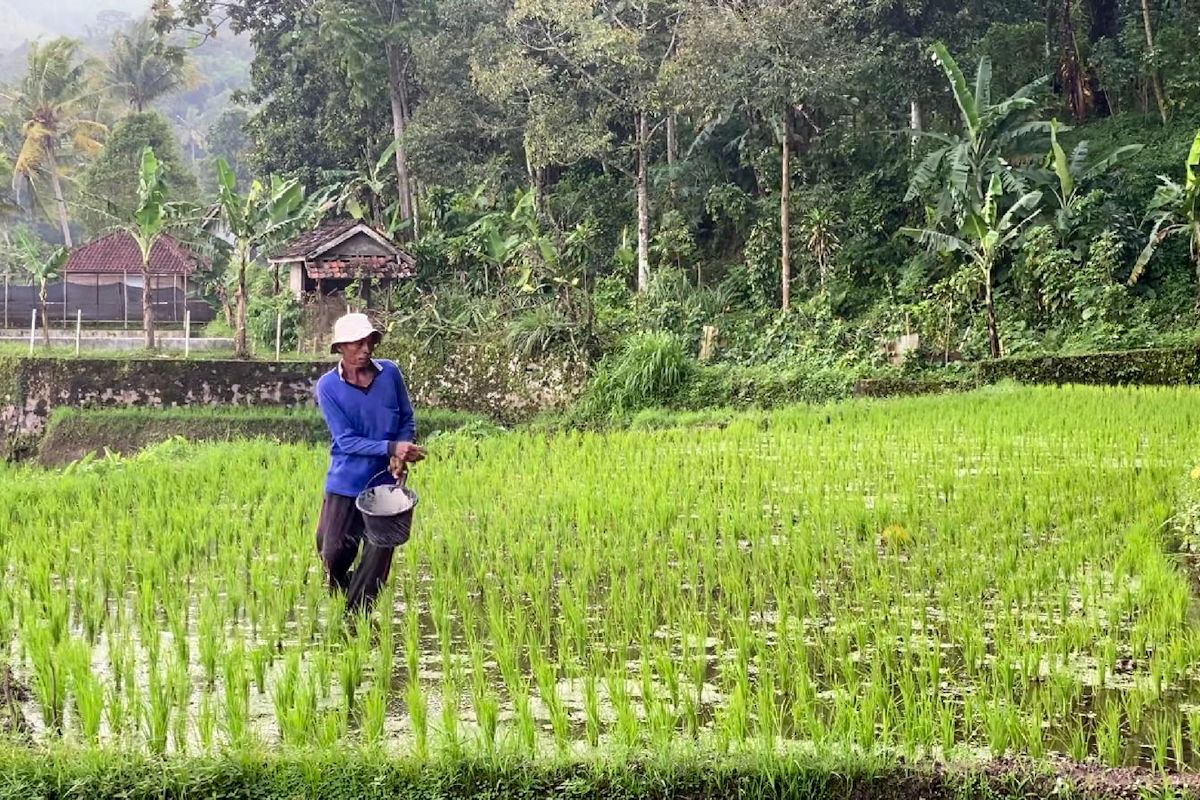
Agriculture Minister Andi Amran Sulaiman stated that the maintained availability of subsidised fertiliser is a key factor in increasing national rice production amidst the threat of a global food crisis and climate change. He noted that the government’s success in maintaining access to subsidised fertiliser, including reducing the highest retail price by 20 per cent, is one of the main factors driving the increase in national food production. “When farmers in many countries face scarce and expensive fertiliser, the Indonesian Government actually lowered the subsidised fertiliser’s highest retail price by 20 per cent and ensured easy access for farmers. This is one of the keys to why Indonesia’s food production continues to increase,” Amran said. Amid global agricultural pressures due to climate change and international fertiliser price volatility, Indonesia is showing positive performance. The availability of subsidised fertiliser is maintained and national rice production continues to rise. According to the Minister, the government’s partiality towards farmers is an important foundation for maintaining national food production amidst global challenges. The Food and Agriculture Organization’s June 2026 Food Outlook report further strengthens this optimism. The report lists Indonesia as the largest rice producer in Southeast Asia and the fourth largest in the world. FAO projects Indonesia’s rice production to reach approximately 38.6 million tonnes. Meanwhile, world rice production is estimated to decline by around 1.6 per cent due to climate change and supply disruptions in several major producing countries. Director General of Agricultural Infrastructure and Facilities at the Ministry of Agriculture, Andi Nur Alam Syah, confirmed that subsidised fertiliser stocks are sufficient to meet farmers’ needs until the next planting season. He mentioned that as of 25 June 2026, the realisation of subsidised fertiliser distribution had reached 54.28 per cent of the national allocation of 9.55 million tonnes. “This means that around 45.72 per cent, or approximately 5.1 million tonnes, of subsidised fertiliser is still available for use by farmers throughout Indonesia,” he said. The government continues to ensure smooth distribution so that fertiliser is available on time, in the right quantity, and on target. He added that the government is accelerating fertiliser distribution so that farmers can immediately utilise it to support increased production. The government is also anticipating the impact of the El Nino phenomenon, which could potentially affect agricultural production in several regions. He called on local governments, extension workers, and all farmers to utilise the availability of subsidised fertiliser, modern agricultural machinery, water pumps to meet water needs, and tractors for land cultivation to accelerate planting. “The sooner planting is carried out under conditions that are still possible, the greater the opportunity to maintain and even increase national food production,” he said. The government had previously reduced the highest retail price of subsidised fertiliser, which took effect at the end of 2025. This policy was the first of its kind, lowering fertiliser prices by around 20 per cent without reducing quality or allocation volume. The step was taken to reduce farmers’ production costs while maintaining the competitiveness of the national agricultural sector. In 2026, the government allocated 9.55 million tonnes of subsidised fertiliser. With maintained fertiliser availability, simplified distribution, and various production enhancement programmes, the government is optimistic that the food self-sufficiency target can be achieved. The synergy between government policy, production facility support, and the hard work of farmers is considered important capital for Indonesia in maintaining food security amidst global uncertainty.