
Minister: Ship safety evaluation must not stop at documents
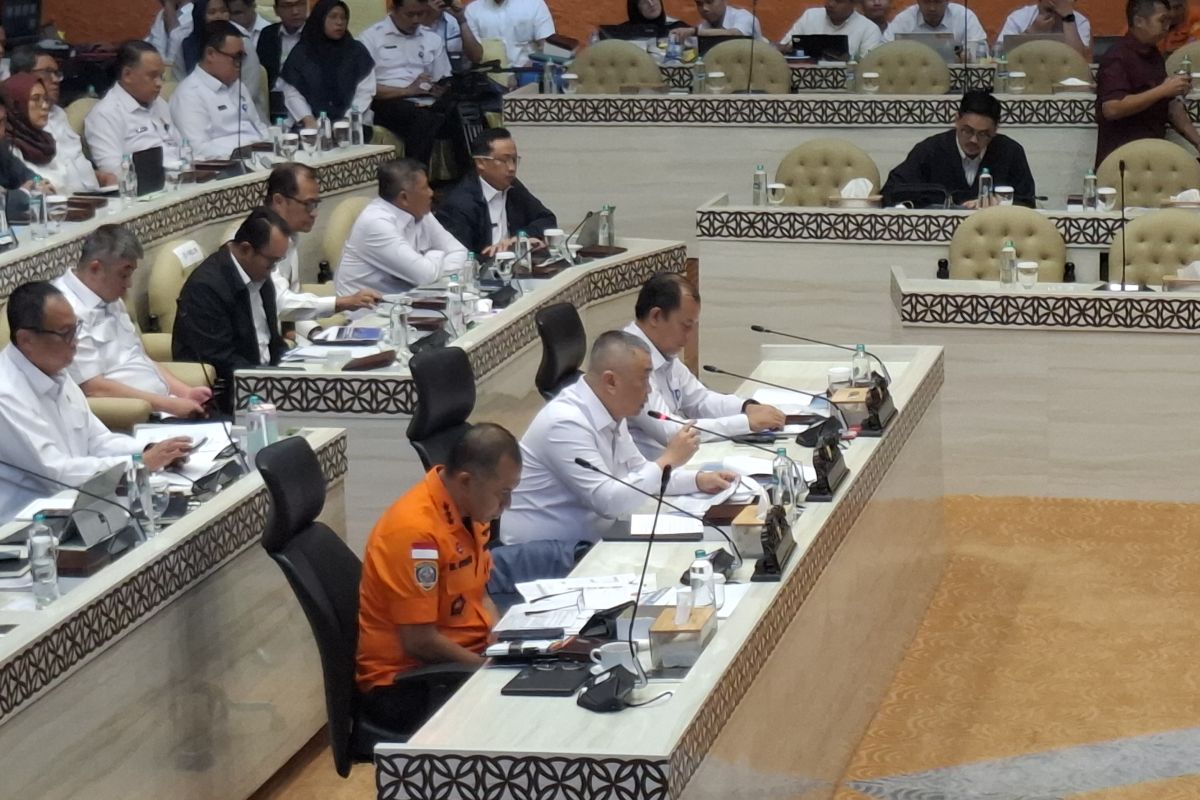
Transport Minister Dudy Purwagandhi has said that ship safety evaluations must not stop at the completeness of seaworthiness documents, but must also cover the effectiveness of safety system implementation.
According to the minister, the government is examining this aspect after evaluating a number of ship incidents, including the fires aboard KM Mutiara Sentosa II and KMP Putri Yasmin.
“However, complete documents do not mean we stop at the administrative aspect. These incidents have instead become the basis for us to evaluate more deeply the effectiveness of safety system implementation on those ships,” Dudy said during a working meeting with Commission V of the Indonesian House of Representatives in Jakarta on Wednesday.
The statement was made while explaining the fire aboard KM Mutiara Sentosa II in the northern waters of Sumenep Regency, East Java, on 2 August 2026.
The ship had undergone a spot check by a Marine Inspector on 6 June 2026 with a seaworthy result and obtained a Sailing Approval Letter on 1 August 2026.
The Ministry of Transportation’s presentation also noted that the ship’s interim safety management certificate was valid until 17 August 2026. In the incident, 238 people were evacuated, comprising 233 survivors and five fatalities.
Dudy explained that the evaluation was then deepened to cover the effectiveness of the fire protection system, crew preparedness, the condition of vehicles and cargo, and the ability to respond to emergencies.
The definitive cause of the fire remains subject to the ongoing investigation process.
As a follow-up, the ministry has ordered a verification audit of the safety management system and Document of Compliance for PT Atosim Lampung Pelayaran, an inspection of its fleet, and improvements to the fire protection system.
Operational restrictions up to a sailing ban may be imposed if safety-related non-conformities are found.
“Our message is clear: there must be no compromise on findings directly related to safety,” Dudy stressed.
The audit of PT Atosim Lampung Pelayaran’s safety management system was previously announced by the Directorate General of Sea Transportation on 7 August 2026 as part of a comprehensive evaluation following the KM Mutiara Sentosa II fire.
The ministry at that time also emphasised that the cause of the incident still awaited the investigation of the National Transportation Safety Committee.
A similar evaluation was carried out on KMP Putri Yasmin, which caught fire while serving the Padang Bai, Bali–Lembar, West Nusa Tenggara route on 12 August 2026.
The ship had undergone a spot check on 31 May 2026 with a seaworthy result, obtained a Sailing Approval Letter on 12 August, and held a passenger ship safety certificate valid until 21 November 2026.
The ministry evaluated the reliability of the fire protection system, access to life-saving equipment, emergency response preparedness, and crew capability.
PT Jemla Ferry as the operator was then subjected to an additional audit of its safety management system and Document of Compliance, while seaworthiness inspections were carried out with emphasis on fire safety aspects before the ship was allowed to depart.
Routinely, the ministry conducts seaworthiness inspections and spot checks by Marine Inspectors three times a year, namely during the Eid period, Christmas and New Year, and school holidays.
Supervision also covers safety management system audits, accident investigations, and follow-up on findings.
As part of supervision for the 2026 Eid transport period, the Directorate General of Sea Transportation previously inspected five passenger ships at Padang Bai Port, including Putri Yasmin, as well as 10 ships at Benoa Port.
All 15 ships were declared seaworthy, with a number of minor findings that operators were required to address.
Furthermore, Dudy said accident prevention must be carried out in layers through regulation, improving the competence of crew and officers, seaworthiness inspections, and corrective action on every finding.
The ministry’s presentation emphasised that ships must not sail if major deficiencies are found before repairs are carried out.
According to Dudy, these strengthening measures are aimed at preventing accidents, ensuring the safety of passengers and crew, maintaining smooth shipping operations, and improving compliance and safety culture.
“Because in safety, even one life is already too many,” Dudy said.