
Minister Saifullah Yusuf Calls on Community Social Workers to Drive Tangible Change at 51st National Gathering
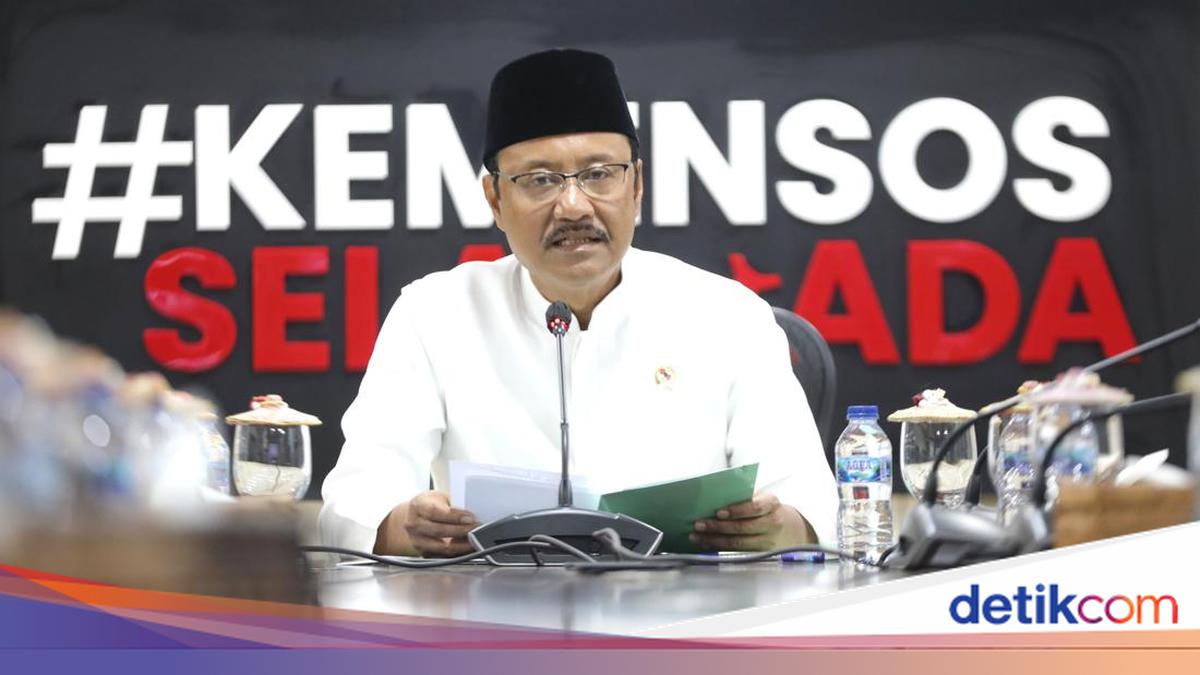
Social Affairs Minister Saifullah Yusuf (Gus Ipul) has called upon the Association of Community Social Workers (IPSM) to strengthen their role as part of the Potential Social Welfare Resources (PSKS) to assist those in need.
“Work with responsibility, sincerity, and real action. Move, do not wait, but go directly to the community. Impact: social work must produce changes that are felt by citizens,” said Gus Ipul in a written statement on Thursday (2/7/2026).
This was conveyed during a virtual address from the Ministry of Social Affairs office in Jakarta, during the National Meeting celebrating the 51st Anniversary of Community Social Workers 2026, held in Balige, Toba Regency, under the theme ‘Work, Move, Impact’.
He explained that IPSM serves as a platform for community social strength, with social workers acting as the ‘eyes, ears, and hands’ of humanity within their respective environments. He added that IPSM assists vulnerable citizens, the elderly, children, persons with disabilities, poor families, disaster victims, and neglected groups.
Gus Ipul also urged social workers to take an active role in supporting the President’s mandate to the Ministry of Social Affairs, which includes achieving accurate data, ensuring targeted social assistance distribution, and implementing the ‘Sekolah Rakyat’ (People’s School) programme.
Explaining the position of social workers within this mandate, Gus Ipul likened social welfare to a magnet with two poles. The first pole consists of those in need of social welfare services, known as the 12 Social Attention Groups, which include vulnerable children, people with disabilities, neglected elderly, disaster victims, and the impoverished.
The second pole is the Potential Social Welfare Resources (PSKS), which provides services to the community. “PSKS comprises the state and the community; naturally, your fellow community social workers are part of this PSKS pole. You are part of the potential and the strength that provides aid,” he explained.
He noted that like the two poles of a magnet, both sides are meaningless if they stand alone and never meet. This is why the Social Welfare Centre (Puskesos) or the Integrated Referral Service System (SLRT) was established as a bridge to connect those in need with those capable of helping.
Gus Ipul further added that as part of the social welfare resources, social workers must ‘level up’ to become more than just social volunteers, but agents of change with four specific objectives. First, as initiators who bravely take the first step to create local innovation in their villages. Second, to inspire Beneficiary Families (KPM) to have a strong desire to escape poverty. Third, to mobilise mutual cooperation (gotong royong) and consolidate local potential. Fourth, to ensure DTKS data remains up-to-date through social assistance checks and the SIKS-NG system.
To achieve this, Gus Ipul urged synergy with District Social Welfare Officers (TKSK), PKH facilitators, Karang Taruna, peace pioneers, and other volunteers to move together through Puskesos and SLRT. “There must be no barriers, and there must be no more sectoral ego,” he asserted.
During the event, the Ministry of Social Affairs, alongside partners including the Directorate General of Social Empowerment, the Directorate of Social Rehabilitation for Persons with Disabilities, the North Sumatra Provincial Social Service, Sentra Bahagia, Sentra Insyaf Medan, and PT Kalbe Farma, distributed aid worth Rp1,065,082,934 to beneficiary families. The aid included basic food supplies, nutrition, disability aids, economic empowerment, and health check-up services provided by PT Kalbe Farma.
The 51st National Meeting in Balige, Toba Regency, was attended by the Vice Regent of Toba, Audi Murphy; Director of Community Social Empowerment, Adrianus Ala; Head of the Toba Regency Social Service, Lalo Hartono Simanjuntak; Director of Customer Health at Kalbe Farma, Tunghadi Indra; the National Chairman of IPSM, Andriansyah; and various national and regional IPSM officials and social workers from across Indonesia.