
Minister Rini: Collaboration Key to Realising Integrated Public Services
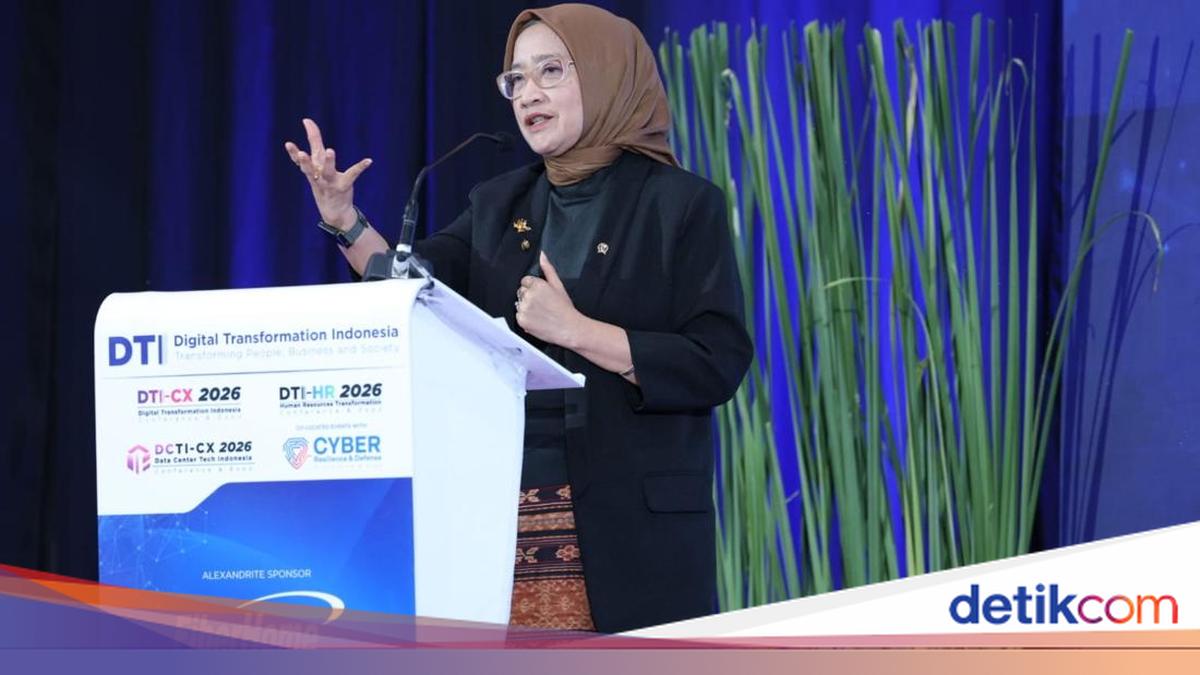
Minister for Administrative and Bureaucratic Reform (PANRB) Rini Widyantini stated that digital transformation is an effort to build a government that works as a single entity, while inviting all stakeholders to collaborate in delivering public services that are simpler, safer, and more trustworthy. She made the remarks at the Digital Transformation Indonesia Conference & Expo (DTI-CX) 2026 in Jakarta.
"Our challenge today is no longer building more applications, but building a government that works as a single entity, so that public services become simpler, integrated, safe, and trustworthy," Rini said.
According to Rini, public services must be designed around the life journey of the community, not around the boundaries of government agency authority. Therefore, groups such as persons with disabilities, communities in remote areas, and the elderly need to be involved from the service design stage so that digital transformation truly delivers benefits felt by everyone.
To realise this, the government is building Digital Public Infrastructure (DPI) as a shared digital foundation encompassing digital identity, data exchange, digital payments, and the utilisation of big data and artificial intelligence. This shared foundation allows ministries, agencies, and regional governments to deliver interconnected services, utilise infrastructure together, and accelerate innovation without building fragmented systems.
The implementation of this shared digital foundation has been realised through the digitalisation of social assistance distribution, reaching 38 provinces and 152 regencies/cities. Approximately 67 percent of the implementation areas are outside Java, covering around 111 million residents or 36.6 million households. The integration of digital identity, biometric verification, and secure data exchange successfully slashed the social assistance eligibility verification process from around 75-200 days to just one minute to six hours. Costs, which previously reached around Rp150,000, also dropped to around Rp10,000 or even lower.
"Success is not measured by the number of systems built, but by how much time can be saved, costs reduced, and the ease of service truly felt by the community," Rini said. She added that digital transformation must not create new gaps. Therefore, the government is implementing an omnichannel approach through face-to-face services, mobile services, self-service kiosks, and remote digital services, so that every citizen can access services according to their needs and conditions.
"What must be unified is not the service vessels, but the business processes, data, and systems working behind them. Thus, the community receives the same, fast, and consistent service through whichever channel they choose," she explained. Rini invited the entire digital ecosystem, including businesses, the digital industry, academics, civil society, communities, and development partners, to become part of Indonesia’s digital transformation. According to her, inclusive public services can only be realised when those who build policies, develop technology, and directly experience services sit together from the start. This collaboration serves as the foundation to ensure digital transformation not only delivers increasingly advanced technology but also a government that is closer to the people, capable of reaching every citizen, opening equal access, and ensuring no one is left behind from public services.
Source: jawawa.id (https://jawawa.id/newsitem/minister-rini-collaboration-key-to-realising-integrated-public-services-1786071143)
Originally published by detikcom (https://news.detik.com/berita/d-8608019/menpan-rb-sebut-kolaborasi-kunci-mewujudkan-layanan-publik-terintegrasi), translated from Indonesian