
Minister proposes task force to map Bali infrastructure development
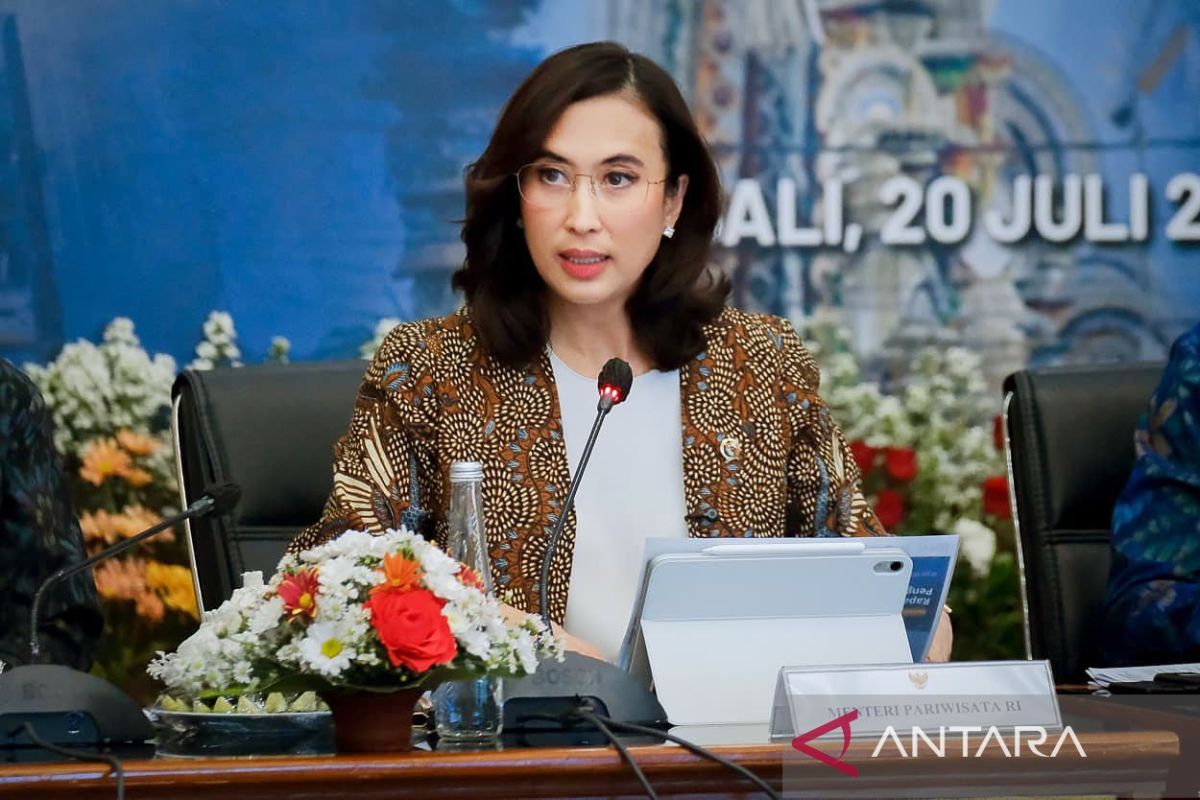
Jakarta (ANTARA) - Minister of Tourism Widiyanti Putri Wardhana has proposed the formation of an inter-ministerial/agency working group (pokja) to map and set priorities for basic infrastructure development that can be immediately executed in order to improve the quality of Bali’s tourism sector.
“Collaboration and synergy will be key in addressing the various existing challenges,” said Widiyanti in an official statement confirmed in Jakarta on Monday.
At a Ministerial-Level Coordination Meeting on Bali Regional Development held at the Bali Governor’s Office, Widiyanti described the proposal as a response to the various challenges facing Bali’s tourism sector, ranging from waste management and tourist congestion to spatial planning and the optimisation of cruise tourism potential.
The needs encompass the energy sector, waste management, transport, water, sanitation, and tourism infrastructure, with estimated investment requirements of US$16.4 to 24.7 billion, equivalent to Rp295.2 trillion to Rp444.6 trillion.
She highlighted that waste management must be a shared concern, as it is one of the important factors in maintaining Bali’s competitiveness and reputation as a world-class tourism destination.
She therefore urged cross-sectoral support for the mass remediation of marine waste, the mapping of open dumping systems at the Suwung Final Processing Site (TPA) to prevent new waste generation, and the accelerated provision of Reduce, Reuse, Recycle Waste Processing Facilities (TPS 3R) at tourist destinations and tourism villages.
The Ministry of Tourism has carried out various initiatives, including the Clean Tourism Movement, sustainable tourism village certification, tourism business mentoring, and environmental performance assessment through the Corporate Performance Rating Assessment Programme (Proper).
Travel patterns under the 4B programme, covering Banyuwangi, West Bali, North Bali, and East Bali, are also being continuously updated.
In the field of spatial planning, the accelerated preparation of the Regional Spatial Plan (RTRW) and digital Detailed Spatial Plans (RDTR) integrated with the Online Single Submission (OSS) licensing system is considered an urgent need.
To date, only 28 RDTRs have been integrated with the OSS system out of a target of 73. This integration is expected to prevent the conversion of green land for purposes other than those intended, particularly for tourism accommodation development.
Widiyanti also highlighted the significant opportunity for developing cruise tourism as a new source of growth for Bali’s tourism. Bali currently has the Bali Maritime Tourism Hub and Celukan Bawang Port, which serve as cruise ship berthing points.
Coordinating Minister for Infrastructure and Regional Development Agus Harimurti Yudhoyono added three main directives as follow-up actions for Bali’s tourism development.
These directives comprise drawing up a masterplan for tourist dispersion to reduce the concentration of visits in South Bali, promoting the development of destinations in North, East, and West Bali so that the economic benefits of tourism are more evenly distributed, and integrating destination development with connectivity, basic services, environmental management, and community empowerment.
Agus also stressed that Bali must become a model of tourism development for other regions of Indonesia.